

Science & Tech · Science & Environment · 1 hr ago
Brain organoids on the ISS showed changes linked to Alzheimer’s
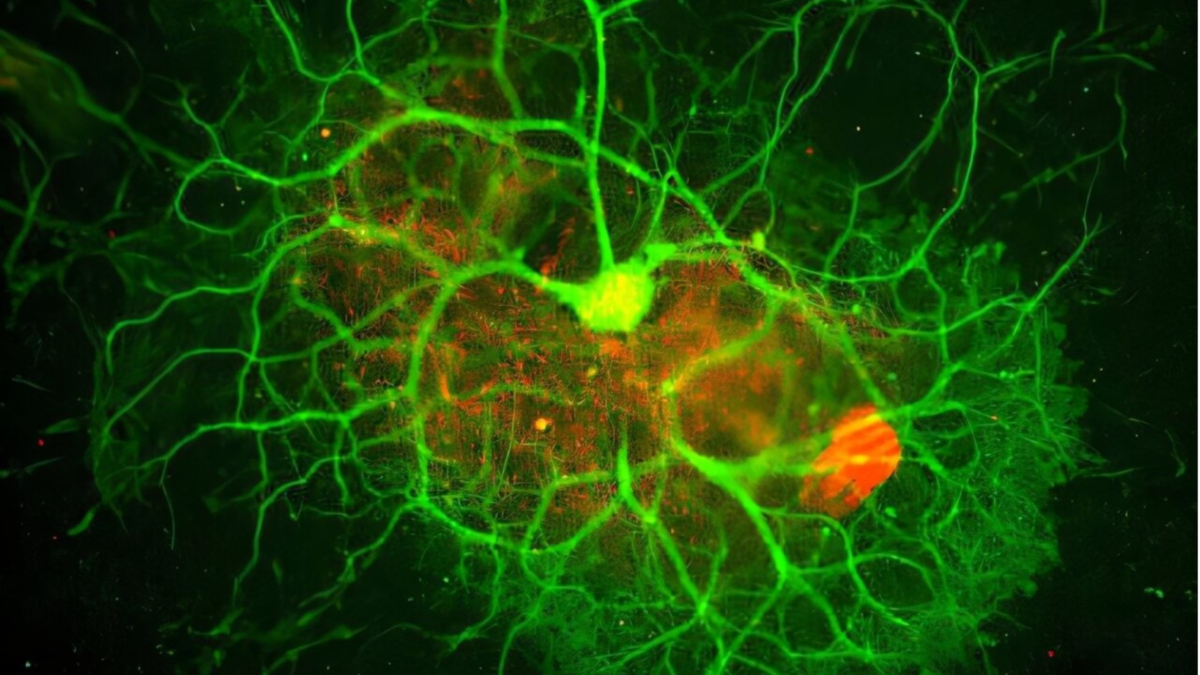
Researchers sent lab-grown brain organoids to the International Space Station for 40 days to study Alzheimer’s-related changes in brain cells.
The simplified models were made from human stem cells and included versions with mutations in genes linked to rare inherited forms of Alzheimer’s, as well as controls.
After returning to Earth, the organoids showed changes linked to the disease, including differences in amyloid-beta and tau proteins and in cell processes.
The changes varied by gene mutation, with organoids carrying a PSEN1 mutation showing changes involving more than 7,400 genes.
The results suggest space conditions may help reveal how genetic differences affect brain cells, but the findings are preliminary.
Organoids do not fully match human brains, and the study’s genetic models represent only a small number of Alzheimer’s cases.
Researchers may next test more complex organoids on the ISS using a system that refreshes their growth medium.

Brain organoids with Alzheimer’s-related mutations spent 40 days aboard the International Space Station, where researchers found changes linked to the disease.
The study, published in Science Advances, was coordinated by Alysson Muotri of the University of California, San Diego.
The organoids showed changes involving amyloid-beta and tau proteins, as well as genes linked to cell communication and energy production.
Responses differed according to the gene mutations carried by the organoids.
Researchers said the findings are exploratory and that organoids are not exact copies of human brains.
- Who
- Researchers coordinated by Alysson Muotri of the University of California, San Diego.
- What
- They studied Alzheimer’s-related brain organoids after spaceflight and found molecular changes linked to the disease.
- When
- The organoids were sent to the ISS in 2024 and stayed for 40 days. The study was published on November 25, 2026.
- Where
- The International Space Station.
- Why
- To investigate how spaceflight affects brain cells and whether it could help researchers study Alzheimer’s disease.
This story does not have two clearly opposing sides.
Brain organoids were sent to the International Space Station.
The organoids returned after spending 40 days aboard the station.
Researchers analyzed the organoids and found changes in proteins and other molecular features linked to Alzheimer’s disease.
The study was published in Science Advances.
- Time aboard ISS
- 40 days
- Study lead
- Alysson Muotri, University of California, San Diego
- Mutation-related genes
- APP, PSEN1 and PSEN2
- Genes affected in PSEN1 organoids
- More than 7,400
- Genes affected in PSEN2 organoids
- More than 640
3 sources
What people are saying
Spaceflight provides a unique environment to study neural responses relevant to neurodegenerative diseases
These exploratory findings indicate that spaceflight reshapes neuronal regulation in human brain organoids, revealing coordinated molecular responses relevant to Alzheimer's disease biology.