

Business · Economy · 2 hrs ago
What counts as a recession, and is Australia in one?
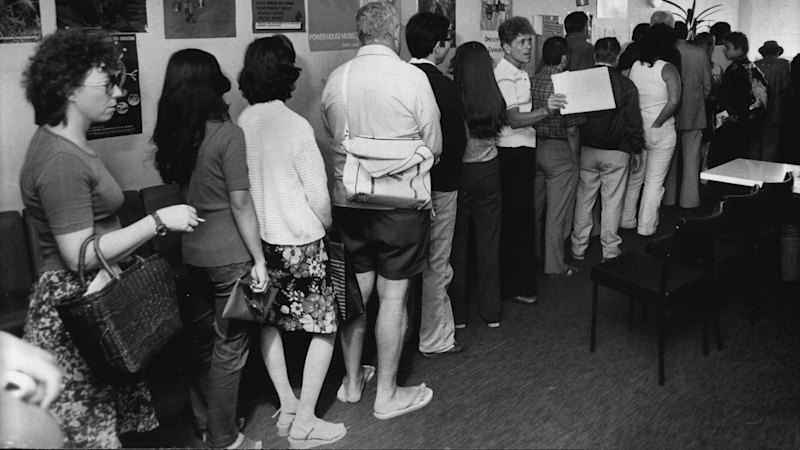
Australians searched for answers about recessions after Reserve Bank governor Michele Bullock raised the prospect of one while explaining the bank’s fifth interest rate rise of the year.
A common definition is two consecutive quarters of economic contraction, but later data revisions can change whether that threshold was met.
Another measure looks at unemployment: the Sahm rule signals recession risk when the jobless rate rises by at least half a percentage point from a low in the previous year.
Australia’s unemployment rate averaged 4.63 per cent from July to September, up from 4.17 per cent from December to February, a rise of 0.46 percentage points.
That comparison falls just short of the Sahm rule’s half-point threshold.
The pandemic recession in 2020 showed that economic output can plunge without mass job losses, especially when government support helps protect incomes.
These measures can help explain economic conditions, but the figures given do not establish that Australia is in a recession.

A recession is commonly defined in Australia as two consecutive quarters of negative economic growth.
Some economists instead use the “Sahm rule”, which signals recession risk when the jobless rate rises by at least half a percentage point.
Australia’s unemployment rate rose by 0.46 percentage points between the cited three-month periods, below that rule’s threshold.
The article does not provide current economic growth figures, so it does not establish whether Australia is in a recession under the two-quarter definition.
Interest-rate comments by Reserve Bank governor Michele Bullock prompted a surge in Australians’ searches about recessions.
- Who
- Australians searched for information after comments by Reserve Bank governor Michele Bullock.
- What
- The article explains competing ways to define a recession. It does not establish whether Australia meets the two-quarter definition.
- When
- The article was published on November 6, 2026; Bullock’s comments followed the Reserve Bank’s fifth rate rise of the year.
- Where
- Australia.
- Why
- Bullock said the Reserve Bank did not want to push the economy into recession if it could avoid it, prompting public interest in the term.
This story does not have two clearly opposing sides.
Treasurer Paul Keating declared this is the recession that Australia had to have after national accounts showed two quarters of contraction.
Australia experienced a recession as the economy contracted by 7 per cent in the first six months of the year.
Reserve Bank governor Michele Bullock discussed recession as the bank announced its fifth interest-rate rise of the year.
Google searches for recession reached their highest level since 2020, according to Google Trends.
- Common Australian definition
- Two consecutive quarters of negative economic growth
- Sahm rule threshold
- A 0.5 percentage-point rise in the jobless rate
- Australian unemployment comparison
- 4.63 per cent from July to September, compared with 4.17 per cent from December to February
- Pandemic recession contraction
- 7 per cent in the first six months of 2020
- Interest-rate rises
- The Reserve Bank had lifted rates for a fifth time in 2026
What people are saying
We are not looking to tip the economy into a recession if we can avoid it
this is the recession that Australia had to have