

Business · Markets · 3 hrs ago
US stocks fall as AI concerns and rising oil prices weigh
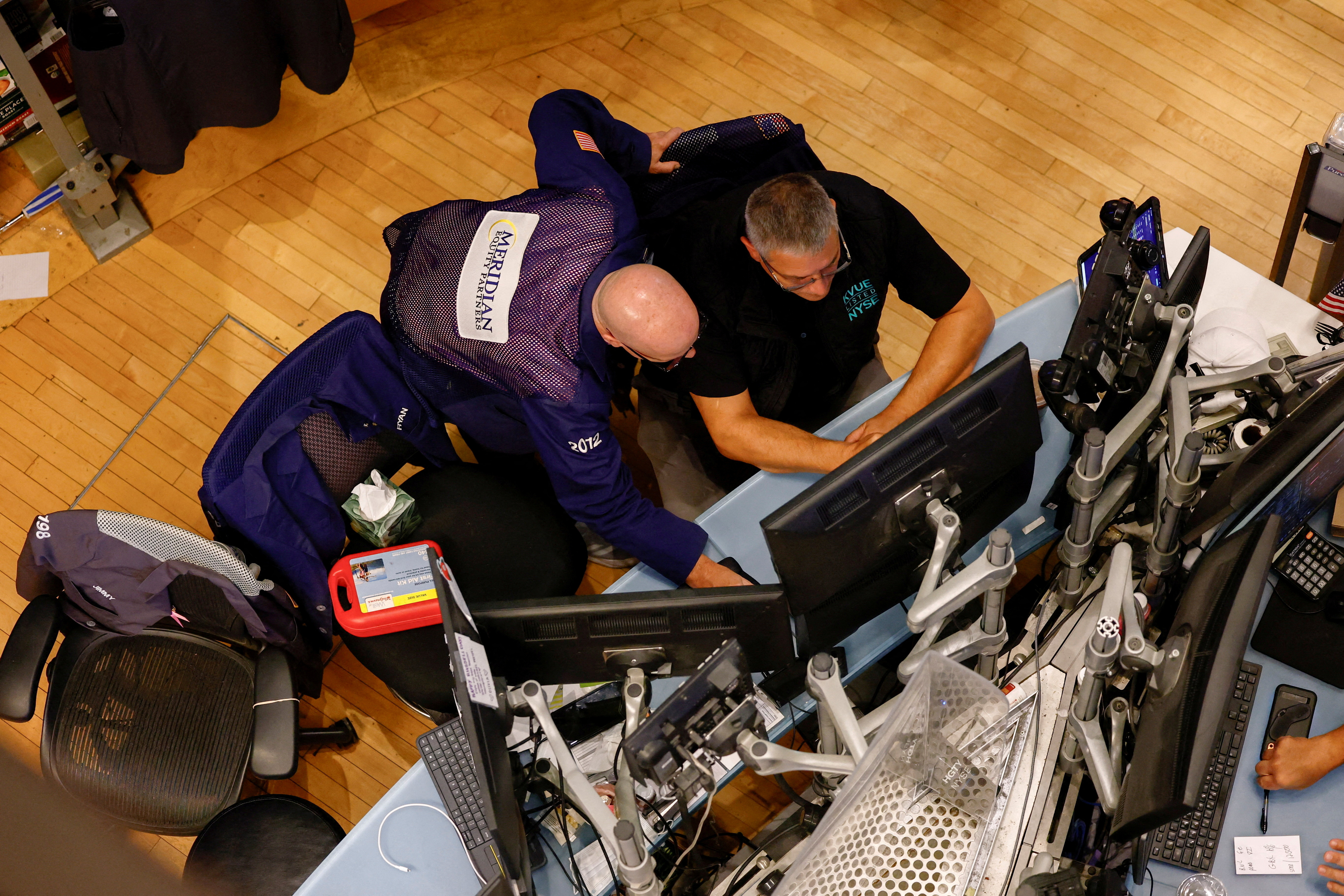
US stocks fell sharply on Friday, led by losses in technology shares.
The Nasdaq dropped 2.15%, the S&P 500 fell 1.10% and the Dow Jones fell 0.36%.
Investors questioned whether debt-heavy AI infrastructure companies can earn enough to repay what they owe, while borrowing costs may rise.
Oil prices also climbed more than 3% on concerns about Middle East supplies, adding to worries about inflation and company costs.
The market’s gains this year have depended heavily on AI-related technology stocks, while the median S&P 500 company has risen much less.
Earnings reports from Tesla, Meta and Procter & Gamble are due next week, as investors look for signs of how companies are performing.
Markets increasingly expect the Federal Reserve to hold interest rates steady this month, though Barclays now forecasts increases in December and January.

US stocks fell sharply on Friday as renewed concerns about AI-related companies’ debt and rising oil prices weighed on markets.
The Nasdaq Composite dropped 2.15%, while the S&P 500 fell 1.10% and the Dow Jones Industrial Average lost 0.36%, according to preliminary figures.
The Philadelphia semiconductor index declined for an eighth consecutive trading day.
Oil prices rose more than 3% amid concerns about supplies from the Middle East.
Investors were concerned that highly indebted AI infrastructure companies might not earn enough to repay their debts on time.
- Who
- US stock market investors and companies, including AI-related firms such as CoreWeave and Broadcom.
- What
- US stocks fell as concerns about AI companies’ debt and rising oil prices weighed on markets.
- When
- Friday, October 16, 2026.
- Where
- Wall Street, in the United States.
- Why
- Investors worried that highly indebted AI infrastructure companies may not generate profits in time to repay debts, while oil prices rose amid Middle East supply concerns.
Market investors concerned about AI debt
Michael Rosen, Angeles CIO
Systemic risk from AI infrastructure debt
Market investors concerned about AI debt
Investors worried that highly indebted AI infrastructure companies may not generate profits in time to repay their debts.
Michael Rosen, Angeles CIO
Rosen said rising debt issuance should be watched, but that the situation was currently far from a concerning level.
Concerns about AI companies’ borrowing and rising financing costs weighed on technology stocks.
CoreWeave bonds sold off sharply, with yields rising above 15%.
Oil prices jumped more than 3% amid concerns about Middle East supplies.
US stocks ended lower, with the Nasdaq down 2.15% and the Philadelphia semiconductor index recording an eighth consecutive daily decline.
- Nasdaq Composite
- Fell 2.15% to 26,137.85 points, according to preliminary figures.
- S&P 500
- Fell 1.10% to 7,658.62 points, according to preliminary figures.
- Dow Jones Industrial Average
- Fell 0.36% to 51,990.05 points, according to preliminary figures.
- Philadelphia semiconductor index
- Declined for an eighth consecutive trading day.
- CoreWeave bonds
- Yields rose above 15% during the week.
- Brent crude
- December delivery rose 3.72% to $109.86 a barrel, according to Hankyung.
8 sources
최악의 일주일 나스닥 2.2%…AI 경고등에 유가 급등까지 [뉴욕증시 브리핑]
AI 경고등에 유가 급등까지…반도체 급락, 나스닥 2.2%↓(종합)
Wall Street fecha em queda pressionada por IA e alta do petróleo
US stocks: US market ends down sharply; worries about AI trade and high oil prices weigh
S&P 500 and Nasdaq close sharply lower as AI selloff drags down stock market
Wall Street tumbles as worries about AI trade and high oil prices weigh
What people are saying
High oil prices, in particular, tend to weigh on the price/earnings multiple of stocks, and so I think you have investors looking to be cautious into the weekend rather than take more risk.
The key is whether this is a systemic risk; increased debt issuance is something to keep watching, and if it reaches excessive levels we should be concerned, but currently it is far from that level.