

Science & Tech · Space · 1 hr ago
Euclid maps more than 900 million galaxies in first major data release
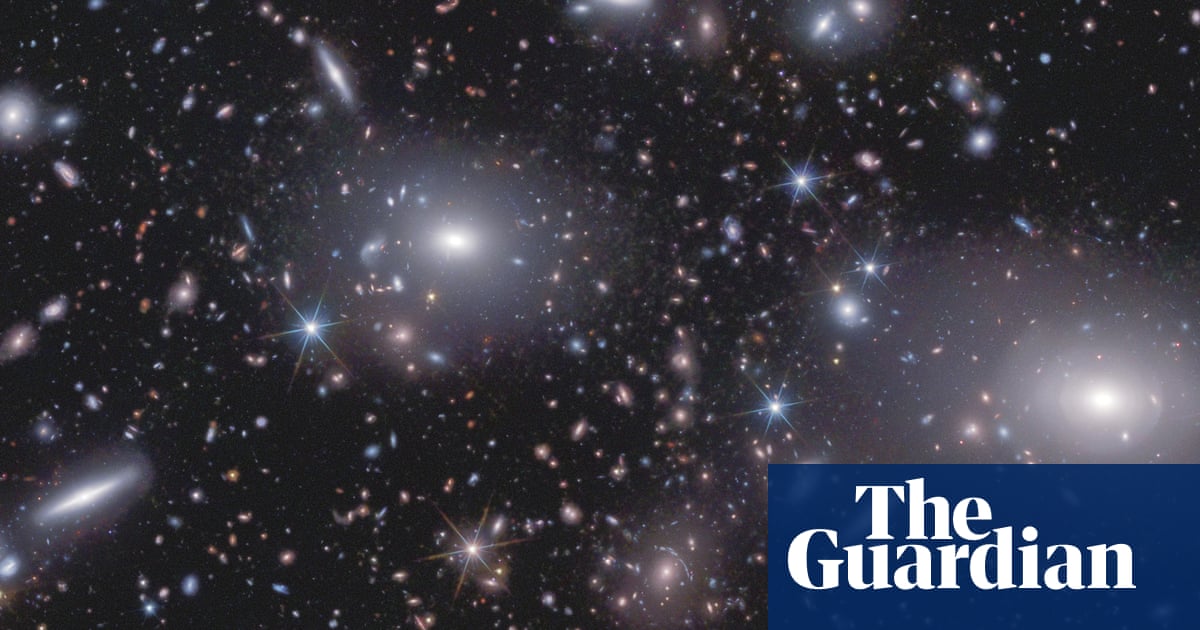
The Euclid space telescope has revealed more than 900 million galaxies in its first major data release.
The European Space Agency launched the mission in July 2023 to build a detailed 3D map of the universe.
The release covers about 14% of the sky Euclid is set to map and also includes more than 60 million possible quasars, bright objects powered by supermassive black holes.
Researchers found about 15,000 likely cases of strong gravitational lensing, in which the gravity of a foreground galaxy bends and magnifies light from a more distant one.
Studying this effect could help scientists understand dark matter, because its distribution affects how the light bends.
A further data release is expected next summer, and the mission is expected to find about 170,000 likely lensing cases by its end.

The European Space Agency’s Euclid mission has released its first major data set, containing more than 900 million galaxies.
The release also includes more than 60 million potential quasars and about 15,000 probable cases of strong gravitational lensing.
Euclid’s data covers about 14% of the sky area the mission plans to map.
Researchers say gravitational lensing could help test theories about dark matter.
The mission aims to create the largest ever 3D map of the universe and investigate dark matter and dark energy.
- Who
- The European Space Agency’s Euclid mission released the data. Researchers studying the data include Prof Andy Taylor and Stephen Serjeant.
- What
- Euclid’s first major data release contains more than 900 million galaxies and about 15,000 probable cases of strong gravitational lensing.
- When
- 12 November 2026.
- Where
- The data covers about 14% of the total area of sky Euclid will map.
- Why
- The mission aims to create the largest ever 3D map of the universe and shed light on dark matter and dark energy.
This story does not have two clearly opposing sides.
The European Space Agency launched the Euclid mission.
Euclid’s first major data release revealed more than 900 million galaxies and about 15,000 probable cases of strong gravitational lensing.
A further data release was expected.
- Galaxies
- More than 900 million
- Potential quasars
- More than 60 million
- Probable strong gravitational lensing cases
- About 15,000
- Sky coverage in first release
- About 14% of the total area Euclid will map
- Expected lensing cases by mission end
- 170,000
3 sources
What people are saying
It’s the biggest high-resolution image of the universe we’ve ever had.
The technological leap that’s Euclid is that we can keep that high resolution, but now we can basically map huge volumes of the sky, huge volumes of the universe.
With strong gravitational lensing, you find out how the dark matter is clumping and that’s very diagnostic of the type of matter that it is, because different types of matter can clump in very different ways.