

Science & Tech · AI · 16 hrs ago
AI tool improves weather forecasts up to six weeks ahead
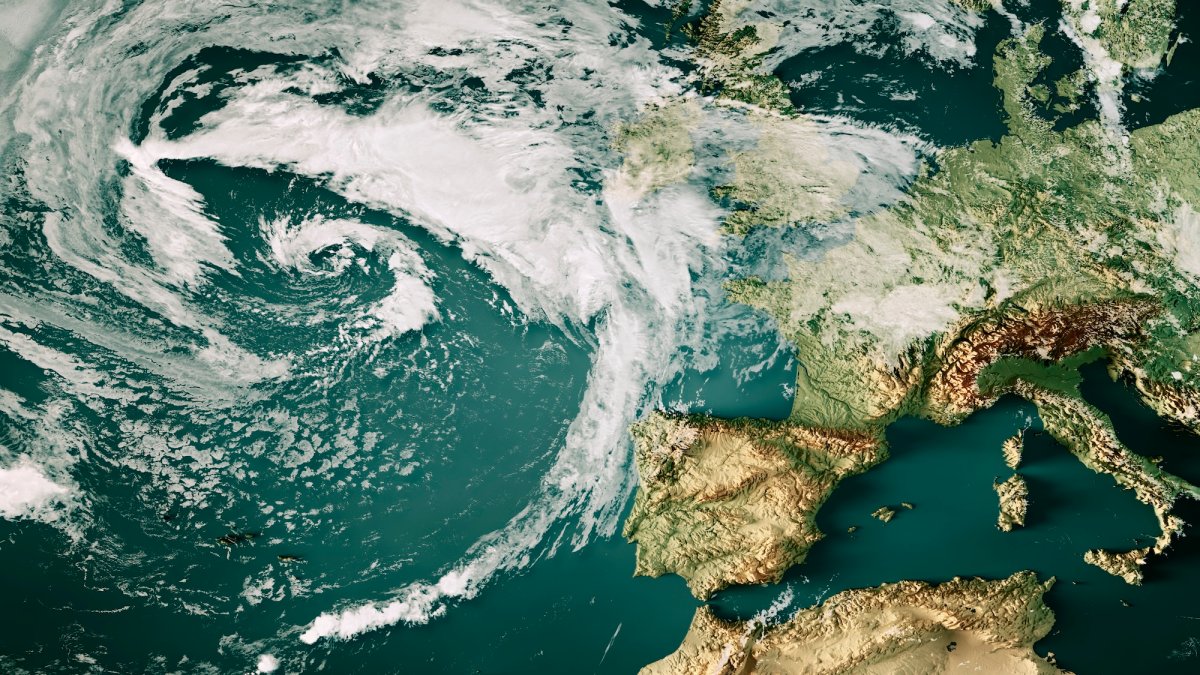
Microsoft researchers developed a tool called Probabilistic Bias Correction to improve weather forecasts two to six weeks ahead.
Forecasts are generally reliable for about 10 days, but become much harder beyond two weeks as errors build up and weather systems interact.
The tool learns from a model’s past mistakes and adjusts its forecasts, and it can be used with both traditional and AI-based models.
In a 2025 forecasting competition, a team using the tool ranked first for every weather variable and forecast period, ahead of six forecasting centers.
Tests also found better predictions of extreme weather, and improved flood-prediction skill in trials using floods from the past decade.
More accurate forecasts could help farmers, emergency responders and resource managers prepare for events such as floods, heat and cold spells.
The tool is also being tested in real-world use, including to improve monsoon forecasts for farmers in Kenya.

Probabilistic Bias Correction, a machine-learning framework developed by Microsoft researchers and collaborators, improves weather forecasts for the difficult two-to-six-week period.
The tool learns systematic errors in existing models and adjusts their forecasts.
In tests, it improved ECMWF model performance across precipitation, temperature and pressure targets, and doubled the accuracy of ECMWF’s AI forecasting system.
A PBC-based entry placed first in every weather variable and forecast period in ECMWF’s 2025 real-time competition, according to Microsoft.
Researchers also reported improved forecasts of extreme weather and floods, which could help decision-makers prepare.
- Who
- Microsoft researchers and collaborators, including Lester Mackey and Judah Cohen, developed the tool.
- What
- Probabilistic Bias Correction uses machine learning to correct systematic errors in weather models and improve forecasts two to six weeks ahead.
- When
- The research was reported in a Nature paper published on October 14, 2026.
- Where
- The tool was tested on ECMWF forecasting systems and in a global forecasting competition. Real-world applications include monsoon forecasts for farmers in Kenya.
- Why
- Forecasts two to six weeks ahead are difficult because errors accumulate and weather systems interact, but better outlooks could support decisions in farming, emergency response and resource management.
This story does not have two clearly opposing sides.
ECMWF launched the AI Weather Quest, a real-time competition focused on improving probabilistic sub-seasonal forecasting.
The PBC-based MicroDuet entry placed first for every weather variable and lead time, according to Microsoft.
Articles reported the findings of a Nature study on Probabilistic Bias Correction.
- Forecast window
- Two to six weeks
- Precipitation targets improved
- 98%
- Temperature targets improved
- 92%
- Pressure targets improved
- 91%
- AI system accuracy
- Doubled for ECMWF’s AI Forecasting System
- Flood prediction skill
- Improved by 76% to 92% in tests of floods from the previous decade
3 sources
What people are saying
Our new pipeline (PBC) takes your favorite model as input and learns in what ways it tends to make errors. It then corrects those errors, yielding a better output forecast for the sub-seasonal range.
It’s model agnostic, and the paper shows that whether it’s a more traditional model or a newer AI model, we can correct these errors that are systemic to the model
Extreme weather has the largest impact on our society and improved forecasts of these events can yield large societal benefits
I never really believed that completely