

Politics · Indonesia · 6 hrs ago
MBG Kitchen Partners Urge Indonesia to Avoid Frequent Funding Changes
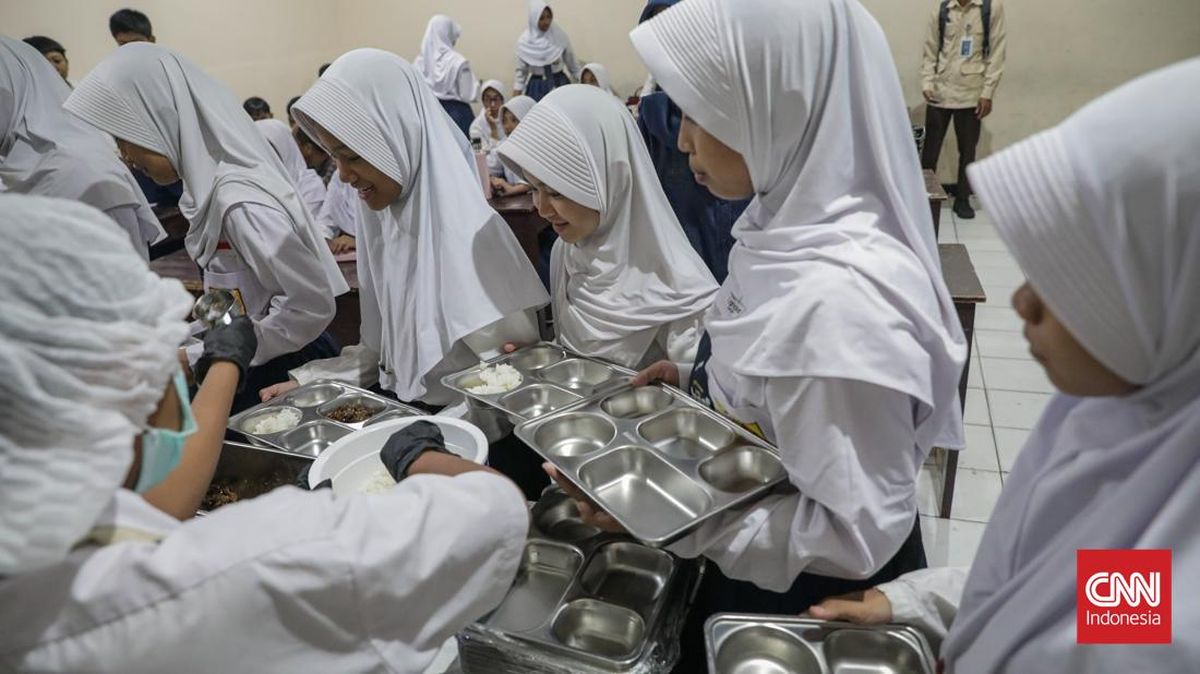
Partners in Indonesia’s free meal program want fewer funding changes from the National Nutrition Agency, known as BGN.
The program provides free nutritious meals, and local partners run the kitchens that prepare and distribute them.
BGN has replaced reimbursement based on actual costs with a cap of 3,000 rupiah per meal recipient for kitchen operating costs.
It has also changed facility incentives from a flat 6 million rupiah per day to 2,000 rupiah per recipient, while meal budgets are set at 13,000 rupiah for small portions and 15,000 rupiah for large ones.
Partners say changing rules can put kitchen operations and investment recovery at risk, since they pay for facilities, equipment, staff, ingredients and distribution.
They say funding should be fair and sustainable while keeping food quality, nutrition and safety standards in place.
They want BGN to assess real costs and consult partners before wider changes, but the agency says the new system is meant to keep spending within the state budget.

Partners in Indonesia’s free nutritious meals program urged the National Nutrition Agency not to change funding policies frequently without adequate evaluation and communication.
They said funding uncertainty could threaten kitchen operations and recovery of investments made by partners.
The partners called for fair, transparent and sustainable funding that reflects the costs and conditions of individual kitchens.
The agency capped kitchen operating costs at Rp3,000 per beneficiary, replacing reimbursement based on actual costs without a ceiling.
It also changed facility incentives from Rp6 million per day to Rp2,000 per beneficiary.
- Who
- Partners in Indonesia’s free nutritious meals program, represented by Gardian Muhammad of APGI3T, urged the National Nutrition Agency to reconsider how it changes funding rules.
- What
- They called for stable, fair and sustainable funding policies. The agency has introduced caps and changed facility incentives.
- When
- Gardian spoke to CNN Indonesia on November 4. The article was published on November 4, 2026.
- Where
- Indonesia. Gardian spoke to CNNIndonesia.com; the article is datelined Jakarta.
- Why
- Partners say frequent policy changes create uncertainty about kitchen operations and recovering their investments.
MBG kitchen partners
National Nutrition Agency
Funding policy
MBG kitchen partners
Partners say changes should follow adequate evaluation and communication and account for kitchens’ real operating costs.
National Nutrition Agency
The agency says the new rules control spending so it does not exceed the state budget allocation.
Operating costs
MBG kitchen partners
Partners say funding should account for expenses such as ingredients, labor, utilities, distribution and maintenance.
National Nutrition Agency
The agency capped operating costs at Rp3,000 per beneficiary, replacing reimbursement based on actual expenses without a ceiling.
Facility investment
MBG kitchen partners
Partners seek clarity on investment recovery and facility incentives.
National Nutrition Agency
The agency changed the facility incentive from Rp6 million per day to Rp2,000 per beneficiary and says it reflects service availability and quality.
The agency reimbursed kitchen operating costs according to actual spending without a ceiling.
The agency set a maximum operating cost of Rp3,000 per beneficiary and changed facility incentives from Rp6 million per day to Rp2,000 per beneficiary.
Gardian Muhammad urged the agency to avoid frequent funding changes without adequate evaluation and communication.
- Operating cost cap
- Rp3,000 per beneficiary
- Facility incentive
- Changed from Rp6 million per day to Rp2,000 per beneficiary
- Meal allocation
- Rp13,000 for a small portion; Rp15,000 for a large portion
- Article publication
- November 4, 2026
- Partner representative
- Gardian Muhammad, APGI3T secretary-general
What people are saying
We are concerned that policy changes that are too frequent could instead create uncertainty for implementers. If this continues without adequate evaluation and communication, there could be a wave of objections from various partner groups, both remote SPPG kitchens and those in agglomeration areas.
Do not let partners be asked to keep meeting facility and service standards while certainty about the sustainability of investment funding becomes increasingly unclear.
We are not asking the government to give partners excessive profits. What we are fighting for is a fair, transparent, measurable and sustainable scheme.