

Health · Public Health & Disease · 2 hrs ago
Measles research raises questions about when babies should get vaccinated
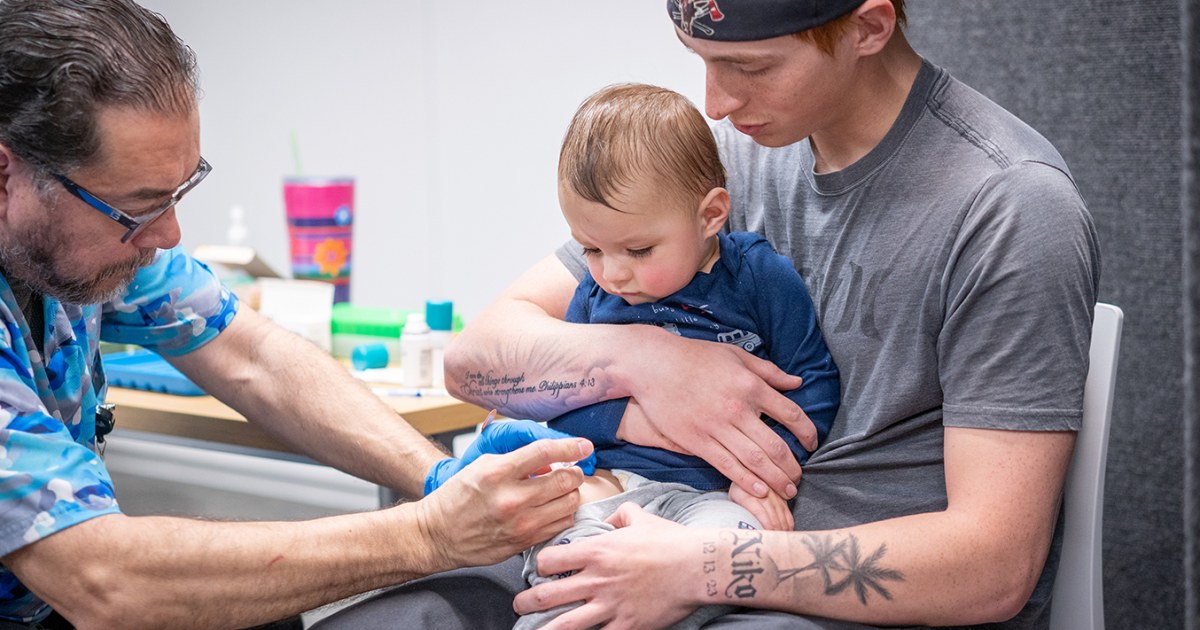
A study found most babies lose protective measles antibodies by 4 to 6 months of age, earlier than many experts had assumed.
Researchers at Vanderbilt University analyzed blood samples from 92 mother-infant pairs, but their findings have not yet been peer-reviewed.
The routine schedule calls for the first measles-mumps-rubella (MMR) shot at 12 to 15 months and a second dose at ages 4 to 6.
Babies from 6 months old can get an early dose in areas with active outbreaks, followed by their two regular doses.
Toddlers who have had their first regular dose can get the second at least 28 days later if they need added protection during an outbreak.
Growing US outbreaks leave babies under 1 at greater risk, as the country has lost its measles elimination status.
Experts are reviewing whether vaccination guidance should change, but no change to the routine schedule is stated.

A new study found that fewer than 20% of 6-month-old babies in its sample still had protective antibodies against measles.
The findings raise questions about whether babies should receive their first measles vaccine earlier than the routine schedule.
The routine schedule calls for the first MMR dose at 12 to 15 months and the second between ages 4 and 6.
In areas with active outbreaks, babies from 6 months old can receive an early dose, and toddlers can get their second dose 28 days after the first.
The study analyzed blood samples from 92 mother-infant pairs and has not been peer-reviewed.
- Who
- Researchers led by Dr. Buddy Creech studied mother-infant pairs; the findings concern babies and their measles vaccination schedule.
- What
- The research found that fewer than 20% of 6-month-old babies in the sample still had protective measles antibodies, prompting questions about when to vaccinate.
- When
- Creech presented the research at an October meeting. The article was published November 24, 2026.
- Where
- The research was presented at a meeting of the Infectious Diseases Society of America. The study location is Not stated.
- Why
- Researchers found that maternal antibodies may wane before babies reach the routine vaccination age, while measles outbreaks are increasing.
This story does not have two clearly opposing sides.
Pennsylvania has given more than 67,000 early MMR shots, according to the state health department.
Creech presented the research at a meeting of the Infectious Diseases Society of America.
NBC News published its report on the research and questions about the timing of measles vaccination.
- Study sample
- Blood samples from 92 mother-infant pairs
- Antibodies at 6 months
- Less than 20% of babies in the study still had protective antibodies
- Routine first dose
- 12 to 15 months old
- Routine second dose
- Between ages 4 and 6
- Early second dose
- Eligible 28 days after the first dose
- Pennsylvania early shots
- More than 67,000 since July
What people are saying
By somewhere between 4 to 6 months of age, the majority of kids have completely lost the level of seroprotection that would be needed to protect against measles
We’re going to have to rethink when we should give the first dose of measles vaccine
We have seen huge uptake in the zero dose as well as in the early second dose
I’ve been trying to figure out what to do to protect my son