

Health · Public Health & Disease · 13 hrs ago
No approved vaccine targets the Bundibugyo Ebola virus
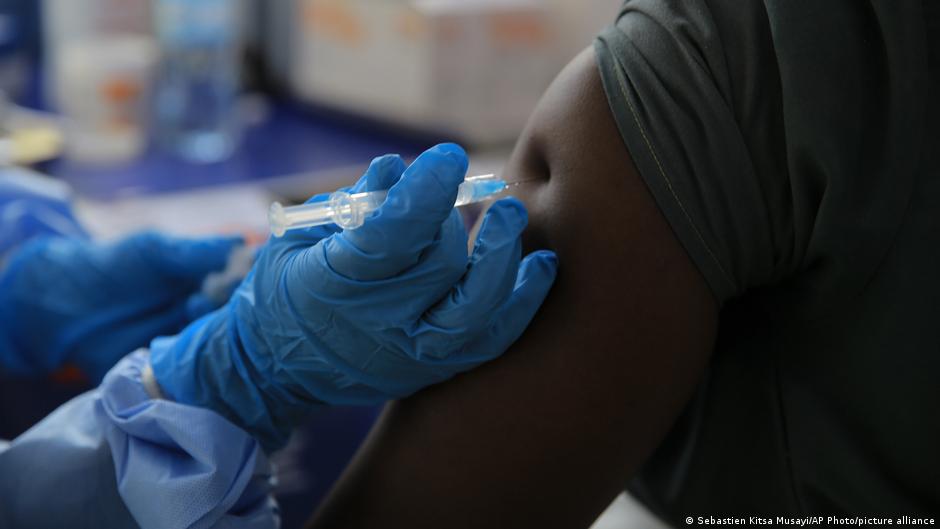
A severe Bundibugyo Ebola outbreak is under way in the Democratic Republic of the Congo.
The virus was identified during an outbreak in Uganda in 2007, and it caused another outbreak in the Congo in 2012.
Despite those earlier outbreaks, there is no approved vaccine or specific treatment for Bundibugyo.
The approved Ebola vaccine Ervebo was developed for a different type, the Zaire variant, so it offers no confirmed protection against Bundibugyo.
A recent study found that immune cells triggered by Ervebo may also recognize Bundibugyo, but the study does not show that the vaccine protects people.
Researchers say vaccine development was held back in part by funding and decisions to prioritize other viruses.
Whether this immune response can prevent illness can only be confirmed during an outbreak.

No approved vaccine specifically targets the Bundibugyo Ebola virus, which is responsible for a current outbreak in the Democratic Republic of the Congo.
The virus was identified in Uganda in 2007, and another outbreak followed in the Congo in 2012.
The approved Ebola vaccine Ervebo was developed for the Zaire variant, not Bundibugyo.
A study found that Ervebo may prompt immune cells to recognize Bundibugyo, but it cannot establish whether that response protects people.
Researchers say vaccine development may have been held back by limited funding and the prioritization of other pathogens.
- Who
- The Bundibugyo virus is causing the outbreak. Researchers including Leonie Mayer of the German Center for Infection Research studied immune responses to it.
- What
- A current Ebola outbreak is caused by Bundibugyo, for which no vaccine is approved.
- When
- The virus was identified in 2007; the current outbreak is described in an article published on November 2, 2026.
- Where
- The current outbreak is in the Democratic Republic of the Congo. The virus was first identified during an outbreak in Uganda.
- Why
- The article says limited funding and prioritization of other pathogens may have delayed vaccine development.
This story does not have two clearly opposing sides.
The first scientifically documented Ebola epidemic occurred near the Ebola River in what was then Zaire, now the Democratic Republic of the Congo.
The Bundibugyo virus was identified during an outbreak in Uganda.
Another Bundibugyo outbreak occurred in the Congo.
A current outbreak in the Democratic Republic of the Congo is attributed to the Bundibugyo virus.
- First identified
- Uganda, 2007
- Second reported outbreak
- Congo, 2012
- Current outbreak location
- Democratic Republic of the Congo
- Approved vaccine mentioned
- Ervebo, developed for the Zaire variant
- Study finding
- Immune cells showed cross-reactivity to Bundibugyo and partly to Sudan virus
What people are saying
We knew the Bundibugyo virus from two previous outbreaks, in 2007 in Uganda and 2012 in the Congo. We therefore had enough time to develop vaccines and treatment options, but we did not take this opportunity and have consequently lost important time in the current outbreak.
One could of course have developed a vaccine and conducted preclinical studies.
This is perhaps also a bit of luck in misfortune in this situation, that vaccines against Ebola can be developed relatively well.
We now know that the immune cells can very likely also recognize the Bundibugyo virus.