

Science & Tech · Science & Environment · 2 hrs ago
Study Finds Honey Bee Hives Use Layered Defenses Against Disease
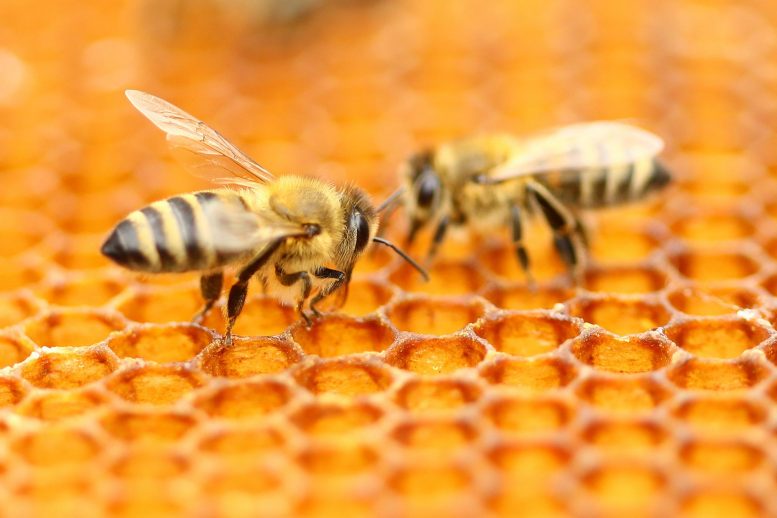
Researchers found that honey bee hives help protect colonies from disease by using materials arranged in layers.
The study examined 24 colonies at five apiaries at Tocal College in New South Wales, Australia.
Honey and propolis provided strong antimicrobial protection near the hive’s outer areas, while wax comb, pollen and substances made by bees helped protect eggs and larvae deeper inside.
These defenses were generally more effective against bacteria than fungi, and the researchers said bacterial diseases such as American foulbrood can threaten larvae and entire colonies.
Nearby plants influenced the chemicals in hive materials, with differences between colonies near native bushland and those near farmland.
The findings link healthy bee defenses to diverse flowering habitats, and the researchers warned that land clearing and intensive farming could weaken them.

Honey bee hives use layers of antimicrobial defenses to protect developing bees and stored food, a study found.
The defenses include honey and propolis near the hive’s outer areas, and beeswax combs, stored pollen and bee-produced substances deeper inside.
Researchers found that hive materials closer to eggs and larvae help suppress harmful microbes while supporting beneficial ones.
Colonies near native bushland showed different chemical defenses from those near agricultural land.
The findings suggest that the plants available to bees can influence hive defenses.
- Who
- Researchers studying honey bee colonies, including lead researcher Dr. Kenya Fernandes.
- What
- The study found that hives use layered antimicrobial defenses and that surrounding vegetation is linked to differences in those defenses.
- When
- The article was published on 2026-11-05.
- Where
- Five apiaries at Tocal College in New South Wales, Australia.
- Why
- The researchers investigated how hive materials and microbes protect colonies against disease.
This story does not have two clearly opposing sides.
Researchers examined 24 honey bee colonies across five apiaries at Tocal College in New South Wales, Australia.
SciTechDaily published an article reporting the study’s findings.
- Colonies studied
- 24
- Study sites
- Five apiaries at Tocal College
- Study location
- New South Wales, Australia
- Journal
- ISME Communications
- Outer hive defenses
- Honey and propolis
- Inner hive defenses
- Beeswax combs, stored pollen and substances produced by bees
What people are saying
Hives are not only homes for bees, but also act as their workplaces, restaurants, and hospitals, and now we can add immune systems to the list
This shows healthy hives depend on and are influenced by healthy ecosystems.