

World · Europe · 3 hrs ago
Pompeii cupboard reveals personal belongings left before Vesuvius eruption
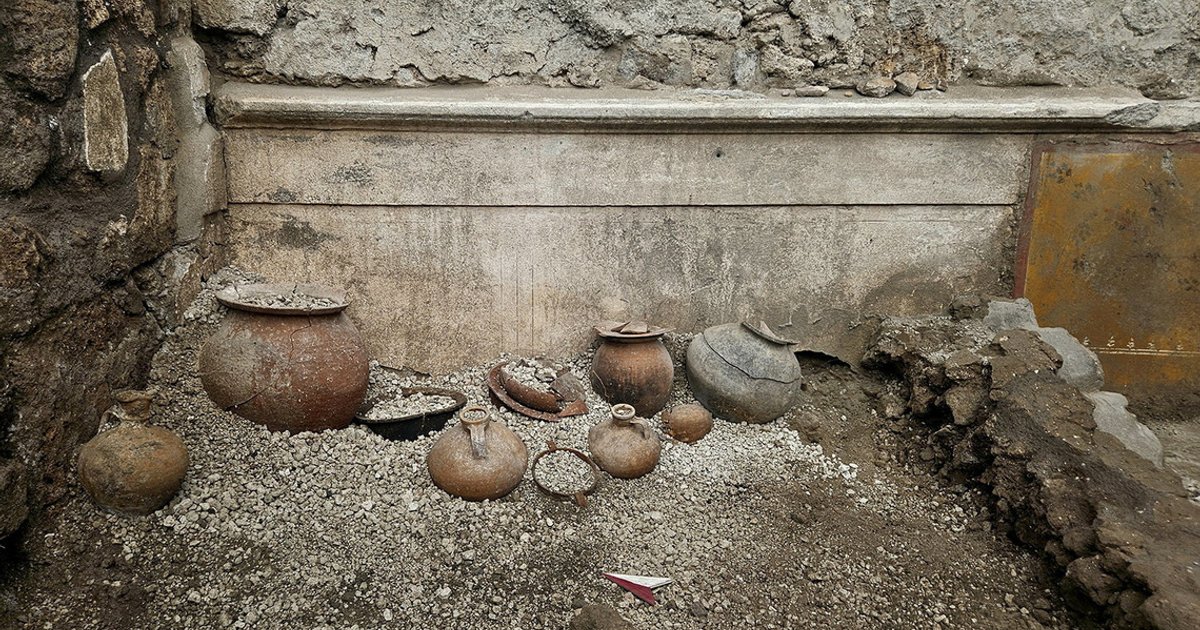
Archaeologists uncovered a cupboard of personal belongings in a house on Via dell’Abbondanza in Pompeii, near Naples.
The objects had been left behind when Mount Vesuvius buried the city in AD 79, preserving them under ash.
They include make-up tools, a perfume bottle, cooking pots and a small container with 38 bronze coins.
A necklace of at least 24 miniature objects may have been kept from childhood as protective amulets and treasured keepsakes.
Lead weights suggest someone in the household may have worked in trade, but the residents’ identities and fate remain unknown.
The discovery gives researchers a rare view of daily habits, work and personal memories in ancient Pompeii.
Archaeologists found the cupboard’s remains during a wider restoration project, and further investigation of the house has only recently begun.

Archaeologists in Pompeii uncovered a cupboard sealed since the AD 79 eruption of Mount Vesuvius, preserving belongings linked to a resident’s daily life.
The finds include personal-care items, cooking vessels, lead weights, 38 bronze coins and a necklace of childhood amulets.
The cupboard was found in a house on Via dell’Abbondanza, a busy street in ancient Pompeii.
The identity and fate of the cupboard’s owners remain unknown.
The objects offer evidence of personal habits, work and memories in the city before the eruption.
- Who
- Archaeologists working in Pompeii uncovered the cupboard and its contents. The identity of the people who owned them is unknown.
- What
- A cupboard sealed by the eruption contained personal belongings, household objects, coins and a necklace of amulets.
- When
- The eruption buried Pompeii in AD 79. The cupboard was uncovered during recent archaeological work reported on October 29, 2026.
- Where
- In a house on Via dell’Abbondanza in Pompeii, near Naples, Italy.
- Why
- The eruption buried the city and preserved the cupboard and its contents. The owners’ reason for leaving the belongings behind is not known.
This story does not have two clearly opposing sides.
Mount Vesuvius erupted and buried Pompeii, preserving buildings and objects under ash.
The facade of the house where the cupboard was found was first excavated.
Archaeologists investigated rooms behind the facade as part of a wider restoration project and uncovered fragments of the cupboard and its contents.
Reports described the discovery and the objects found inside the cupboard.
- Location
- House on Via dell’Abbondanza, Pompeii
- Eruption
- Mount Vesuvius buried Pompeii in AD 79
- Coins
- 38 bronze coins in a small woven container
- Necklace
- At least 24 miniature objects, including images of Bes and Mercury
- Possible trade
- Lead weights were found in a wooden box
- House association
- Tentatively associated with Cornelius Maximus because of inscriptions found there
3 sources
What people are saying
We cannot reconstruct with certainty the identity of whoever lived in the house, but these fragments bring us closer to their daily life.
Pompeii is not just a place of great works of art. It is also a place where the most ordinary objects restore the human dimension of the past.
The value of this discovery lies in the possibility of reading together the different traces of a life: personal habits, work and memories.