

Business · Trade · 3 hrs ago
Trade routes shift as Türkiye seeks to remain a key energy hub
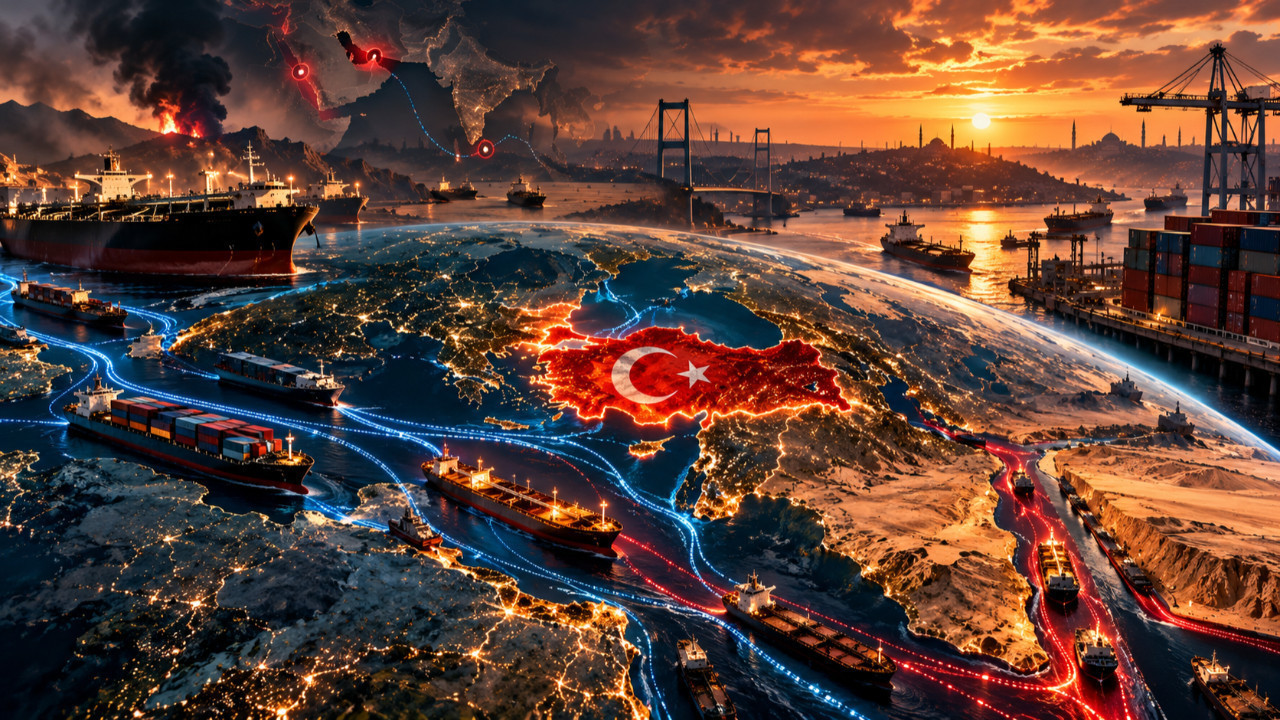
Disruption at key shipping routes is reshaping energy trade, as ships and oil supplies shift to alternative paths.
The story involves Türkiye, whose straits and pipelines connect energy producers with markets in Europe and beyond.
Oil moving through the Strait of Hormuz fell from 21.6 million barrels a day in late 2025 to 4.9 million in the second quarter of 2026, while attacks in the Red Sea have led more ships to go around Africa.
Longer and riskier routes can raise shipping, insurance and energy costs for countries and consumers.
Türkiye’s oil flows through its straits rose to 4.1 million barrels a day in the second quarter of 2026, and the country also has major pipeline links.
But planned capacity does not guarantee actual trade: a new arrangement with Iraq covers 750,000 barrels a day, while flows to Ceyhan were about 200,000 barrels a day in September.
Türkiye could benefit from shifting trade routes, but security, financing, infrastructure and reliable policies will shape whether it becomes a lasting hub.

Disruptions at key maritime chokepoints are making global energy and trade routes longer, costlier and riskier.
Oil flows through the Strait of Hormuz fell from 21.6 million barrels a day in late 2025 to 4.9 million in the second quarter of 2026.
Türkiye’s oil transit through the Turkish Straits rose to 4.1 million barrels a day in the second quarter of 2026.
Pipelines, ports and planned corridors give Türkiye the potential to serve as an energy and trade hub, but capacity does not guarantee actual flows.
The article says Türkiye’s prospects depend on reliable infrastructure, security, predictable policies and cooperation with neighbouring countries.
- Who
- Türkiye, energy-trading countries and global shippers are affected.
- What
- Trade routes are shifting amid disruptions at major maritime chokepoints, while Türkiye seeks to maintain its role as an energy and trade hub.
- When
- The article was published on October 17, 2026, and cites developments in 2025 and 2026.
- Where
- The Strait of Hormuz, the Turkish Straits, the Red Sea, the Suez Canal and other global trade routes.
- Why
- Conflict and attacks are disrupting routes and raising shipping, insurance and energy costs, prompting countries and companies to seek alternatives.
This story does not have two clearly opposing sides.
UNCTAD said ship tonnage passing through the Suez Canal was about 70% below its 2023 average.
Oil and petroleum-product flows through the Strait of Hormuz were 21.6 million barrels a day.
Hormuz flows had fallen to 4.9 million barrels a day, while flows through the Turkish Straits reached 4.1 million.
Türkiye and Iraq reached a new oil-pipeline arrangement covering capacity of 750,000 barrels a day.
Actual oil flow to Ceyhan was about 200,000 barrels a day, and Brent crude averaged $114 a barrel.
- Hormuz oil flows
- 4.9 million barrels a day in the second quarter of 2026
- Turkish Straits oil flows
- 4.1 million barrels a day in the second quarter of 2026
- Iraq-Türkiye pipeline arrangement
- 750,000 barrels a day of capacity
- Ceyhan actual flow
- About 200,000 barrels a day in September 2026
- Development Road
- About $17 billion in planned investment
What people are saying
Producing oil and natural gas is one thing; delivering them safely to world markets is quite another.