

Science & Tech · Space · 2 hrs ago
Hidden companion found around a star used to calibrate JWST
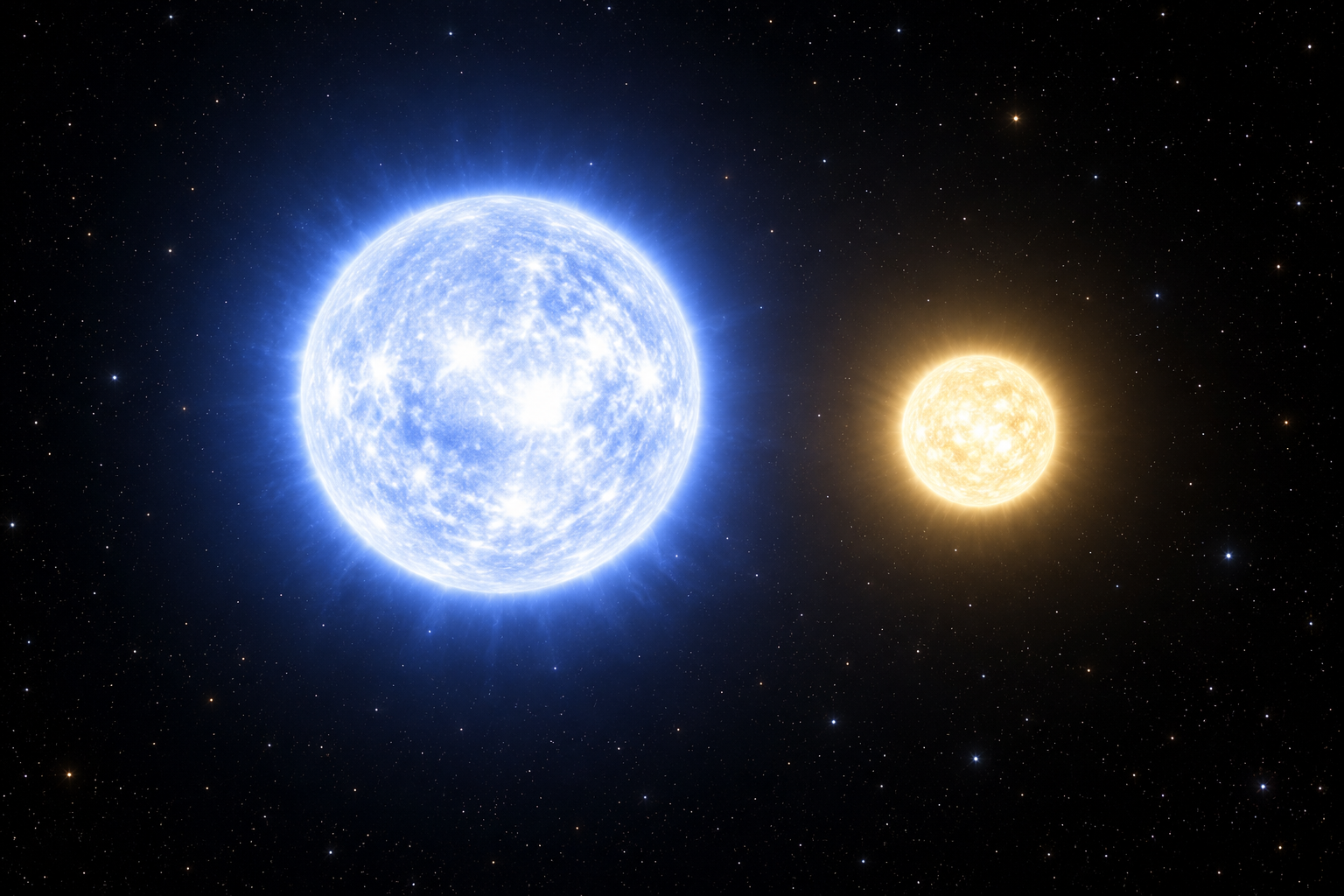
Astronomers found a hidden companion to HD 158485, a star used to calibrate the James Webb Space Telescope.
Calibration stars help telescopes measure the brightness of other objects, so their light needs to be well understood.
A team at the Xinjiang Astronomical Observatory in China found the companion while studying data from NASA’s TESS satellite.
The two stars orbit each other every 382.8 days, and the companion is about 80% as massive as the main star.
The team estimates that treating the pair as one star would change predicted flux by about 1.6% at wavelengths from one to five micrometers and 2.5% from five to 28 micrometers.
These are possible shifts, not measured calibration errors, but they show why hidden companions matter when choosing calibration stars.
The finding also shows that regular changes in a star’s brightness can reveal unseen companions.

Astronomers identified a previously undetected companion to HD 158485, a star used to calibrate the James Webb Space Telescope.
The discovery came from a team at the Xinjiang Astronomical Observatory of the Chinese Academy of Sciences reviewing observations from NASA’s TESS mission.
The stars orbit each other every 382.8 days, and the companion is about 80% as massive as the primary.
A two-star model predicts flux differences of about 1.6% at wavelengths of one to five micrometers and 2.5% at five to 28 micrometers compared with a single-star model.
The researchers said these differences are not a measured calibration error, but show that an unseen companion can affect predicted stellar fluxes.
- Who
- A team from the Xinjiang Astronomical Observatory of the Chinese Academy of Sciences identified the companion.
- What
- The team found that HD 158485, a star used to calibrate JWST, is a binary system.
- When
- The discovery was reported on November 26, 2026. The stars orbit each other every 382.8 days.
- Where
- The system is HD 158485; the sources do not state its location.
- Why
- The team was reviewing long-term TESS observations and found opposing light-travel-time variations in the star’s pulsations, indicating a companion.
This story does not have two clearly opposing sides.
The team reviewed observations of HD 158485 and identified six distinct pulsation rhythms grouped into two signals with opposing light-travel-time variations.
The researchers determined that the two stars orbit each other every 382.8 days.
Universe Today reported the discovery and its potential implications for JWST calibration.
- Star
- HD 158485
- Telescope used to find the companion
- NASA’s Transiting Exoplanet Survey Satellite (TESS)
- Orbital period
- 382.8 days
- Companion mass
- About 80% of the primary star’s mass
- Predicted flux difference
- About 1.6% at 1–5 micrometers and 2.5% at 5–28 micrometers