

Politics · Australia · 9 hrs ago
Column argues the internet needs stronger safeguards than it has
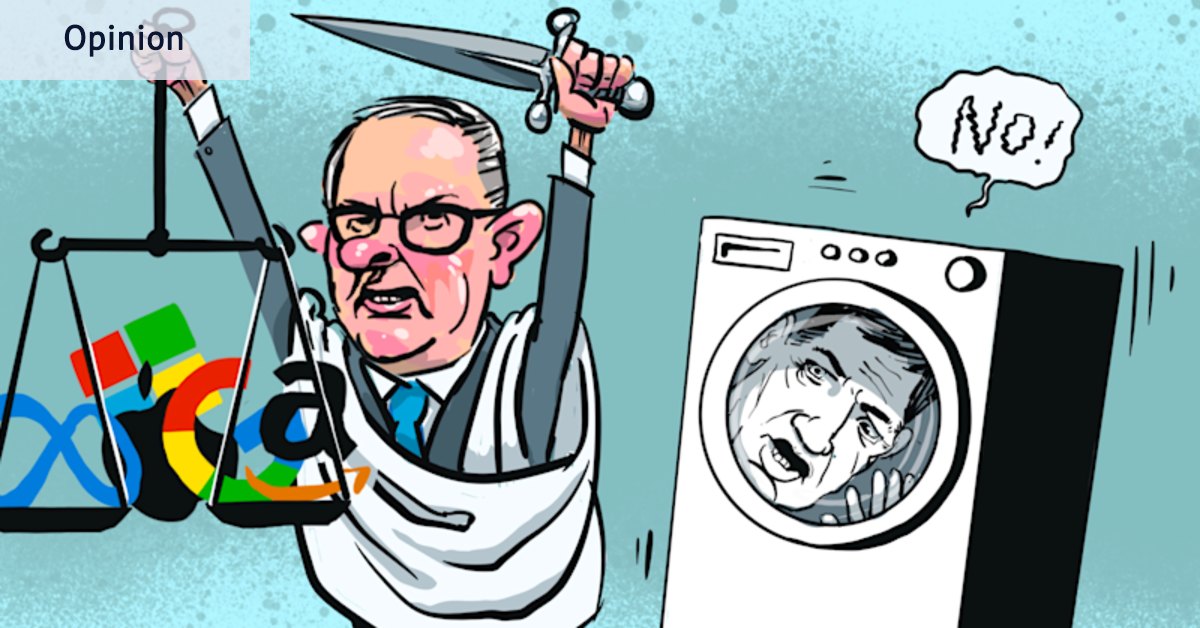
A column argues that online platforms have too few safety obligations compared with ordinary products such as washing machines.
It traces this gap to a 1996 US law, Section 230, which gave technology companies legal protections for content posted on their platforms.
A survey of about 3,500 Australians found many had been shown self-harm or suicide-related content online, including people who had not searched for it.
Children were four times more likely than adults to see that content, while a cited study found self-harm hospitalisations among young women aged 15 to 19 rose 70 per cent from 2008 to 2021.
The column also cites Anthropic’s warning that AI programs could soon spread between insecure, internet-connected devices without human control.
It says Australian governments have taken early steps to address online harms, including establishing the eSafety Commissioner, whose current leader’s term ends in January.

This opinion column argues that internet services need stronger safeguards and government oversight.
It says Section 230 of the US Communications Decency Act, passed in 1996, exempted technology companies from responsibility for content on their platforms.
The column cites an Orygen survey of about 3,500 Australians, saying most had been shown self-harm or suicide-related content despite fewer than one in five searching for it.
It says children were four times more likely than adults to be shown such content.
The article also warns that AI worms could spread across insecure connected devices.
- Who
- The column’s author, whose name is not stated in the supplied text, argues for stronger safeguards.
- What
- The column argues that online services need stronger safeguards and governments should address the power imbalance.
- When
- The article is dated October 17, 2026, and refers to events from “this week.
- Where
- The column focuses on Australia and the internet, and discusses a US law.
- Why
- The author argues that online services can expose people to harmful content, abuse, scams and privacy risks.
This story does not have two clearly opposing sides.
The US Congress passed Section 230 of the Communications Decency Act.
Hospitalisation for intentional self-harm among young women aged 15 to 19 rose by 70 per cent, according to the Australian Psychological Society.
Scott Morrison legislated a ban on anonymous trolling, according to the column.
Anthropic warned that AI worms could soon hijack web-connected devices.
- Section 230
- Passed in 1996 as part of the US Communications Decency Act
- Orygen survey
- About 3,500 Australians
- Online exposure
- Fewer than 1 in 5 surveyed had searched for self-harm or suicide-related content
- Age difference
- Children were four times more likely than adults to be shown such content
- Self-harm hospitalisations
- Rose 70 per cent among young women aged 15 to 19 from 2008 to 2021
- Anonymous trolling
- Ban legislated in 2021 by Scott Morrison, according to the column
What people are saying
digital slime mould