

Science & Tech · Gadgets & EVs · 13 hrs ago
Electric rickshaws take a growing share of India’s three-wheeler market
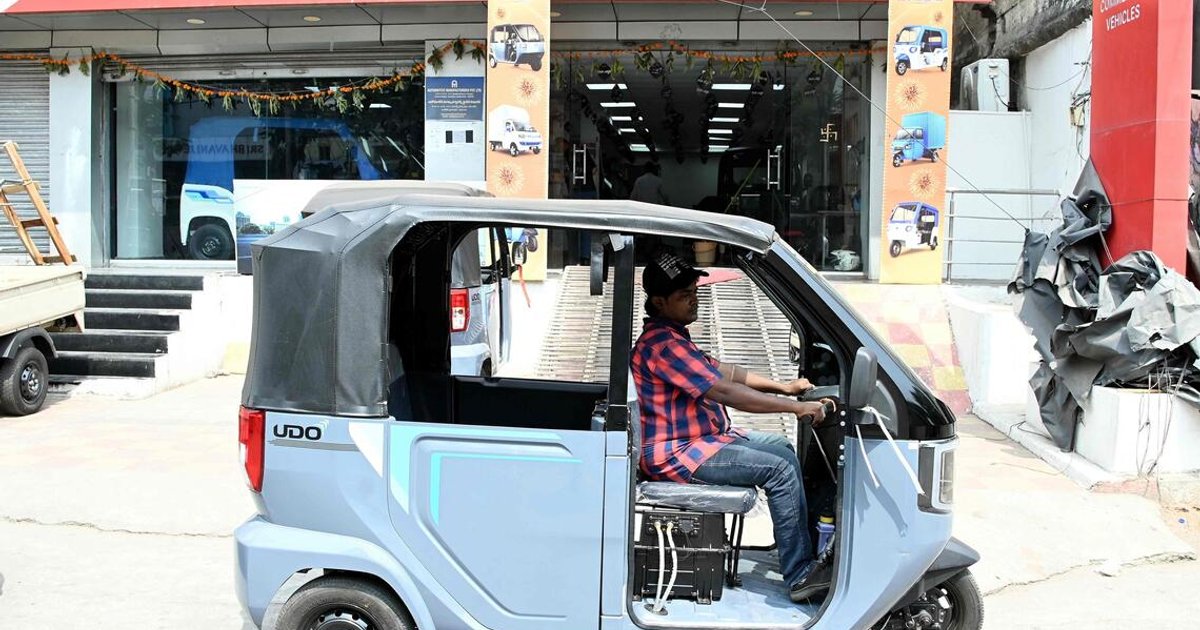
Electric rickshaws are reshaping India’s three-wheeler market, with more than half of new three-wheelers sold in September powered by batteries.
The shift is visible in cities such as Hyderabad and Lucknow, where electric vehicles are replacing some traditional fuel-powered tuk-tuks.
Government subsidies, better vehicles and lower running costs have helped speed up adoption over the past two years.
Drivers can save on fuel, and analysts say those savings build quickly because rickshaws run for much of the day.
India is the world’s largest market for electric three-wheelers, while electric models made up a much smaller share of car and two-wheeler sales.
The change could also help reduce oil use in a country that imports most of its oil and natural gas.
Charging gaps and supply-chain disruptions remain obstacles: limited parking and charging make adoption harder in Mumbai, while China’s 2025 export restrictions on rare-earth magnets forced some Indian automakers to reduce or pause production.
The shift is uneven across India, and the sources give no specific next policy step.

More than half of new three-wheelers sold in India in September were electric, making the country the world’s largest market for electric three-wheelers.
The shift has been driven mainly by lower operating costs, alongside government subsidies and improving vehicle quality.
Electric rickshaws are replacing some fossil-fuel three-wheelers and are increasingly seen around railway stations and markets in northern India.
Adoption remains uneven, with limited parking and charging infrastructure presenting challenges in cities such as Mumbai.
Supply-chain problems, including China’s 2025 export restrictions on rare-earth magnets, have also affected Indian manufacturers.
- Who
- Indian electric three-wheeler makers, including Mahindra Last Mile Mobility, and drivers are part of the market shift.
- What
- Electric rickshaws are taking a growing share of India’s three-wheeler market. More than half of new three-wheelers sold in September were electric.
- When
- The article was published on Nov 8, 2026. It says electric rickshaws first appeared in New Delhi more than a decade ago.
- Where
- India, with examples from Hyderabad, northern India and Mumbai.
- Why
- Lower operating costs, government subsidies and improving vehicle quality have made electric models more attractive.
This story does not have two clearly opposing sides.
Electric rickshaws first appeared on New Delhi’s streets, often assembled in roadside workshops.
China restricted exports of rare-earth magnets, leading several Indian automakers to cut or suspend production.
India’s think-tank CEEW estimated that petrol three-wheelers cost more than twice as much per kilometre to operate over their lifetime as electric vehicles.
Hyderabad driver Afroz Alam switched from a gas-powered model to an electric vehicle.
More than one in two new three-wheelers sold in India was electric.
- September sales
- More than half of new three-wheelers sold in India were electric
- Car comparison
- About 8.5% of cars sold were electric
- Two-wheeler comparison
- 11.6% of two-wheelers sold were electric
- Production pace
- One electric three-wheeler rolls off a factory production line every 90 seconds
- Mahindra workforce
- Mahindra Last Mile Mobility is one of 15 finalists shortlisted for the Earthshot Prize
- Cost estimate
- CEEW said petrol three-wheelers cost more than twice as much per kilometre to operate over their lifetime as EVs
What people are saying
Our company has grown six times in its EV penetration in the last five years
Money is coming straight into my pocket
Rickshaws, which operate continuously throughout the day, accumulate fuel savings rapidly