

Science & Tech · Science & Environment · 3 hrs ago
El Niño Has Raised Eastern Pacific Sea Levels by Up to 40 Centimeters
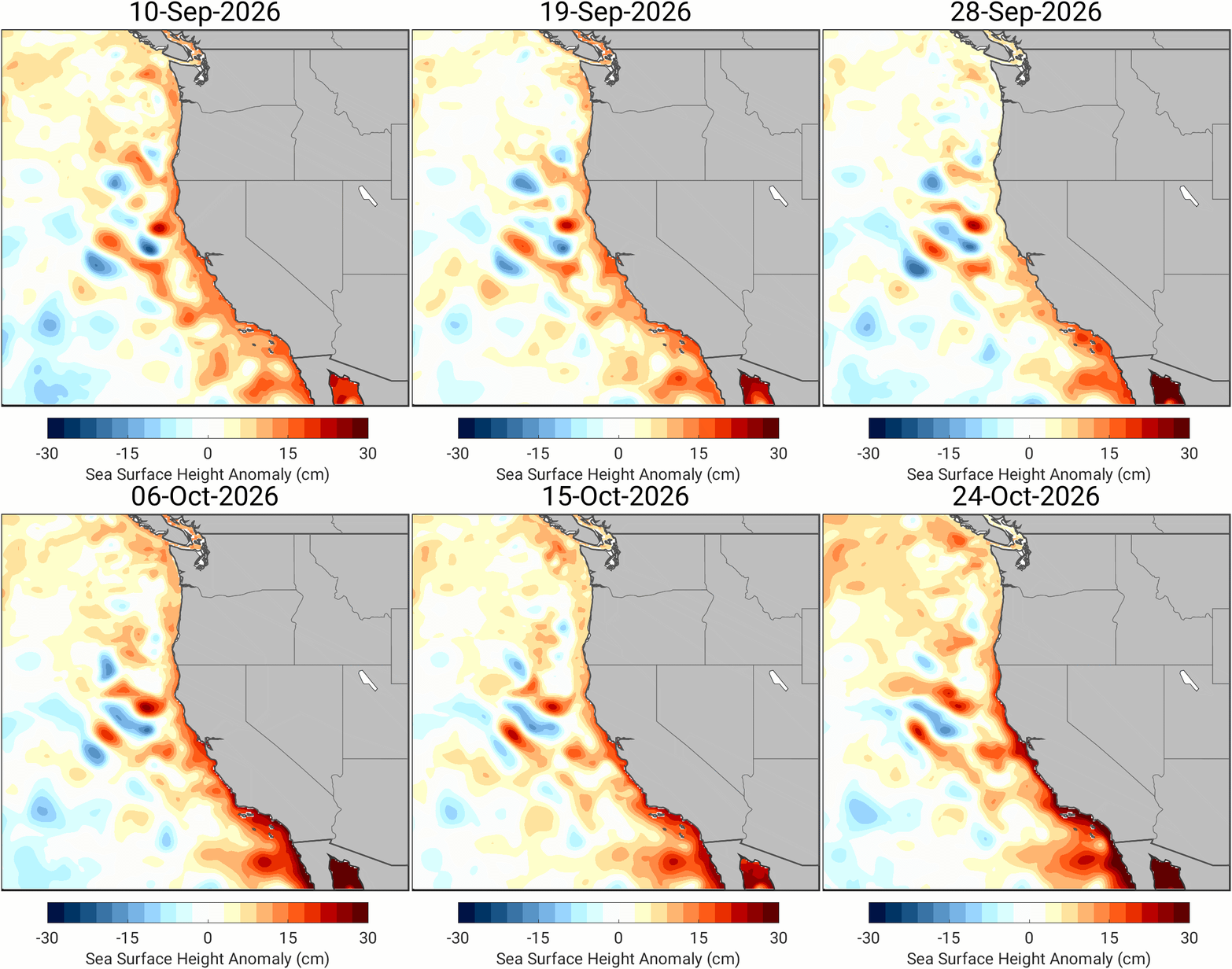
El Niño has raised sea levels in parts of the eastern Pacific by up to 40 centimeters as unusually warm water expands and moves east.
The rise involves Pacific coastlines from South America toward North America, including California.
Long ocean swells called Kelvin waves carry warm water eastward, then travel along the coast and keep sea levels higher for months.
The waves are not tsunamis, but they make flooding more likely when storms or high tides arrive.
A study by researchers at Oxford, Woods Hole and the University of Central Florida estimates that extreme sea-level risk could rise tenfold along Pacific coastlines from Alaska to Chile during the 2026–27 El Niño.
The highest tides are expected around Thanksgiving and Christmas, when more people may be near the coast, according to one study coauthor.
Researchers have also made an interactive map to show projected local conditions, but it is not an official warning.

El Niño-driven Kelvin waves have raised sea levels in parts of the eastern Pacific, with measurements and estimates reaching about 40 centimetres above normal.
The waves carry warm water eastward and then along the coasts of the Americas, raising sea levels for months.
Scientists warn that higher sea levels could increase coastal flooding and erosion, especially when combined with storms and high tides.
Tropical Storm Rachel’s remnants caused flooding in Southern California in October, and scientists said elevated sea levels may have worsened its effects.
Further Kelvin waves and unusually high tides are expected in the coming months.
- Who
- Coastal communities along the eastern Pacific, including the US West Coast, are at risk.
- What
- El Niño-driven Kelvin waves are raising sea levels and increasing the risk of coastal flooding and erosion.
- When
- The effects are happening now and are expected to continue in the coming months.
- Where
- Along the eastern Pacific coast, from Alaska to Chile, including California.
- Why
- El Niño helps drive warm water eastward in Kelvin waves, raising sea levels; storms and high tides can amplify the effects.
This story does not have two clearly opposing sides.
A Kelvin wave raised sea levels along the West Coast before Tropical Storm Rachel affected Southern California.
Remnants of Tropical Storm Rachel flooded streets and homes in parts of Southern California.
Oceanographer Dillon Amaya expected another Kelvin wave to reach San Diego.
The highest sea surface temperatures were projected, according to Thomas Monahan.
- Eastern Pacific sea levels
- Up to 40 centimetres above normal
- Galapagos Islands
- Estimated rise of 24 to 40 centimetres
- Peru and Ecuador
- Estimated rise of 19 to 33 centimetres
- California
- Estimated rise of 9 to 13 centimetres
- Global mean sea level
- About 20 centimetres higher than in 1900
- Tropical Storm Rachel
- Remnants flooded parts of Southern California on October 10–11, 2026
4 sources
El Niño Has Already Risen Some Pacific Region Sea Levels by Over 1 Foot
Giant Pacific 'wave' heads for US coast as scientists warn of 'quintuple whammy' flooding threat
El Niño is dramatically increasing sea levels – how bad could it get?
A Kelvin wave raised sea levels on the West Coast. More are coming
What people are saying
Presently, the east Pacific is an astounding 40 centimetres above normal, and a strong westerly wind event will drive those sea levels even higher over the next few weeks.
Frequent coastal inundation will likely develop in many areas and may become severe or record breaking, causing significant disruption and possibly also some significant damage.
It's not a wall of water, it's not a tsunami, it's not a wave you can surf.
A Kelvin wave is more similar to raising the water level in a bathtub.