

Science & Tech · Science & Environment · 2 hrs ago
Microplastics may be changing the color of the Pacific Ocean
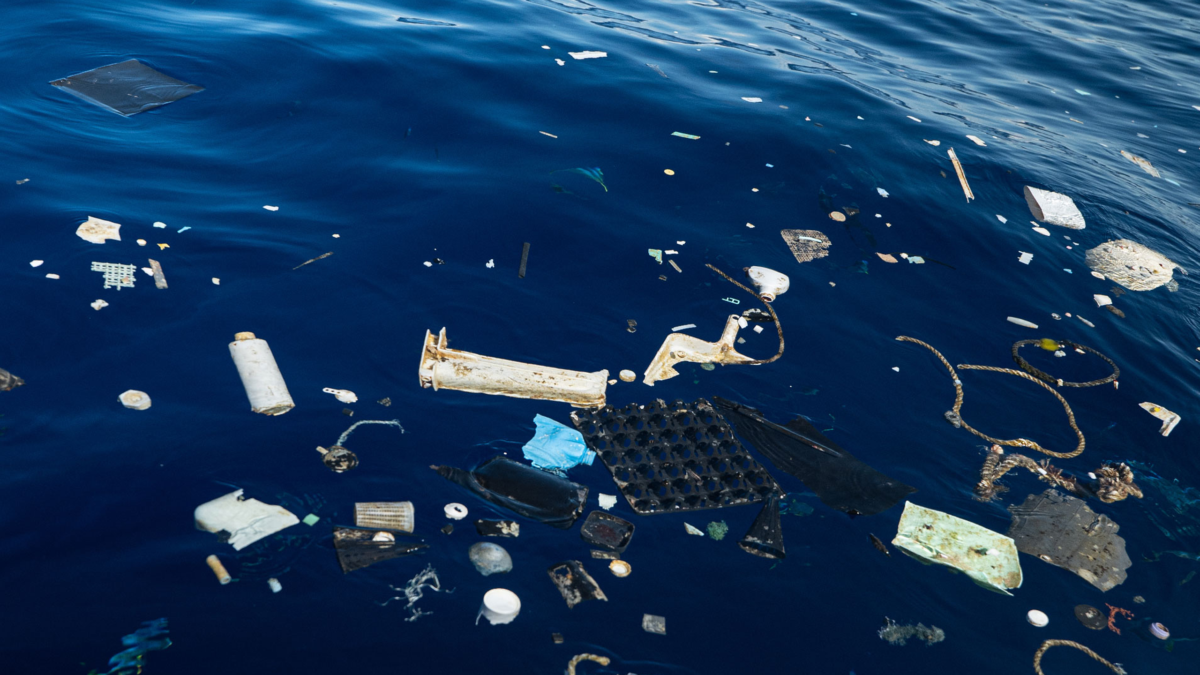
Waters near the Great Pacific Garbage Patch grew brighter in blue and green light between 2002 and 2022, satellite data show.
The patch lies in the Pacific between Hawaii and California, where ocean currents gather plastic debris.
Much of the debris is tiny microplastic fragments, which can scatter light differently from natural material in seawater.
Researchers at the University of Bergen say the observed color shift is consistent with microplastics, but the satellite data do not prove plastics caused it.
Microplastics can harm ocean microbes, affect fish behavior and accumulate in seafood people eat.
The team’s next step is to take direct measurements in the patch, and, if the findings are confirmed, use the method to look for other areas where microplastics have accumulated.

Satellite data show a gradual brightening in blue and green wavelengths near the Great Pacific Garbage Patch from 2002 to 2022.
Researchers say rising microplastic concentrations may be changing the ocean’s color to cyan.
The study, by scientists at the University of Bergen in Norway, was published in Communications Earth & Environment.
Simulations found that adding plastics made the color shift more likely, but the researchers say the link is not yet proven.
They plan to take direct measurements in the patch, a process described as difficult and expensive.
- Who
- Researchers from the University of Bergen in Norway, including Shea Cheatham and Daniel Koestner.
- What
- A study found a satellite-detected ocean color shift consistent with the optical effects of microplastics.
- When
- Satellite observations covered 2002 to 2022; the study was published November 5, 2026.
- Where
- In and around the Great Pacific Garbage Patch in the North Pacific, between Hawaii and California.
- Why
- Researchers say microplastics may scatter and absorb light in ways that produce a cyan tint. They have not proved that plastics alone caused the observed change.
This story does not have two clearly opposing sides.
Researchers analyzed satellite data showing brightening in blue and green wavelengths in and around the patch.
The researchers said direct measurements in the patch are the next step.
The study was published in Communications Earth & Environment.
- Study location
- Great Pacific Garbage Patch, North Pacific
- Satellite observation period
- 2002–2022
- Researchers’ institution
- University of Bergen, Norway
- Ocean color shift
- Brightening in blue and green wavelengths, consistent with a cyan tint
- Study journal
- Communications Earth & Environment
3 sources
What people are saying
We were able to say that we have this specific spectrum of light, this color that microplastics tend to produce
We were shocked, excited, and a little alarmed to see the same shift in ocean color on the map after we analyzed the first satellite dataset of the garbage patch
We’re definitely lacking closure in terms of where the plastic goes
We don’t really have a good way of quantifying or measuring these really small microplastic particles without laborious methods