

Business · Companies · 3 hrs ago
Greater Bay Area’s integration remains focused on Hong Kong and Shenzhen
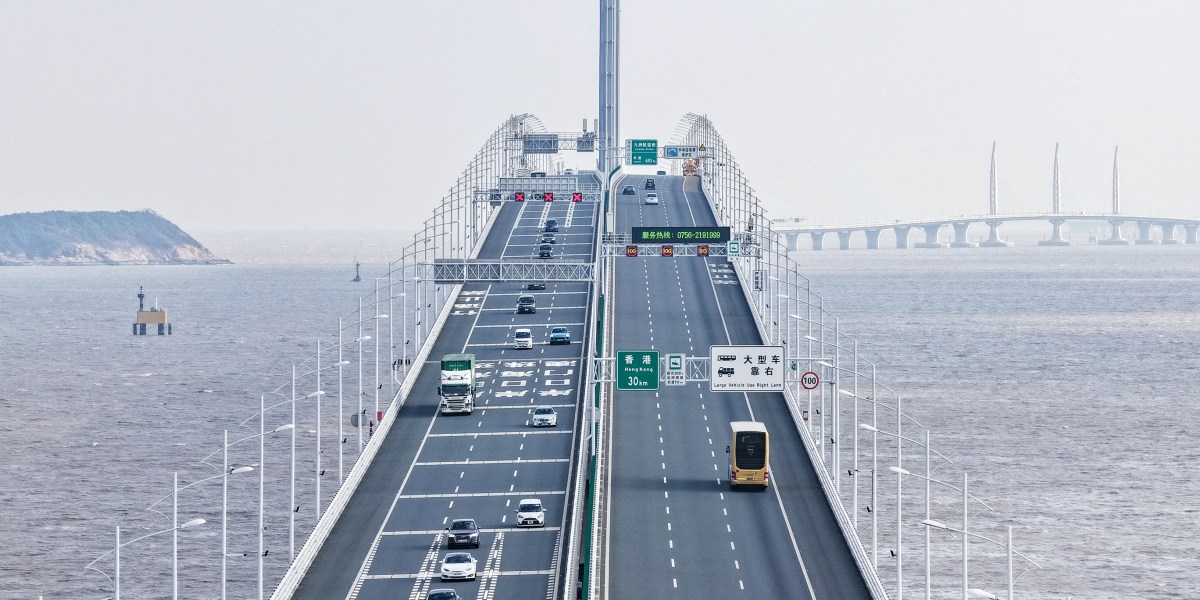
China’s Greater Bay Area brings nine Guangdong cities together with Hong Kong and Macau in a project formalized in 2017.
The region has 88 million people and a $2.1 trillion economy, but connecting its cities is complicated by three legal systems, currencies and customs territories.
The plan aims to link Hong Kong’s financial sector with Shenzhen’s technology strengths and the manufacturing capacity of nearby cities.
On Hengqin, an island near Macau developed to help the territory diversify beyond gambling, the population reached only 50,000 by the end of 2025, far below an earlier target of 280,000 by 2020.
The broader project’s benefits have begun to emerge, but integration so far is mainly a Hong Kong–Shenzhen story.
The open question is whether the other cities can become part of that growth and help build a region-wide innovation and industrial network.

The Greater Bay Area’s integration remains centered on Hong Kong and Shenzhen, pairing Hong Kong’s financial sector with Shenzhen’s technology strengths.
The region comprises nine cities in Guangdong province, plus Hong Kong and Macau.
Formalized in 2017, the project aims to connect the region’s capital, startups and manufacturing into an innovation ecosystem.
The region has 88 million people and a GDP of $2.1 trillion, according to Fortune.
Other cities have yet to share fully in the benefits of integration, the article says.
- Who
- The Guangdong–Hong Kong–Macau Greater Bay Area, including Hong Kong, Macau and nine cities in Guangdong province.
- What
- Integration is developing, but remains focused on Hong Kong and Shenzhen.
- When
- The project was formalized in 2017. The article was published on November 19, 2026.
- Where
- The Pearl River Delta in southern China, including Hong Kong and Macau.
- Why
- The project aims to connect the region’s capital, startups and manufacturing and create an innovation and industrial ecosystem.
This story does not have two clearly opposing sides.
Hengqin was home to oyster farmers and fishermen, according to the article.
The Greater Bay Area project was formalized.
Hengqin had 50,000 residents, below the 280,000 authorities had hoped for by 2020.
- Population
- 88 million
- GDP
- $2.1 trillion
- Members
- Nine Guangdong cities, plus Hong Kong and Macau
- Project formalized
- 2017
- Hengqin population
- 50,000 by the end of 2025
What people are saying
The original idea was to compete with the [U.S.] Bay Area. That’s exactly why the name is the Greater Bay Area
The development of the GBA does not seek to make cities in the GBA identical, or flatten their distinctive edges, but rather aims for interoperability and complementarity across different cities and systems
There are very few Chinese cities where the idea of ‘build it and they will come’ has not worked out.