

Science & Tech · Science & Environment · 2 hrs ago
Amber Fossil Shows Ancient Lizard Could Shed Its Tail
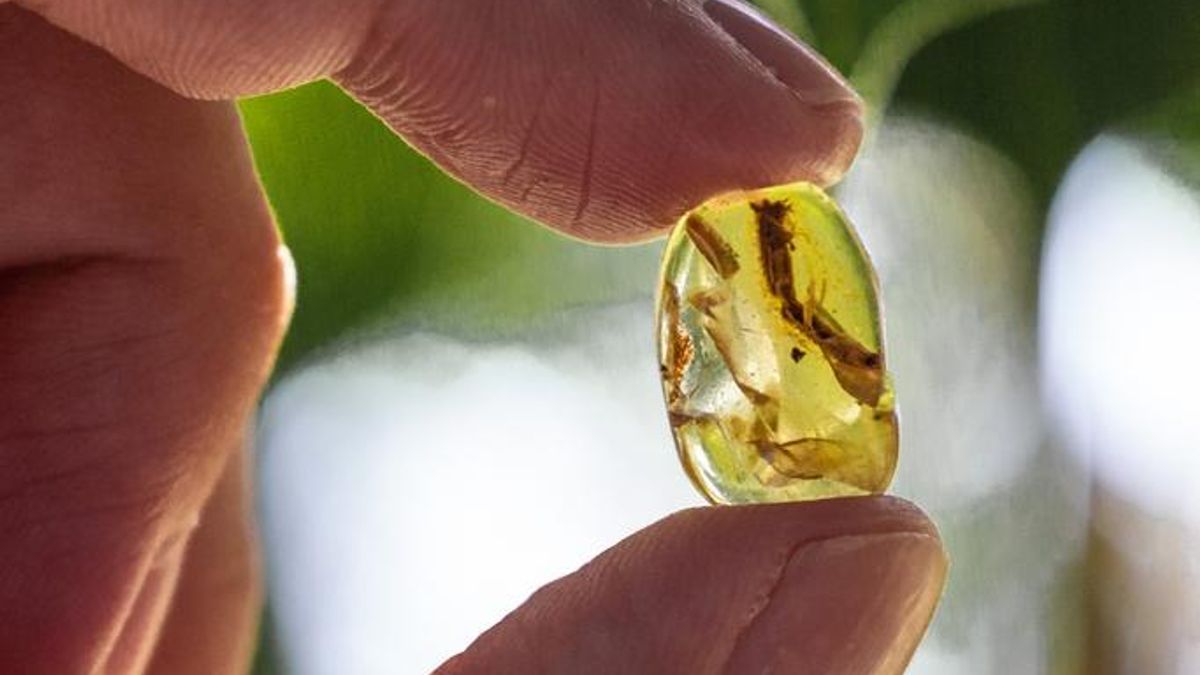
A lizard’s tail was preserved in amber in northern Myanmar about 99 million years ago.
Researchers identified the tiny fossil after it had been mistaken for a twig or insect fragment.
Micro-CT scans revealed a clean, symmetrical break and a ring of tissue like the separation point in tails shed by living lizards.
Those features helped distinguish a controlled shedding from an accidental break.
The fossil is direct evidence of tail-shedding in ancient lizards, a defensive ability known as autotomy.
It shows that lizards had this survival strategy at least as far back as the Cretaceous Period.

A lizard tail preserved in amber provides direct evidence that lizards could shed their tails about 99 million years ago.
The amber was found in northern Myanmar and measures 18 millimeters across.
Micro-CT scans revealed a clean, symmetrical separation and tissue resembling the break point in tails shed by modern lizards.
Researchers say the fossil is the best-preserved direct evidence of ancient lizard tail-shedding.
The reason this particular tail was shed is not stated.
- Who
- An ancient lizard, whose tail was preserved. The researchers include Dolev Fabrikant and Leonidas-Romanos Davranoglou of Tel Aviv University.
- What
- A fossil tail in amber provides direct evidence that an ancient lizard could shed its tail.
- When
- About 99 million years ago.
- Where
- In amber from northern Myanmar.
- Why
- The tail-shedding ability is a defensive mechanism, but why this particular lizard shed its tail is not stated.
This story does not have two clearly opposing sides.
A lizard tail detached and became preserved in amber.
Dolev Fabrikant noticed scales on a specimen that had appeared to be a twig or insect fragment.
Researchers used micro-CT scans to examine the tail’s separation point without cutting open the amber.
Discover published an article about the fossil.
SciTechDaily published an article about the fossil.
- Age
- Approximately 99 million years
- Location
- Northern Myanmar
- Amber size
- 18 millimeters across
- Imaging method
- Micro-CT scanning
- Researcher who identified the tail
- Dolev Fabrikant
2 sources
What people are saying
I realized that what seemed to be a twig was covered in tiny scales
Until now, we could only speculate on whether ancient lizards could shed their tails
We now have direct evidence that one could
It allowed us to examine structures hidden by the amber without needing to cut this one-of-a-kind piece open