

Science & Tech · Gadgets & EVs · 2 hrs ago
Open-source mod boosts AI compute on some GeForce RTX cards
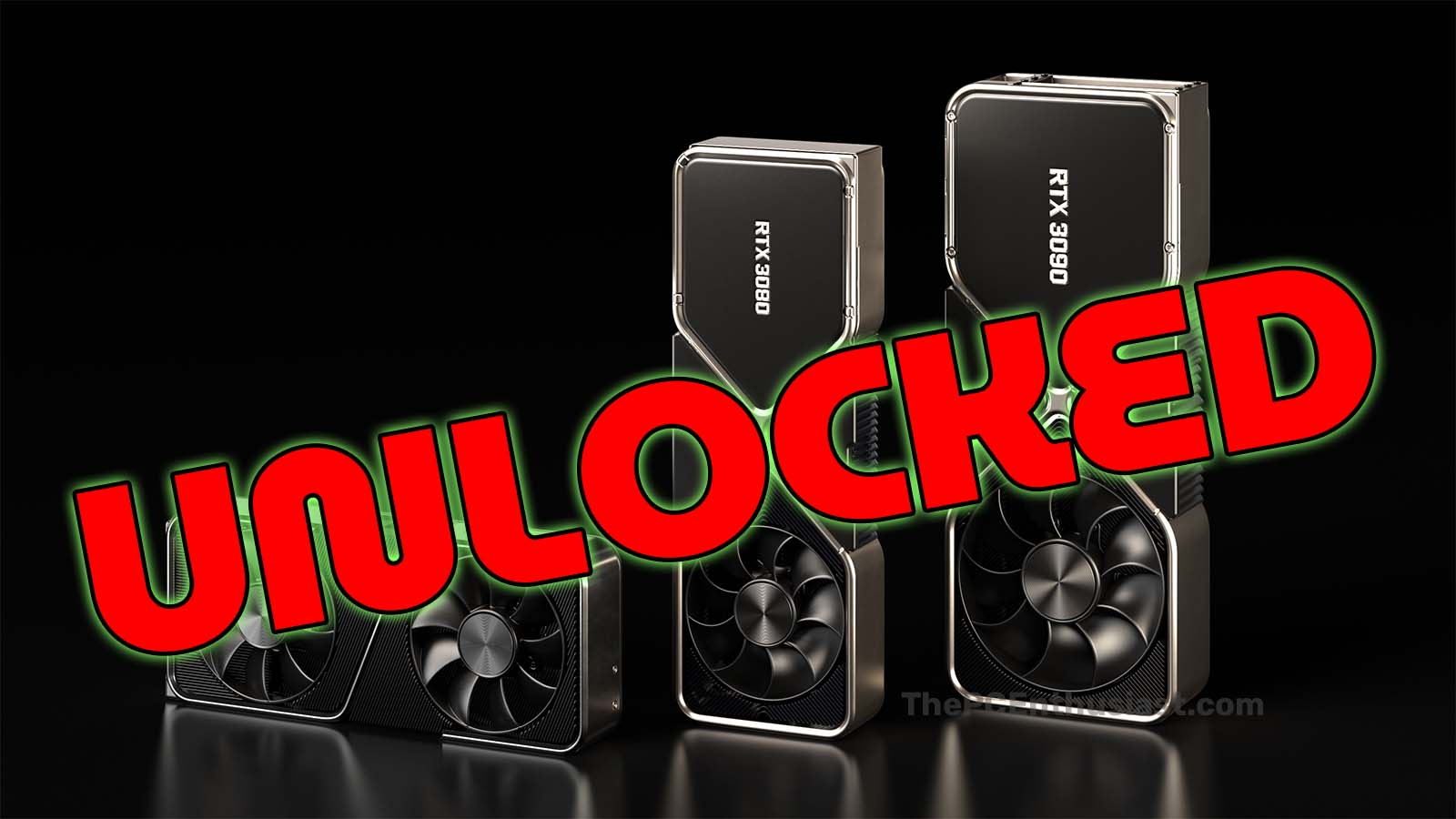
An open-source mod raises AI compute speeds on some NVIDIA GeForce RTX 20, RTX 30 and RTX 40 graphics cards.
It changes low-level settings before the NVIDIA driver loads, lifting a limit on certain Tensor Core calculations used by AI models.
In synthetic tests, an RTX 4090’s FP16 throughput roughly doubled, while an RTX 3090 Ti’s BF16 result rose by about 80%.
Real-world gains depend on the AI task: some image and video generation tests improved by around 56% to 60%, while large language model prompt processing rose by about 14% to 36%.
Gaming performance does not improve, and tasks limited by memory bandwidth, such as generating text tokens, may see little change.
The change is temporary and does not require a hardware alteration or a permanent VBIOS flash, but it is experimental and unsupported setups may fail to boot.
The mod carries risks, including possible warranty loss, and most versions target Linux.
RTX 50-series support has not been confirmed, and there is no reported data showing whether the mod will affect prices of used RTX 3090 or RTX 4090 cards.

Open-source mods can raise the rate of certain AI-related Tensor Core operations on some GeForce RTX 20, RTX 30 and RTX 40 cards, with synthetic tests showing gains of up to about 2x.
The changes target specific compute workloads, not gaming, and do not alter the GPU hardware or flash its VBIOS.
Real-world gains vary: some image-generation tests reported gains of about 56% to 60%, while LLM prompt processing gains were reported at roughly 14% to 36%.
The modifications are experimental, are mainly designed for Linux, and may cause unsupported systems to fail to boot.
- Who
- Open-source modders, including developer Zagitta, developed the unlocks.
- What
- The mods raise the rate of certain Tensor Core instructions on supported GeForce RTX cards, improving some AI compute workloads.
- When
- Reports about the unlocks were published on October 25, 2026.
- Where
- The modifications are applied to supported NVIDIA GeForce RTX graphics cards; most projects target Linux.
- Why
- They remove a limit on the rate of certain Tensor Core operations on GeForce cards.
This story does not have two clearly opposing sides.
ThePCEnthusiast published a report on the RTX 30 unlock and experiments involving selected RTX 40 cards.
TechPowerUp published a report on unlocks for RTX 20, RTX 30 and RTX 40 compute performance.
EJS Computers published an explainer on the unlocks, their performance effects and risks.
- Synthetic BF16 test
- RTX 3090 Ti rose from 87.5 to 157.41 TFLOPS
- Synthetic FP16 test
- RTX 4090 rose from 165.6 to 331.6 TFLOPS
- Real-world image test
- MOSS-Image SFT completed in 45.40 seconds after unlocking, versus 71.98 seconds at stock
- RTX 30 chips listed
- GA102, GA103, GA104 and GA106
- RTX 40 chips listed
- AD102, AD103 and AD106
3 sources
What people are saying
The BF16 result is particularly impressive, climbing from 87.5 TFLOPS to 157.41 TFLOPS.
gaming performance is unaffected.