

Science & Tech · AI · 7 hrs ago
AI Model Aims to Help Choose Safe Sites for Moon Outposts
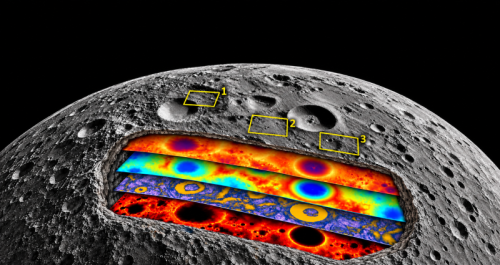
NASA plans to return astronauts to the Moon in 2028 and eventually establish a lasting human presence there.
Ohio State researchers introduced LUMINA, an AI framework designed to help mission planners assess possible landing sites.
The model weighs safety, resources and scientific value, using data on terrain, hazards, geology and surface conditions as well as orbital images.
Finding suitable places matters because future crews may need local resources such as water ice to support life and missions.
The team sees LUMINA as a tool for lunar planning and potentially Mars, though the work described focuses on the Moon.
More lunar data could improve the system, and NASA’s Artemis program is expected to provide opportunities for that research.

Researchers at The Ohio State University introduced LUMINA, an AI model designed to help identify safe lunar landing sites and plan human outposts.
The model evaluates data including terrain hazards, geology, surface properties, resources and scientific value.
The researchers presented the work at the American Astronomical Society’s 58th Annual Meeting of the Division for Planetary Sciences.
They envision adapting LUMINA for other planetary bodies, including Mars.
- Who
- Researchers from The Ohio State University, led by PhD candidate Gokce Inal.
- What
- They introduced LUMINA, an AI framework to assess lunar landing sites and support outpost planning.
- When
- The study was presented at the 58th Annual Meeting of the Division for Planetary Sciences. The presentation date is not stated.
- Where
- The study focuses on the Moon. The meeting’s location is not stated.
- Why
- To help mission planners identify safe sites and weigh resources and scientific value for future outposts.
This story does not have two clearly opposing sides.
The researchers’ earlier LLaVA-LE model was presented at the CVPR2026 AI4Space Workshop.
The researchers presented their study introducing LUMINA.
NASA plans to return astronauts to the lunar surface.
- Model
- LUMINA
- Research team
- The Ohio State University
- Earlier model
- Large Language-and-Vision Assistant for Lunar Exploration (LLaVA-LE)
- Meeting
- 58th Annual Meeting of the Division for Planetary Sciences
- Planned lunar return
- 2028
What people are saying
AI systems are going to become critical tools for space exploration that will help humans analyze the millions of images and datasets that future missions will require
This work is meant to serve as a bridge between those two worlds, AI and planetary science
NASA’s Artemis program creates important opportunities for our research
As new lunar data becomes available, their results can improve systems like ours and better support future mission planning