

Health · Public Health & Disease · 14 hrs ago
US panel backs HPV tests over Pap tests for women ages 30 to 65
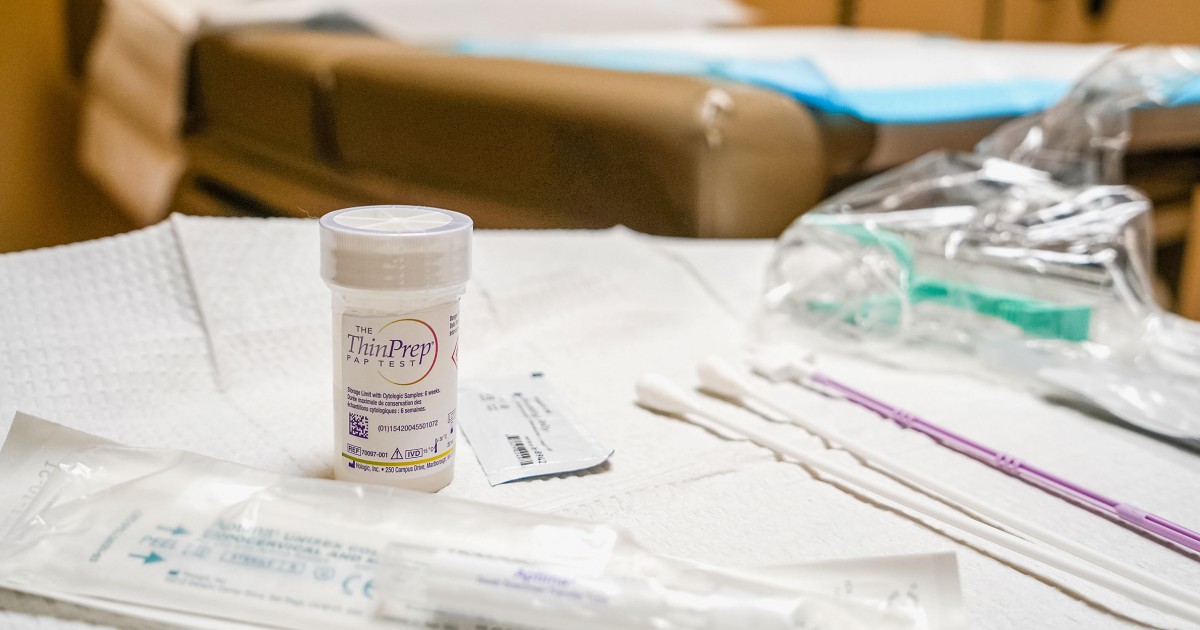
A US federal advisory panel has voted to favor HPV tests for women ages 30 to 65 instead of traditional Pap tests.
The recommendation is not final, and the panel has not said when it will be published.
HPV tests look for high-risk strains of the virus that cause nearly all cervical cancers, while Pap tests look for abnormal cells on the cervix.
Under earlier guidance, women in this age group could choose a Pap test every three years, an HPV test every five years, or both every five years.
The proposed guidance would also let women collect their own HPV sample with a vaginal swab, rather than having a clinician collect it during an exam.
This could make screening easier to access for people who find pelvic exams uncomfortable, and HPV testing can detect precancerous changes earlier than Pap testing.
The task force’s recommendations can affect whether most private insurers cover screening at no cost, but when the guidance will become final remains unclear.

A federal panel voted to recommend HPV tests over Pap tests for women ages 30 to 65, but the recommendation is not yet final.
Women would also be able to choose a self-administered HPV test.
The U.S. Preventive Services Task Force’s recommendations can affect which screening services private insurers cover at no cost.
HPV tests look for high-risk strains of the virus, while Pap tests look for abnormal or precancerous cervical cells.
The task force continues to recommend Pap tests every three years for women ages 21 to 29.
- Who
- The U.S. Preventive Services Task Force, an outside group made up mostly of primary care physicians.
- What
- Panel members voted to recommend HPV testing instead of Pap tests for women ages 30 to 65. The recommendation is not yet final.
- When
- Friday, at the end of a two-day meeting. The article does not give the date of the vote.
- Where
- The United States.
- Why
- HPV tests detect high-risk strains of the virus, which can be present before cervical cell abnormalities develop. The article says research found they detect precancerous changes earlier and more accurately than Pap tests.
This story does not have two clearly opposing sides.
A study published in the Journal of the American Medical Association found HPV tests detected precancerous cervical changes earlier and more accurately than Pap tests.
Task force members voted behind closed doors at the end of a two-day meeting to recommend HPV testing for women ages 30 to 65.
- Age group
- Women ages 30 to 65
- Younger women
- Women ages 21 to 29 are still advised to get a Pap test every three years
- Previous options for ages 30 to 65
- Pap test every three years, HPV test every five years, or both every five years
- Self-collection
- HPV testing can use a self-administered vaginal swab
- Research
- A 2018 study included more than 19,000 women
What people are saying
The self-collection is great for people who might have a hard time tolerating a speculum exam, and it also broadens our ability to offer screening in different scenarios, through mobile health clinics, maybe through a freestanding lab or in medical specialty offices where traditionally pelvic exams aren’t being done
There’s really not a downside to not having that Pap
Collecting a specimen is pretty easily accomplished and it really has equivalent accuracy with a physician-collected specimen.
We expect [the self-collecting test] to increase screening