

Science & Tech · Space · 1 hr ago
Voyager 1 nears one light-day from Earth after brief communications loss
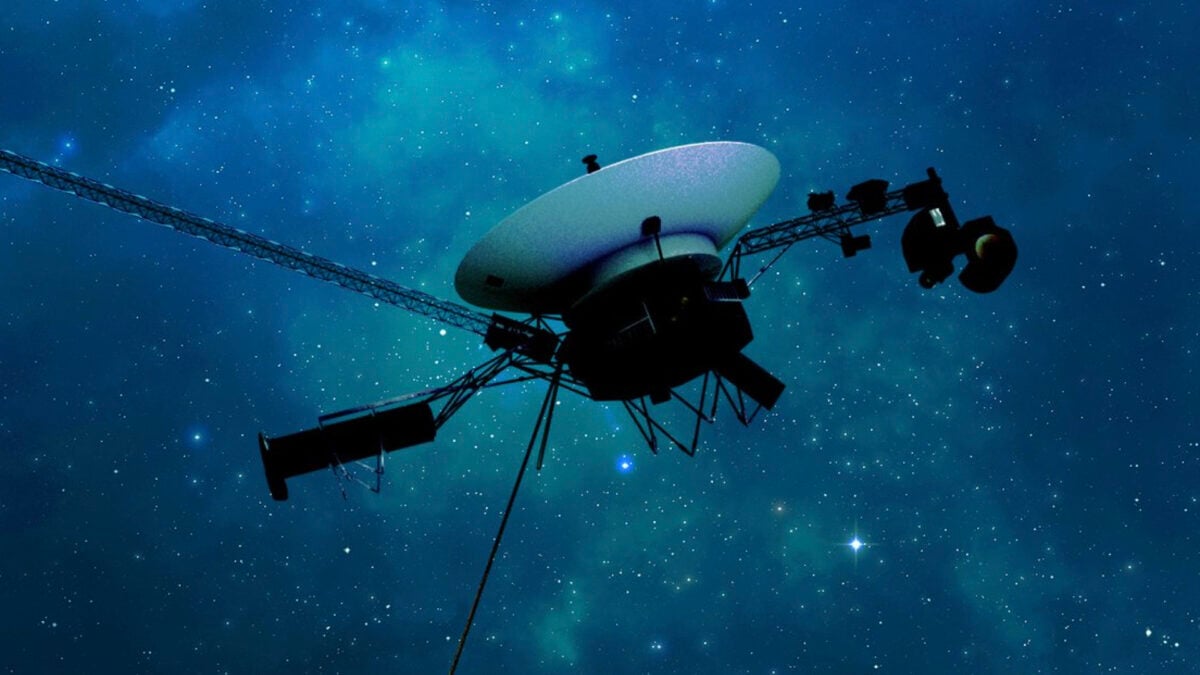
NASA’s Voyager 1 is nearing one light-day from Earth, a distance light travels in 24 hours.
Launched in 1977, the spacecraft has traveled about 16 billion miles and is exploring interstellar space beyond the Sun’s heliosphere.
NASA briefly lost contact with the probe on October 18 and 19, after two scheduled attempts failed to detect its radio signal.
Contact returned on October 20, and engineers have kept in touch since then, but they have not determined the cause of the interruption.
A power-saving upgrade replaced three devices with lower-power alternatives to help conserve Voyager 1’s dwindling electricity supply.
Its power comes from heat produced by decaying plutonium, and the spacecraft loses about four watts of generating capacity each year.
The upgrade is expected to delay another instrument shutdown, which could otherwise have been needed by summer 2027.
Engineers are investigating the communications problem while Voyager 1 continues its journey and science mission.

Voyager 1 is expected to reach a distance of one light-day from Earth on November 18, according to Gizmodo.
The spacecraft briefly lost contact with Earth on October 18 and 19, and communication resumed on October 20.
NASA has not determined what caused the interruption and is investigating the problem.
A September power-saving upgrade replaced three devices with lower-power alternatives to help extend the spacecraft’s operating life.
Voyager 1 is about 16 billion miles from Earth and loses about 4 watts of power each year.
- Who
- NASA’s Voyager 1 spacecraft and the team that operates it.
- What
- Voyager 1 briefly lost communication with Earth and is approaching a one-light-day distance.
- When
- The communication interruption occurred on October 18 and 19, 2026; contact resumed on October 20. It is expected to reach one light-day on November 18.
- Where
- In interstellar space, about 16 billion miles from Earth.
- Why
- NASA has not determined the cause of the communication interruption. The spacecraft’s power-saving upgrade was intended to conserve electricity and extend its operating life.
This story does not have two clearly opposing sides.
NASA’s Voyager team replaced three devices aboard Voyager 1 with lower-power alternatives in a project nicknamed the Big Bang.
NASA’s Deep Space Network failed to detect Voyager 1’s radio signal during two scheduled communication attempts.
Voyager 1’s signal returned, about 48 hours after the interruption began.
Voyager 1 is expected to reach one light-day from Earth, according to Gizmodo.
- Expected one-light-day date
- November 18, 2026
- Distance from Earth
- About 16 billion miles; Gizmodo gives 16.09 billion miles at one light-day
- Communication resumed
- October 20, 2026
- Power loss
- About 4 watts annually
- Power-saving project
- Big Bang; replaced three devices with lower-power alternatives
5 sources
NASA’s Voyager 1 Is About to Become the First Spacecraft One Light-Day From Earth
As Voyager 1 Nears a Historic Milestone, NASA Uses Clever Engineering To Keep the Probe Going
Voyager 1 Briefly Loses Contact With Earth As It Nears One Light-Day Distance
NASA’s Voyager 1 is about to reach a historic one-light-day milestone
Voyager 1 Is Approaching a Full Light-Day From Earth—and It Just Scared the Crap Out of NASA
What people are saying
This is the first time we’ve seen the spacecraft do something like this, but we are also at a point in the mission where we have to expect the unexpected
We’re relieved to be back in contact with Voyager 1 and are eager to understand what happened.
If you want to say ‘hello’ to Voyager, you send your message and then you go home and you wait two days before you finally get a response.