

World · Europe · 12 hrs ago
Ceuta’s El Tarajal sea barrier works resume after border dispute
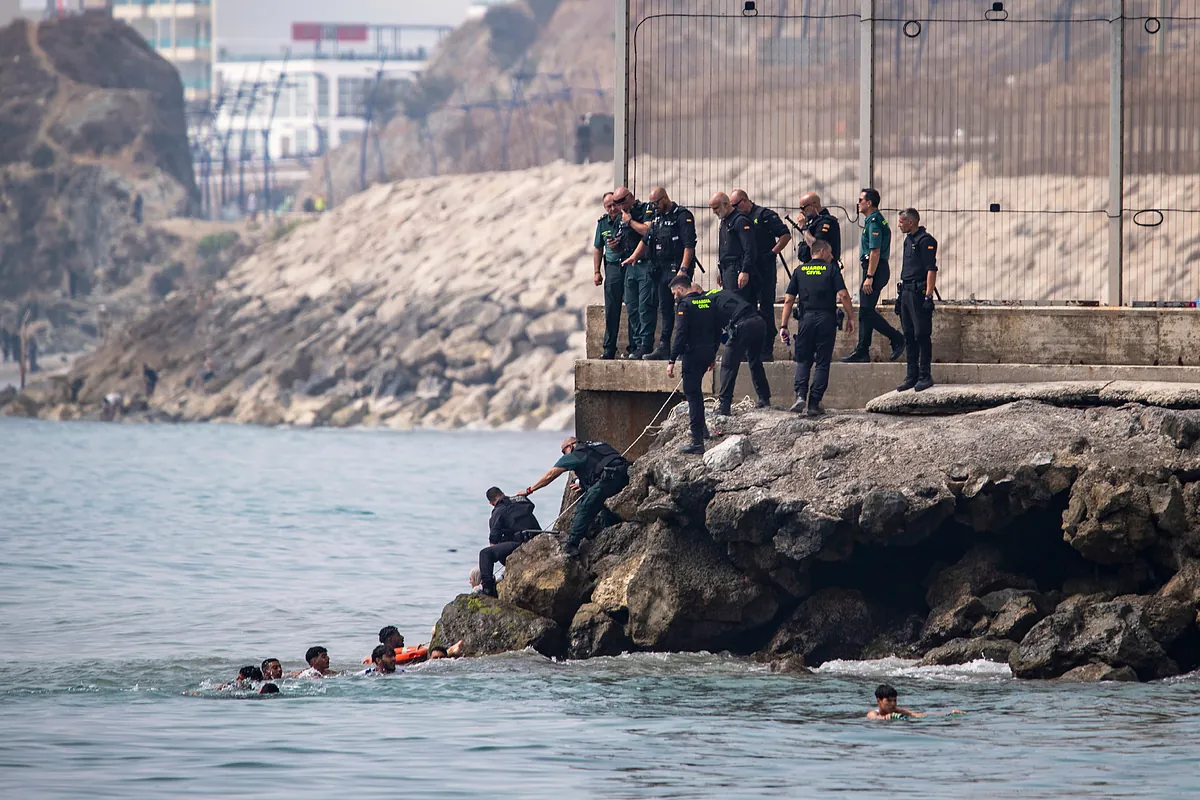
Spain’s Tragsa began work on a longer sea barrier at El Tarajal, on the border in Ceuta, a Spanish city on the North African coast.
Accounts differ over the workboat’s position: one says it anchored a support line in Moroccan territory, while another says Moroccan authorities checked the boundary and found the work respected it.
Moroccan boats approached the site on Thursday, and the work paused for several hours.
Work resumed normally on Friday, with machinery drilling the seabed for the structure’s foundations.
The extension will add 100 metres to the existing barrier, and the project also includes 350 metres of floating barrier.
The plan followed large arrivals of migrants to Ceuta in July, renewing calls to make it harder to reach the city by swimming.
The project is budgeted at seven million euros, with a further two million for permanent marking; a similar system is planned later at Benzú.

Work on the El Tarajal sea barrier in Ceuta resumed on Friday, 20 November 2026, after Moroccan vessels approached the construction area the previous day.
The accounts differ on whether the work was halted: El Mundo reported a stop on Thursday, while El País said it continued after Moroccan authorities checked that the works respected territorial waters.
El Mundo reported that the construction vessel had placed a support line on Moroccan territory and that it resumed work after being anchored on Spanish territory.
The project will extend the existing barrier 100 metres out to sea and add 350 metres of floating barrier, according to El País.
The estimated cost of the extension is seven million euros, with total investment reaching nine million euros when permanent marking is included.
- Who
- Tragsa is carrying out the work. Moroccan authorities and Spanish government sources are among those involved in the reported border incident.
- What
- Work to extend the El Tarajal sea barrier resumed amid conflicting accounts of whether it had been halted.
- When
- Work began on Thursday, 19 November 2026, and was reported to be continuing on Friday, 20 November.
- Where
- The El Tarajal border crossing in Ceuta, on Spain’s border with Morocco.
- Why
- The extension is intended to make it harder to reach Ceuta by swimming. The works were promoted after large numbers of migrants arrived on 30 and 31 July.
El Mundo’s account
El País’s account
Whether work stopped
El Mundo’s account
The works were stopped for several hours on Thursday after Moroccan vessels occupied the area and prevented work from continuing.
El País’s account
Moroccan authorities checked that the works respected territorial waters; there was no order to stop the work, and it continued normally.
What prompted the incident
El Mundo’s account
The vessel had placed a support line on Moroccan territory, prompting the intervention.
El País’s account
The vessels warned that construction boats and machinery could not enter Moroccan territorial waters.
Work on the new sea barrier began, according to El Mundo.
The construction vessel began drilling the seabed, and Moroccan vessels approached the work area.
Work was reported to be continuing; El Mundo said it resumed after the vessel was anchored on Spanish territory.
- Location
- El Tarajal, Ceuta
- Extension
- 100 metres out to sea
- Floating barrier
- 350 metres
- Estimated extension cost
- Seven million euros
- Total investment
- Nine million euros, including two million for permanent marking
3 sources
Tragsa ancló el barco que construye el nuevo espigón de Ceuta en suelo marroquí y provocó un conflicto de frontera
Las obras del espigón de El Tarajal continúan tras una comprobación de las autoridades marroquíes
What people are saying
attack on Spanish sovereignty