

Science & Tech · Space · 1 hr ago
NASA ends Swift telescope mission after failed rescue attempt
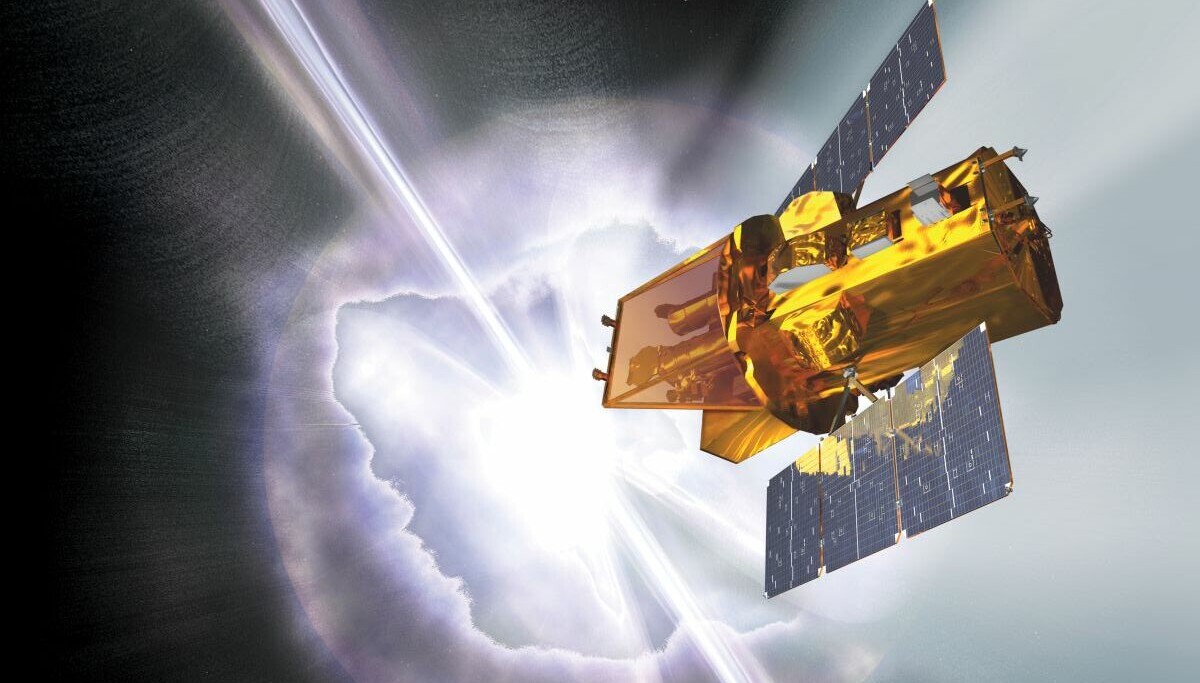
NASA has ended the Swift space telescope mission after more than 20 years of observations.
The observatory launched in 2004 to study gamma-ray bursts, powerful explosions in space, and was designed to last just two years.
A rescue attempt by Arizona company Katalyst Space Technologies failed when its LINK spacecraft developed propulsion and control problems and could not capture Swift.
The telescope recorded more than 2,000 gamma-ray bursts and also studied supernovas, black holes and other objects.
Swift’s orbit has been falling because of atmospheric drag, and it can no longer point its telescopes steadily at targets.
NASA expects Swift to re-enter Earth’s atmosphere in the next few weeks.
With no direct replacement, NASA says it is exploring how to use existing space telescopes and other future missions to respond quickly to cosmic events.

NASA has ended operations of the Neil Gehrels Swift Observatory as atmospheric drag lowers its orbit toward re-entry.
The observatory gathered its last scientific data on October 20 and is expected to re-enter Earth's atmosphere in the next few weeks.
A rescue attempt by Katalyst Space Technologies failed after its LINK spacecraft developed propulsion and orientation problems.
Swift launched in 2004 on a planned two-year mission and observed more than 2,000 gamma-ray bursts.
- Who
- NASA ended operations of the Neil Gehrels Swift Observatory.
- What
- The observatory's mission has ended as it descends toward atmospheric re-entry. A private rescue attempt failed.
- When
- Swift gathered its last scientific data on October 20, 2026. Re-entry is expected in the next few weeks.
- Where
- In orbit around Earth.
- Why
- Atmospheric drag lowered Swift's orbit, and it has no propulsion system to counteract the drag. Katalyst's LINK spacecraft failed to capture and boost it.
This story does not have two clearly opposing sides.
Swift launched into Earth orbit on a planned two-year mission.
NASA awarded Katalyst Space Technologies a contract to attempt to boost Swift to a higher orbit.
Katalyst's LINK spacecraft launched to attempt the rescue.
LINK experienced propulsion and reaction-wheel problems that prevented it from capturing and boosting Swift.
Swift gathered its last scientific data.
NASA said Swift was expected to re-enter the atmosphere in the next few weeks.
- Launch
- November 2004
- Planned mission
- Two years
- Last scientific data
- October 20, 2026
- Gamma-ray bursts observed
- More than 2,000
- Rescue contractor
- Katalyst Space Technologies
- LINK's closest approach
- 7.5 to 9.3 miles (12 to 15 kilometers) from Swift
3 sources
What people are saying
In that time, Swift played a major role in advancing our understanding of the changing universe and was part of a revolution in astrophysics that showed how critical rapid-response observations are to the entire community
From the beginning, this was a high-risk, high-reward mission
To support rapid response to cosmic events in a post-Swift world, we're exploring our ability to use and augment NASA's fleet of existing space telescopes, from fast-to-orbit commercial capabilities to efficient, innovative new missions.