

Politics · Australia · 1 hr ago
Albanese grants Greens 15 staff before senators reject staffing inquiry
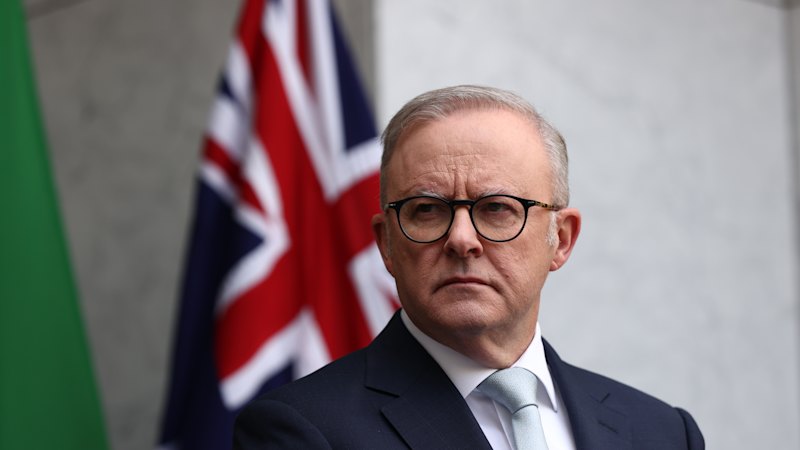
Prime Minister Anthony Albanese granted the Greens 15 staff under a renewed staffing allocation.
Three days after it took effect, One Nation senator Pauline Hanson proposed an inquiry into a bill setting minimum staffing levels for independent, minor party and opposition MPs.
Labor, Greens and Coalition senators voted against the inquiry, while independent senator David Pocock supported it.
Hanson says One Nation has six MPs and five personal staff, and has asked for more; her request has not received a response.
Staffing decisions are currently at the prime minister’s discretion, including the number of staff and their salary bands.
Critics say the system can be used to limit MPs’ ability to scrutinise the government, and the Remuneration Tribunal has been suggested as an alternative decision-maker.
The bill did not proceed to an inquiry, and the motion set a proposed reporting deadline of the end of the year.

Prime Minister Anthony Albanese granted the Greens 15 staff before Labor, Greens and Coalition senators voted down an inquiry into staffing levels for independents and minor parties.
The inquiry motion was put forward by One Nation senator Pauline Hanson on October 15.
Hanson said One Nation had six MPs and five personal staff and sought a safe staffing guarantee.
The Greens’ renewed staffing allocation included two senior advisers for each MP, with salaries of up to $190,231 and $205,808.
Independent senator David Pocock and a public integrity expert called for changes to the staffing allocation system.
- Who
- Prime Minister Anthony Albanese granted the Greens additional staff. One Nation senator Pauline Hanson proposed the inquiry motion.
- What
- The Greens received a renewed staffing allocation, while senators rejected a motion for an inquiry into minimum staffing levels.
- When
- The allocation took effect on October 12, 2026. The motion was voted down on October 15.
- Where
- The Australian Senate.
- Why
- The Greens’ allocation was renewed; the sources do not state Albanese’s reason. Hanson sought an inquiry into staffing levels for independent, minor party and opposition MPs.
Supporters of a staffing inquiry
Senators who voted against the inquiry
Inquiry supporters said
Supporters of a staffing inquiry
Staffing allocations should be governed by fair minimum standards, not the prime minister’s discretion.
Senators who voted against the inquiry
Labor, Greens and Coalition senators voted down Hanson’s motion for a Senate inquiry.
Safety and capacity
Supporters of a staffing inquiry
Hanson said additional staff were needed to plan visits, coordinate security and liaise with the AFP.
Senators who voted against the inquiry
The sources do not state the opposing senators’ reasons for voting against the motion.
Hanson sent a letter requesting proportional staffing for One Nation; it had not received a response by October 23.
The Greens’ renewed staffing allocation came into effect.
Hanson moved for a Senate inquiry into a safe staffing guarantee bill, and Labor, Greens and Coalition senators voted the motion down.
SMH published its report on the Greens’ staffing allocation and the rejected inquiry motion.
- Greens allocation
- 15 staff
- Greens senior advisers
- Two positions, with salaries of up to $190,231 and $205,808
- One Nation representation
- Six MPs and five personal staff, according to Hanson
- Senate motion
- Proposed inquiry reporting by the end of 2026
- Motion outcome
- Labor, Greens and Coalition senators voted it down
What people are saying
One Nation has six MPs and just five personal staff. Yet, Labor, the Liberals and the Greens joined forces to block an inquiry into fair staffing for independents and minor parties.
The safety of our people should never be subject to political games.
Staffing allocation shouldn’t be able to be used as a bargaining chip or to reward or punish parliamentarians. The current process needs reform
The leader of the government may perceive it to be useful to hobble the ability of other members of parliament to hold the government to account.