

Science & Tech · Space · 13 hrs ago
Solar or Nuclear Power for Space Data Centers Depends on Mission Needs
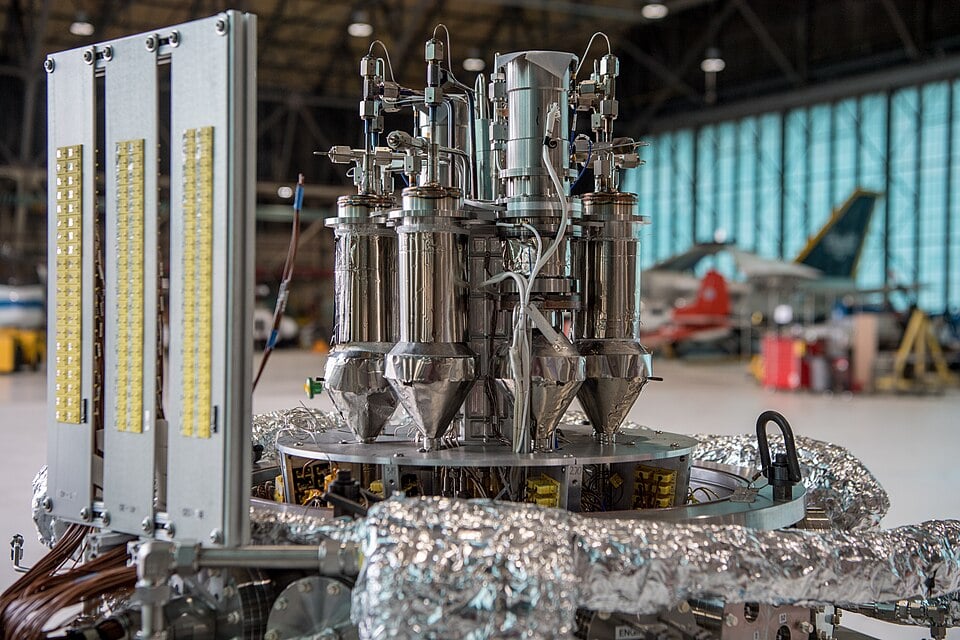
A NASA Jet Propulsion Laboratory researcher says the best power source depends on the mission for an orbital data center.
Solar panels need batteries to keep power flowing when satellites pass through Earth’s shadow, which can last up to 21 minutes per orbit.
For a one-megawatt data center cluster, the batteries would weigh 6.46 metric tons, and panels and radiators bring the total to 43 metric tons before computing hardware is included.
A fission reactor could remove the need for solar panels and batteries, but it creates substantial waste heat that must be managed separately from the heat produced by the computers.
The reactor system is about 10 metric tons lighter per megawatt than current standard solar panels, but the nuclear-powered design needs only about 6% less radiator area for cooling the computers.
More efficient next-generation solar arrays could erase that weight advantage, so the choice depends on mission requirements and how solar technology develops.

The choice between solar and nuclear power for space data centers depends on mission requirements, according to a paper by NASA’s Slava Turyshev.
Solar-powered systems need batteries to supply energy when satellites pass through Earth’s shadow, adding substantial mass.
A 1-megawatt cluster would need 6.46 metric tons of batteries and have a total mass of 43 metric tons for its power and heat-management systems, before computing hardware.
A fission reactor could be around 10 metric tons lighter per megawatt than current standard solar panels, but it creates high-temperature waste heat and requires additional equipment.
More efficient next-generation solar arrays could remove nuclear power’s mass advantage.
- Who
- NASA Jet Propulsion Laboratory researcher Slava Turyshev analyzed the options.
- What
- A paper compares solar and nuclear power for orbital data centers.
- When
- The paper was released as a preprint; the date is not stated.
- Where
- In orbit around Earth.
- Why
- The best power source depends on mission requirements, including system mass and waste-heat management.
This story does not have two clearly opposing sides.
This story does not have a timeline yet.
- Battery mass
- 6.46 metric tons for a 1-megawatt data center cluster
- System mass
- 43 metric tons, excluding computing hardware
- Earth’s shadow
- Up to 21 minutes per orbital pass
- Orbital passes
- Around 15 each day
- Nuclear mass advantage
- Around 10 metric tons less per megawatt than current standard solar panels