

Science & Tech · Science & Environment · 5 hrs ago
Arctic ice traces Montana smelter pollution across North America
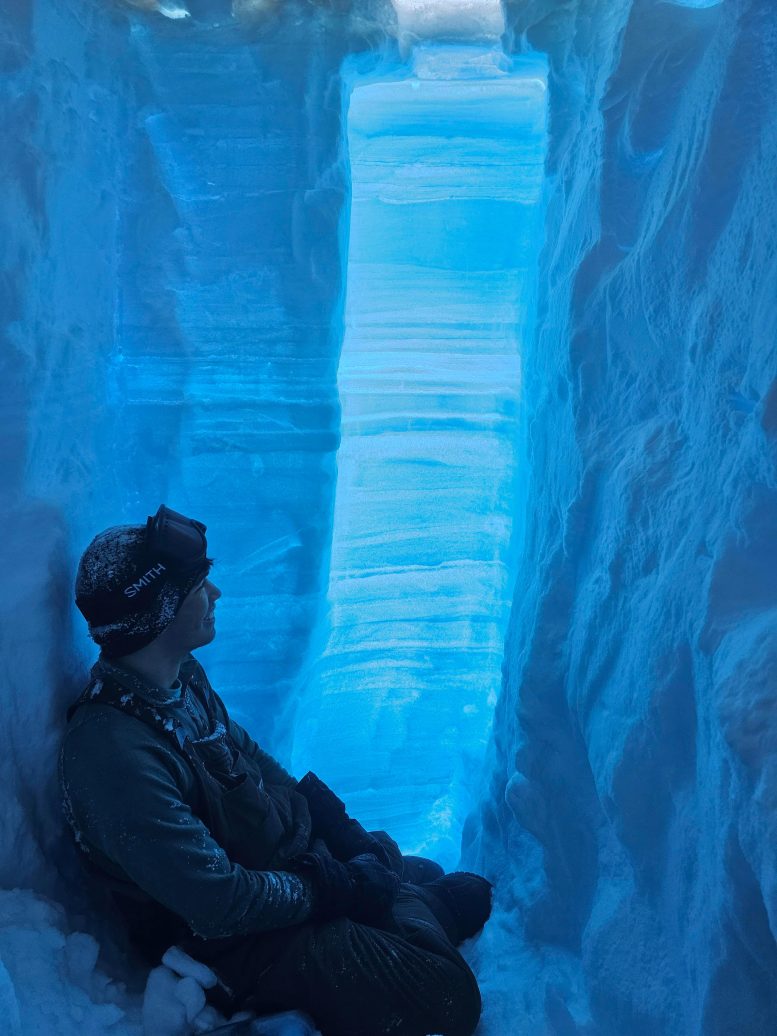
Arctic ice cores reveal pollution from a Montana copper operation more than a century ago.
Researchers studied 10 cores from Greenland, northern Canada and the Russian Arctic, where metal levels in some places reached about 15 times preindustrial levels between 1886 and 1918.
The evidence pointed to the Anaconda Copper Mine complex near Butte, which researchers estimate released about 11,000 tons of arsenic and 4,400 tons of lead into the air each year during peak production decades.
Models suggest about 50.5 million Americans and 600,000 Canadians faced arsenic exposure linked to increased risks of serious illness.
The study did not measure health outcomes, and its estimate that 1.4 million people encountered elevated lead pollution does not establish individual effects.
The findings show how ice preserves evidence of pollution that was not measured at the time and can help reveal how far it travelled.

Ice cores show that pollution from a Montana copper smelter spread across North America and reached the Arctic more than a century ago.
Researchers found toxic metal concentrations at some locations rose to about 15 times preindustrial levels between 1886 and 1918.
The team estimated that the smelter released about 11,000 tons of arsenic and 4,400 tons of lead into the atmosphere each year during peak production decades.
Models and historical census records suggest about 50.5 million Americans and 600,000 Canadians were exposed to arsenic concentrations associated with increased health risks.
The study did not directly measure health outcomes.
- Who
- Researchers led by Joe McConnell and Nathan Chellman of the Desert Research Institute, with international collaborators.
- What
- Scientists traced arsenic and lead pollution from a Montana copper smelter using Arctic ice cores.
- When
- The pollution record covers 1886 to 1918; the study was published November 10.
- Where
- The source was the Anaconda Copper Mine complex near Butte, Montana. Pollution reached parts of North America and western Greenland.
- Why
- Researchers examined ice cores to reconstruct past atmospheric pollution and estimate its spread and exposure.
This story does not have two clearly opposing sides.
Toxic metal concentrations at some locations rose to approximately 15 times preindustrial levels.
The study was published in Nature Sustainability.
- Ice cores examined
- 10
- Smelter source
- Anaconda Copper Mine complex near Butte, Montana
- Estimated annual arsenic emissions
- Approximately 11,000 tons during peak production decades
- Estimated annual lead emissions
- Approximately 4,400 tons during peak production decades
- Estimated arsenic exposure
- Approximately 50.5 million Americans and 600,000 Canadians
What people are saying
It’s pretty wild to think that a single, albeit massive source of pollution could have affected effectively the entire North American continent and western Greenland more than 4000 kilometers or 2500 miles away,