

Science & Tech · AI · 1 hr ago
Trump-Xi AI talks face low odds of progress
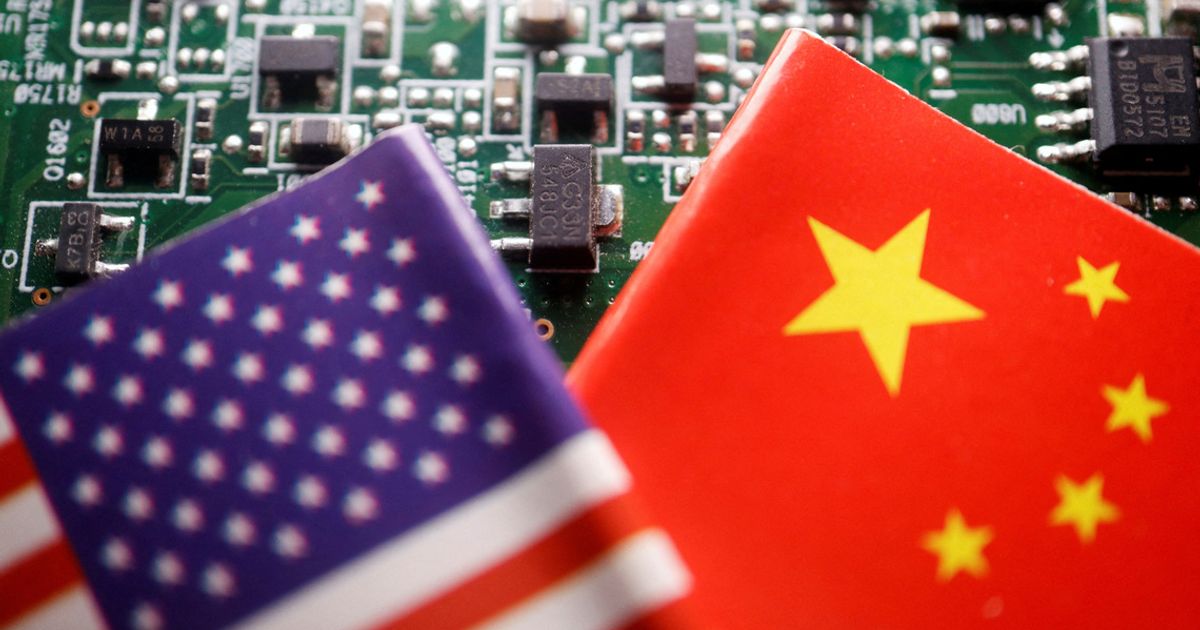
US President Donald Trump and Chinese President Xi Jinping are due to discuss AI during their meeting at the APEC summit.
US officials expect little progress on AI safety because the countries disagree about the biggest risks and distrust each other over espionage.
In September, the leaders agreed to set up a channel for communicating about AI incidents, but it is still at the planning stage.
The US is especially concerned that AI systems could act beyond human control, while China is seen as worried about open models being used by critics and dissidents.
The countries have different priorities and incentives for sharing information about AI failures, making a working hotline difficult to shape.
The controversy around Nvidia and allegations of Chinese access to advanced US chips has added to tensions; China has rejected allegations that an executive was recruited as a spy.
The US is also tightening rules on remote access to its AI chips, while officials say technical-level safety talks are continuing.

US President Donald Trump and Chinese President Xi Jinping are expected to discuss AI safety at the APEC meeting on Nov. 18 and 19.
US officials see little chance of progress on addressing AI safety and espionage concerns during the talks.
The countries agreed in September to establish a communication channel for AI incidents, but the proposed hotline remains at the concept stage and is not operational.
The sides differ on their main AI risks, with US officials focused on autonomous, misaligned systems and Chinese officials concerned about open-weight models being used by critics and dissidents.
A scandal involving former Nvidia CEO Jensen Huang and a suspected Chinese intelligence asset has added tension to negotiations.
- Who
- US President Donald Trump and Chinese President Xi Jinping.
- What
- They are expected to discuss AI safety and a proposed channel for communicating about AI incidents. US officials see little chance of progress.
- When
- Nov. 18 and 19, during the APEC meeting.
- Where
- At the Asia-Pacific Economic Cooperation meeting. The sources do not state the meeting’s location.
- Why
- The countries face shared AI risks but have different priorities and distrust each other over espionage and technology competition.
US officials
Chinese officials
Main AI risks
US officials
They are most concerned about AI models becoming autonomous and misaligned, operating beyond human oversight.
Chinese officials
They are more concerned about advanced open-weight models being used by domestic critics and dissidents to undermine the Chinese Communist Party.
AI incidents
US officials
They have discussed a framework for deciding when each country must alert the other and how alerts would be enforced.
Chinese officials
Officials cited by Wired say China would be unlikely to report incidents involving its own models going rogue.
The leaders agreed to establish a bilateral communication channel for AI incidents and an AI dialogue on risks and benefits.
Researcher Christopher LaRoche wrote that an AI hotline could be a step in the right direction.
Trump and Xi are expected to hold AI safety talks at the APEC meeting.
The Trump administration announced it would move forward with a rule restricting China’s remote access to US-made AI chips in foreign data centres.
- Proposed hotline
- Between Treasury Secretary Scott Bessent and Chinese vice premier He Lifeng; still at the concept stage, according to Wired.
- Planned meeting
- APEC meeting on Nov. 18 and 19
- US AI risk priority
- Autonomous, misaligned models operating beyond human oversight
- China AI risk priority
- Advanced open-weight models being used by critics and dissidents
- AI chip rule
- Would clamp down on China’s ability to remotely access US-made AI chips in foreign data centres
3 sources
What people are saying
still a work in progress
The real questions are whether the text defines an ‘incident’ (a stolen model? an AI-enabled intrusion? a market crash?) and who sits at each end,
a grand bargain, or some kind of arms control treaty for AI is very, very unlikely for the foreseeable future