

Science & Tech · Space · 8 hrs ago
Venus reaches peak brightness in the predawn sky on Nov. 27
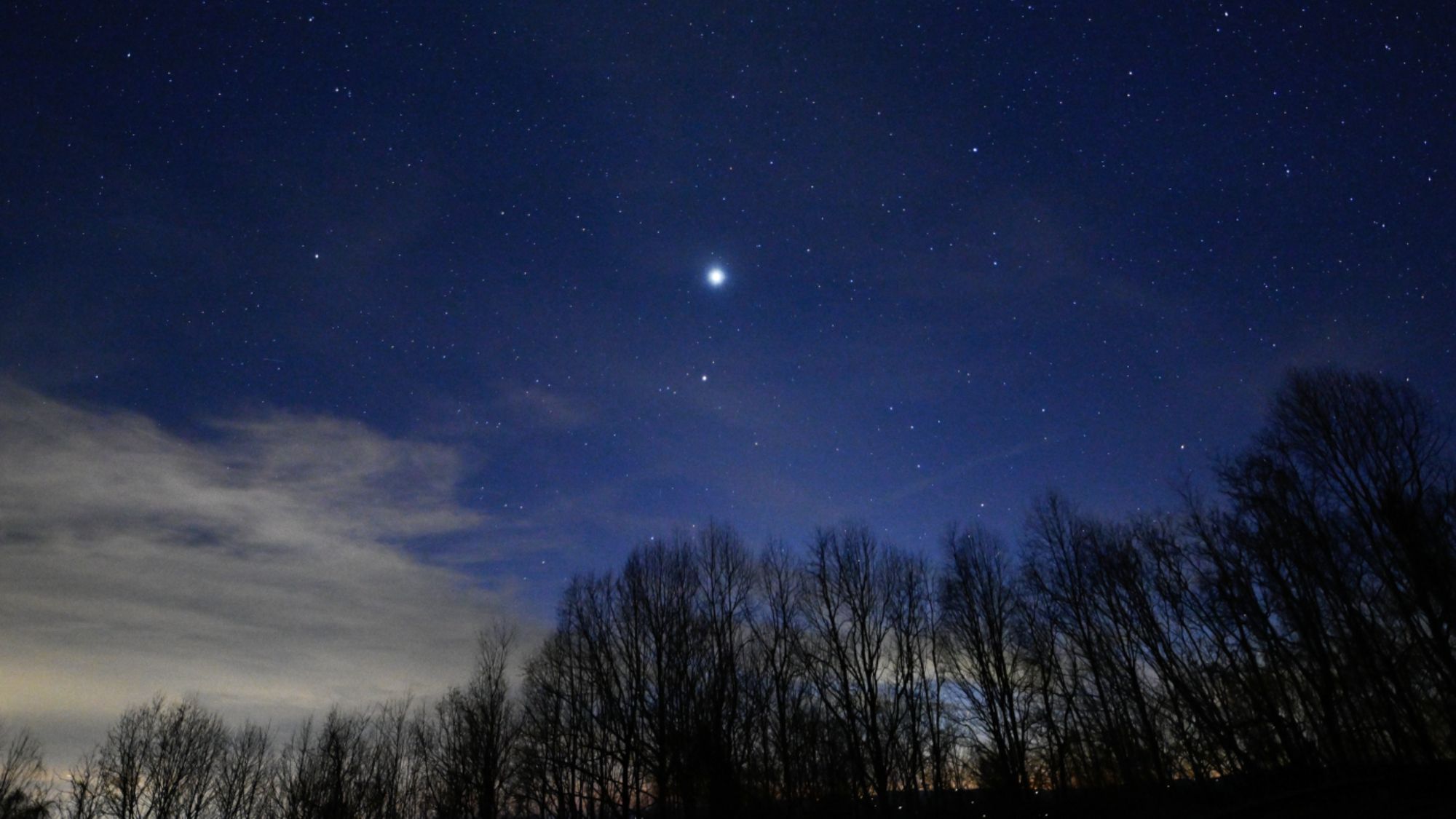
Venus will reach peak brightness on Nov.
27 during its current appearance in the morning sky.
In the United States, people can look for it in the southeast before sunrise, with Mercury closer to the horizon below.
Venus will appear less than five degrees from Spica, a bright star, on the morning of Nov.
27.
Venus alternates between appearing in the morning and evening because it orbits closer to the Sun than Earth does.
Its brightness changes as its distance from Earth and its visible phase change, making this week's appearance especially bright.
Over the coming weeks and months, Venus will look more illuminated but smaller through a telescope.
Anyone observing it with a telescope should wait until the Sun is safely below the horizon.

Venus will reach peak brightness during its current morning appearance on Nov. 27.
The peak is forecast for 1:37 p.m. EST, according to the astronomy website In-The-Sky.
Before dawn, Venus will appear in the southeastern sky near the bright star Spica.
Mercury will be close to the horizon below Venus.
In the coming weeks and months, Venus will appear more illuminated as it moves farther from Earth.
- Who
- Venus, the planet.
- What
- It will reach peak brightness during its current morning appearance.
- When
- Nov. 27, at 1:37 p.m. EST (1837 GMT).
- Where
- In the predawn southeastern sky, near Spica.
- Why
- Venus’s brightness changes as its phases and distance from Earth change.
This story does not have two clearly opposing sides.
Venus will appear in the southeastern sky near Spica, with Mercury close to the horizon below.
Venus is expected to reach peak brightness during its current morning appearance.
Venus will appear increasingly illuminated as it moves farther away from Earth.
- Peak brightness
- Nov. 27 at 1:37 p.m. EST (1837 GMT)
- Nearby star
- Spica, less than five degrees from Venus before dawn on Nov. 27
- Viewing direction
- Southeastern sky
- Other visible planet
- Mercury, close to the horizon below Venus
- Source for peak time
- In-The-Sky