

Science & Tech · Space · 1 hr ago
ULA plans Vulcan rocket's return with 40 Amazon Leo satellites
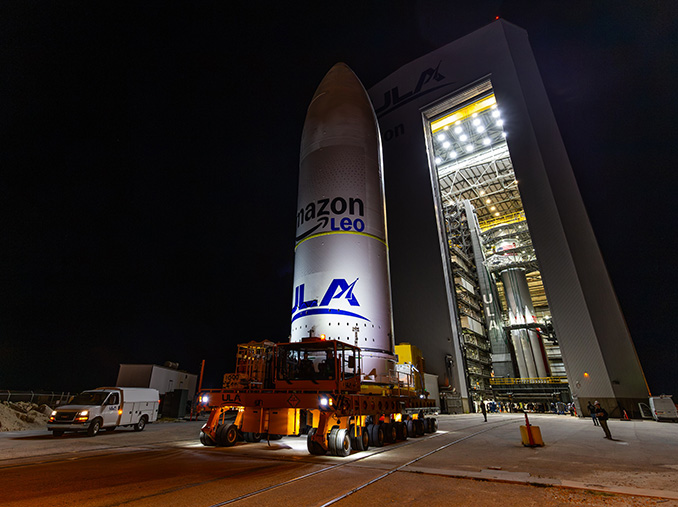
United Launch Alliance plans to launch its Vulcan rocket on November 13, ending a nine-month pause in flights.
The rocket was grounded after solid rocket booster nozzles failed on two earlier missions.
In both cases, the rocket’s main stages compensated for the lost thrust and reached the planned orbits.
ULA says it has made design and process changes to the nozzles, while further testing and analysis will continue alongside the flight.
The mission will carry 40 satellites for Amazon’s Leo internet service and will be Vulcan’s first flight with six solid boosters.
The satellites will add to the nearly 400 Amazon Leo spacecraft already in orbit as the company builds its satellite internet network.
The launch will also give ULA flight data on the improved nozzle design; the sources do not say when Vulcan will be cleared to carry national security payloads again.

United Launch Alliance plans to return its Vulcan rocket to flight on November 13, carrying 40 Amazon Leo satellites.
The launch would follow a nine-month grounding caused by problems with the rocket’s solid rocket boosters.
It would be Vulcan’s fifth flight and its first with six strap-on solid rocket boosters.
ULA says the mission will use an improved nozzle design developed after an investigation into a booster anomaly.
The satellites are intended to join Amazon’s Leo internet constellation.
- Who
- United Launch Alliance is preparing the launch, with 40 satellites for Amazon Leo.
- What
- Vulcan is scheduled to return to flight and deploy the satellites.
- When
- Friday, November 13, 2026.
- Where
- Not stated.
- Why
- The mission will add satellites to Amazon’s Leo internet constellation, and ULA says flying the improved nozzle design will provide flight data.
This story does not have two clearly opposing sides.
A solid rocket booster nozzle failure occurred less than 30 seconds into Vulcan’s fourth flight on the USSF-87 mission.
Assembly of the Vulcan vehicle began when its first-stage booster was hoisted onto the launch platform.
The first-stage booster was followed by additional vehicle stacking.
ULA announced that Vulcan would return to flight on November 13.
Vulcan is scheduled to launch with 40 Amazon Leo satellites.
- Payload
- 40 Amazon Leo satellites
- Planned launch date
- November 13, 2026
- Flight number
- Fifth Vulcan flight
- Solid rocket boosters
- Six strap-on boosters
- Grounding
- Nine months
- Previous anomaly
- Nozzle failure on the USSF-87 flight in February 2026
2 sources
What people are saying
The integrated team has made great strides in improving our understanding of the solid rocket booster (SRB) anomaly that occurred on the previous Vulcan flight and have identified several potential contributors which have been mitigated through design and process improvements to the nozzle
This upcoming launch will utilize the improved nozzle design, and additional testing and analysis will continue in parallel with the mission
By flying the improved design, ULA gains valuable flight data that validates these improvements and is the most beneficial path in support of all our customers