

Health · Medical Research · 48 mins ago
AI tool uses facial photos to estimate cancer patients’ risk of death
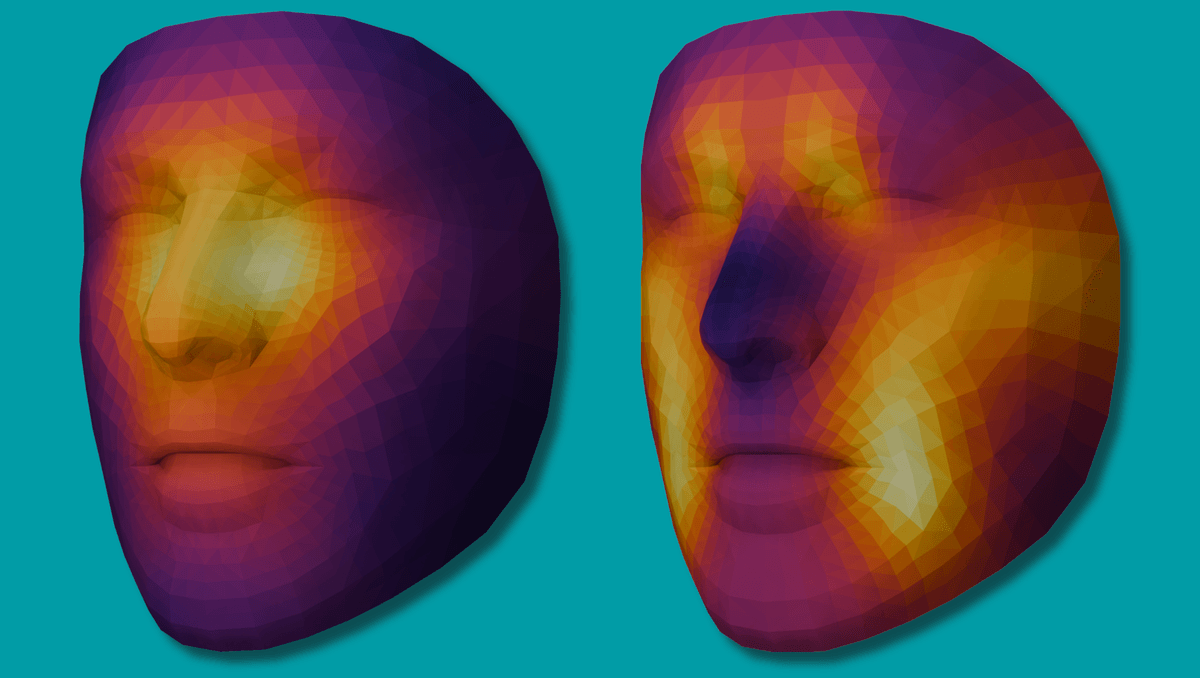
US researchers developed FaceSurvival, an AI tool that estimates cancer patients’ risk of dying from a photo of their face.
They trained it with facial images and tested it on thousands of cancer patients, including groups in the United States and the Netherlands.
In one test, 64 of 122 patients rated highest risk died within 90 days, compared with 20 of 975 in the lowest-risk group.
The highest-risk quarter was more than three times as likely to die as the lowest-risk quarter, even after researchers accounted for age, sex and cancer type.
The tool builds on doctors’ existing practice of judging patients’ health by appearance, but tries to make that assessment more consistent.
Researchers also found that patients who looked at least five years older had a 21% higher risk of death.
The team says the tools could eventually help doctors decide which patients may be fit for aggressive cancer treatment and who may need a gentler approach.

An AI model developed by researchers at Mass General Brigham estimates cancer patients’ risk of death from a photograph of their face.
In a US test group of 3,820 patients, 64 of the 122 given the highest risk scores died within 90 days of their photograph.
The model was trained using more than 40 million facial images and photographs of cancer patients.
A related tool estimates biological age from facial photographs, and patients who appeared at least five years older had a higher risk of death.
Researchers say the tools could help inform treatment decisions, but they are not intended to replace doctors’ judgment.
- Who
- Researchers at Mass General Brigham developed the AI tools; they assess cancer patients.
- What
- The tools estimate biological age and predict cancer survival from facial photographs.
- When
- The study was published on October 19, 2026.
- Where
- The research was conducted by a US team; the findings were tested among patients in the US and the Netherlands.
- Why
- The tools may help doctors assess patients’ health and inform treatment decisions.
Researchers supporting the tools
Miroslaw Bober
Clinical value
Researchers supporting the tools
The researchers say facial analysis could provide another source of information to guide personalised treatment decisions.
Miroslaw Bober
Bober says the study has not shown that the predictions add clinically useful information beyond doctors’ assessments of general health and fitness.
Readiness for use
Researchers supporting the tools
The researchers see the tools as potentially useful in supporting decisions, not replacing doctors’ judgment.
Miroslaw Bober
Bober says the tool is not ready for clinical use and needs comparison with doctors’ judgment and testing across hospitals and patient groups.
Researchers trained an AI model on more than 40 million facial photographs and adapted it to estimate biological age and cancer survival.
Researchers tested the survival tool on 3,820 cancer patients and the biological-age tool on more than 38,000 cancer patients.
The findings were published in The Lancet Digital Health.
- Training images
- More than 40 million facial photographs
- US survival test group
- 3,820 cancer patients
- Highest-score group
- 64 of 122 patients died within 90 days
- Lowest-score group
- 20 of 975 patients died within 90 days
- Biological-age finding
- Appearing at least five years older was associated with a 21% higher risk of death
- External testing
- Nearly 4,900 cancer patients in the Netherlands
4 sources
AI tool predicts cancer survival chances with single face photo, study finds
Could a SELFIE predict whether you'll survive cancer? Scientists develop AI tool that can spot patients at greatest risk of dying simply by looking at their faces
New AI tool can predict cancer survival by a single patient selfie, study suggests
Can AI predict whether you’ll die from cancer from just an image of your face?
What people are saying
We think that using AI, we can capture some of that physiological reserve, risk for mortality, just from a face photo
Our goal is to make face photograph-based health assessment more quantitative, consistent and scalable so it can support personalised treatment decisions rather than replace physician judgment.
Predicting an outcome is not the same as explaining it
To our knowledge, this is the first demonstration that an AI model can directly predict cancer survival from a simple photograph.