

Science & Tech · Science & Environment · 3 hrs ago
Earth’s mantle and ancient ice may explain the Great Unconformity
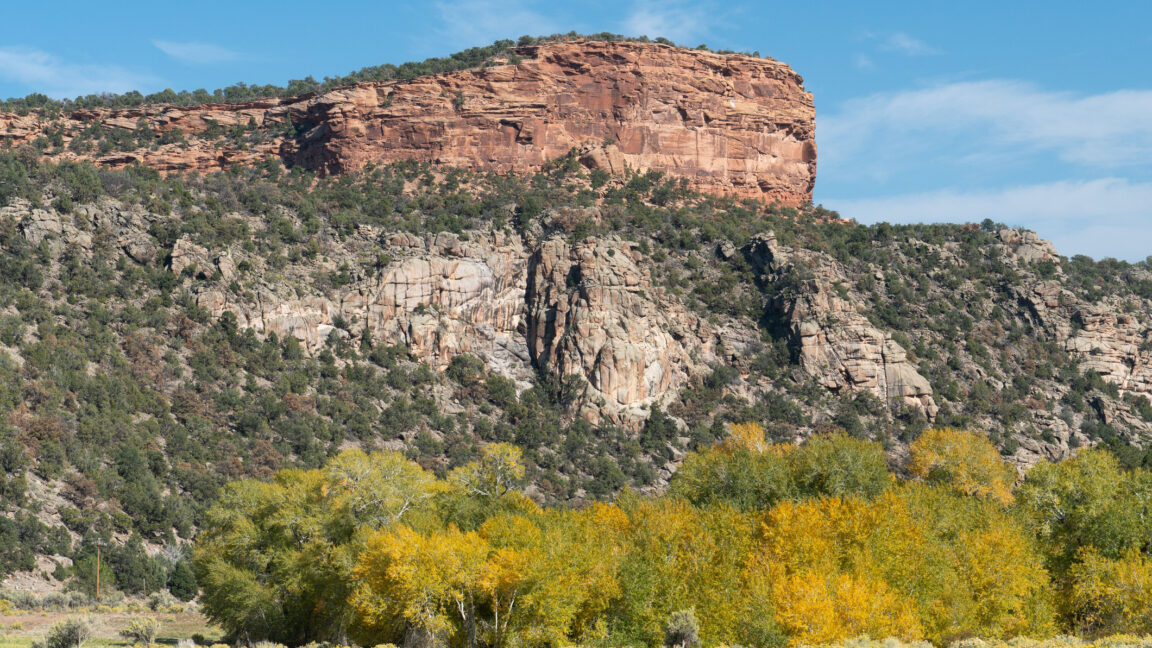
Geologists have found a vast gap in Earth’s rock record in places including North America, northern Europe and northern China.
In the Grand Canyon and elsewhere, rocks about 540 million years old or younger lie directly on much older rocks, with hundreds of millions of years missing between them.
Researchers say mantle movement lifted ancient continents, according to a study published in Nature.
Their computer models suggest the movement raised parts of Laurentia, Baltica and North China above sea level.
Ice sheets then wore away exposed rock, which may explain the Great Unconformity, a name given to the gap after geologists identified it in the 1870s.
The missing interval overlaps the rise of diverse animal life around the time of the Cambrian explosion, though the study does not establish that erosion caused this change.

The Great Unconformity is a gap in Earth’s rock record spanning hundreds of millions of years in many places.
A new study proposes that movement in Earth’s mantle raised ancient continents, where ice sheets eroded their surfaces.
The gap is found in places including the Grand Canyon, North America, northern China and northern Europe.
In some locations, rocks about 540 million years old or younger lie directly on basement rock up to two billion years old.
The missing interval overlaps with the Cambrian explosion, a major diversification of life that began around 540 million years ago.
- Who
- Researchers behind a new study of the Great Unconformity.
- What
- They propose that mantle movement raised ancient continents and that ice sheets scoured their surfaces, helping explain the missing rock layers.
- When
- The Great Unconformity formed during a period within the past billion years; the exact timing is not stated.
- Where
- It appears in places including North America, northern China and northern Europe.
- Why
- The proposed explanation is that mantle movement lifted continents above sea level, where moving ice eroded their surfaces.
Proponents of ice-sheet erosion alone
Researchers proposing mantle uplift followed by ice-sheet erosion
Cause of the Great Unconformity
Proponents of ice-sheet erosion alone
Massive ice sheets during the Snowball Earth period may have eroded the missing layers.
Researchers proposing mantle uplift followed by ice-sheet erosion
Mantle convection lifted ancient continental blocks, and ice sheets then scoured their surfaces.
Geologists discovered the gap in rock layers and named it the Great Unconformity.
The Snowball Earth period occurred, during which some scientists argue massive ice sheets may have eroded rock.
The Cambrian explosion began, and younger sedimentary layers associated with the Great Unconformity date from around this time.
- Rock-record gap
- Hundreds of millions of years in many locations
- Grand Canyon rock layers
- About 540 million years old or younger over basement rock up to two billion years old
- Proposed process
- Mantle convection lifted continents; ice sheets eroded their surfaces
- Modeling tool
- Australian supercomputer Gadi
- Cambrian explosion
- Began around 540 million years ago
2 sources
What people are saying
deep processes inside Earth lifted some continents high above the sea, where their surfaces were scoured down by the grinding movement of enormous sheets of ice