

Health · Public Health & Disease · 1 day ago
Festive celebrations add pollution risks to India’s air, water and soil
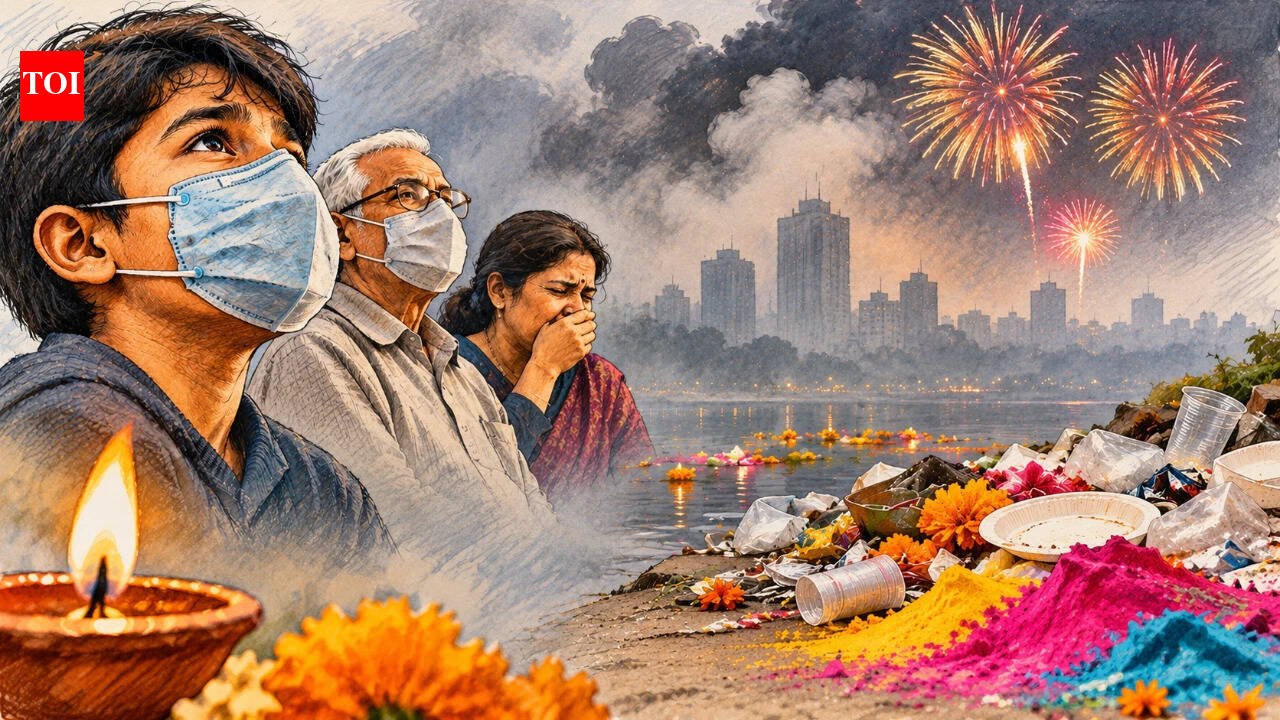
Festivals across India can add to pollution through fireworks, synthetic colours, disposable materials, transport and decorative lighting.
Firecrackers release fine particles and gases, while colours and discarded waste can affect water and soil.
Fine particles can enter deep into the lungs and trigger inflammation, coughing, throat irritation and breathing problems.
Children, older people and those with asthma, COPD or other respiratory conditions are especially vulnerable.
Pollution can linger after celebrations end when weather conditions slow the dispersal of particles.
These emissions add to pollution from vehicles, industry and construction, making environmental management harder in already polluted cities.
The effects can reach health and local ecosystems through poorer air and water quality, waste and pressure on urban sanitation.

Festive celebrations in India can pollute air, water and soil through firecrackers, synthetic colours, plastic waste and debris.
Firecrackers release fine particles and gases, while PM2.5 can penetrate deep into the lungs and cause health risks.
Children, older people and those with respiratory conditions are particularly vulnerable to sudden rises in air pollution.
Pollution can persist after celebrations, especially when weather conditions slow the dispersal of pollutants.
Festivities can also add pressure to sanitation, water quality and local ecosystems.
- Who
- People celebrating festivals in India, with children, older people and people with respiratory conditions identified as especially vulnerable.
- What
- Festive activities can add pollution to air, water and soil and affect public health and local ecosystems.
- When
- During festivals, particularly Diwali; some pollution can remain after celebrations end.
- Where
- India, including cities and areas around riverbanks.
- Why
- Firecrackers, synthetic colours, disposable materials, transport and improper waste disposal add pollutants and waste.
This story does not have two clearly opposing sides.
This story does not have a timeline yet.
- PM2.5 size
- 2.5 micrometres or less
- Firecracker pollutants
- PM2.5, PM10, sulphur dioxide and nitrogen oxides
- Potential metal emissions
- Barium and aluminium
- Vulnerable groups
- Children, elderly people and people with asthma, COPD or other respiratory conditions
- Article location
- New Delhi
What people are saying
During festivals like Diwali, the concentration of pollutants in the air can increase due to firecracker emissions.
Children, elderly people and individuals suffering from asthma, COPD or other respiratory conditions are particularly vulnerable.
The effects of pollution do not necessarily disappear once the firecrackers stop.