

Science & Tech · Space · 4 hrs ago
Research proposes 27 exoplanet targets for the Lazuli space telescope
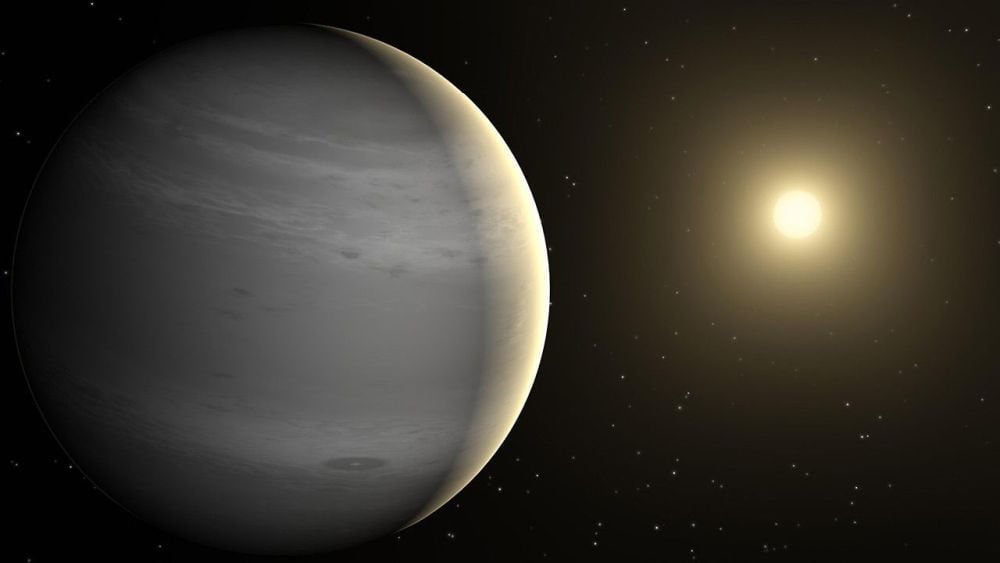
Researchers proposed 27 giant exoplanets as targets for the ExtraSolar Coronagraph, an instrument planned for the Lazuli Space Telescope.
Lazuli is a planned private space telescope linked to Eric Schmidt, Google's former CEO, and is expected to launch by 2029.
Its 3-meter mirror would be larger than Hubble's 2.4-meter mirror.
The coronagraph is designed to study planets by capturing starlight they reflect, rather than heat they emit.
This approach could help scientists study the atmospheres of older planets and planets closer to their stars, and may allow searches for signs of life.
The proposed targets are already known planets, which could make observations more efficient because the telescope's measurements may require tens to hundreds of hours.
Researchers say observations could complement work by the ELT's METIS instrument and the Nancy Grace Roman Space Telescope; the next step depends on Lazuli's planned launch and future observations.

Researchers have proposed 27 giant exoplanets as targets for the Lazuli Space Telescope’s ExtraSolar Coronagraph.
The proposed observations would use reflected starlight to study the planets and their atmospheres.
The researchers say this approach can examine mature planetary systems without relying on planets’ leftover heat.
Lazuli is planned to have a 3-meter mirror and is expected to launch by 2029.
The authors say long exposure times make carefully selecting known planets important for efficient observations.
- Who
- Researchers Logan Pearce of the University of Michigan and Ewan Douglas of the University of Arizona proposed the targets.
- What
- They proposed 27 giant exoplanets for observations with Lazuli’s ExtraSolar Coronagraph.
- When
- The article was published on October 23, 2026. The telescope is planned to launch by 2029.
- Where
- The proposed observations would be made with the Lazuli Space Telescope. The article does not state where the telescope will operate.
- Why
- Reflected-starlight observations could help characterize atmospheres in mature planetary systems and may enable probes of biosignatures.
This story does not have two clearly opposing sides.
Universe Today published its article about the proposed list of 27 targets.
The Lazuli Space Telescope is planned to launch.
- Proposed targets
- 27 giant exoplanets
- Telescope mirror
- 3 meters
- Coronagraph
- ExtraSolar Coronagraph (ESC)
- Proposed launch
- By 2029
- Researchers
- Logan Pearce and Ewan Douglas
What people are saying
Our target list spans ages and temperatures of planets not probed before by direct imaging
Campaign efficiency can be dramatically improved by targeting known planets and leveraging well constrained orbital priors in order to prioritize targets and time observations for the maximum likelihood of detection.
To date all exoplanets have been imaged through their self-luminous thermal emission, but direct, spatially resolved imaging of planets via reflected starlight is on the near horizon