

Politics · Brazil · 1 hr ago
Brazil’s presidential vote could shape the Amazon’s future
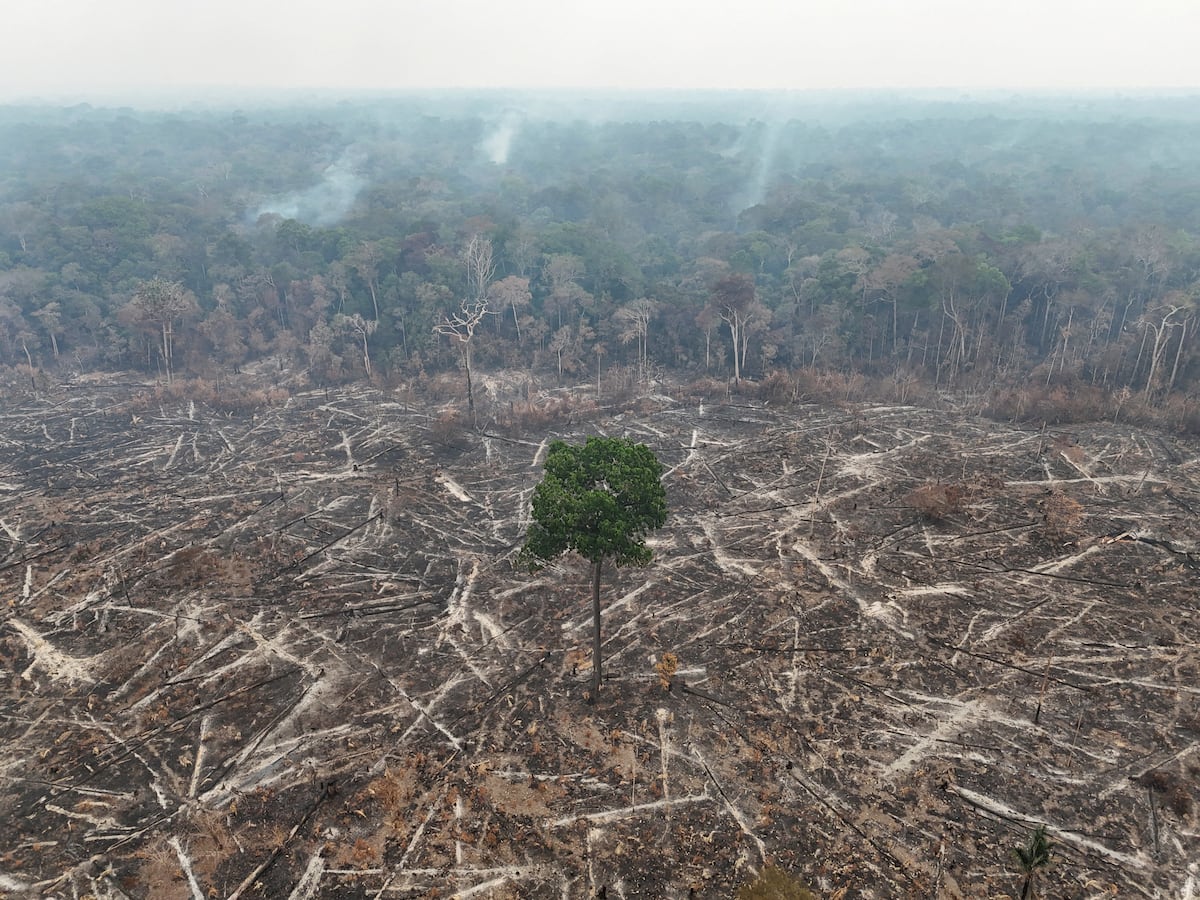
Brazil’s presidential runoff on Sunday pits Luiz Inácio Lula da Silva against Flávio Bolsonaro in a contest with major implications for the Amazon.
Lula has worked to curb deforestation, while Bolsonaro has proposed loosening environmental rules and giving landowners more power.
Brazil holds about 60% of the Amazon, which is home to more than 27 million people in the Brazilian region and helps regulate the climate.
Scientists warn that the rainforest could reach a tipping point, shifting toward a drier ecosystem that would be difficult or impossible to restore.
About 17% of the Amazon has been cleared, and some research suggests widespread changes could follow if forest loss exceeds 20% alongside further global warming.
The candidates’ policies could affect how quickly forest loss continues, and the winner is expected to take a different approach to protecting the rainforest.

Brazil’s presidential election is expected to influence the future of the Amazon, though the rainforest has been largely absent from the campaign.
The two candidates offer sharply different approaches to environmental rules and forest protection.
Under President Luiz Inácio Lula da Silva, Amazon deforestation fell by 71% over four years, according to El País English.
Sen. Flávio Bolsonaro has called for loosening environmental laws and giving landowners more freedom to use their land.
Scientists warn that deforestation and global warming could push the Amazon toward a tipping point, after which parts could shift to a drier ecosystem.
- Who
- Brazilian voters choosing between President Luiz Inácio Lula da Silva and Sen. Flávio Bolsonaro.
- What
- The presidential election could shape policies affecting the Amazon’s future and risk of reaching an ecological tipping point.
- When
- The vote is scheduled for Sunday. The articles were published on October 22 and 23, 2026.
- Where
- Brazil, which contains about 60% of the Amazon rainforest.
- Why
- The candidates propose different approaches to forest protection, and scientists warn that forest loss and warming could cause lasting ecosystem change.
Lula da Silva’s environmental approach
Flávio Bolsonaro’s proposed approach
Forest policy
Lula da Silva’s environmental approach
Lula has sought to curb deforestation and support a sustainable economy.
Flávio Bolsonaro’s proposed approach
Bolsonaro has called for modernizing environmental laws and giving landowners more decision-making power.
Environmental controls
Lula da Silva’s environmental approach
Lula’s government restored enforcement measures, fines and operations against illegal activity in protected areas.
Flávio Bolsonaro’s proposed approach
Bolsonaro has promised to loosen controls, allow mining in Indigenous lands and end the requirement to preserve some native vegetation.
Jair Bolsonaro governed Brazil; deforestation surged as enforcement agencies were dismantled and environmental rules were loosened.
Lula returned to government and made environmental policy a priority.
Lula and Flávio Bolsonaro took part in a televised presidential debate in São Paulo.
Brazil announced its lowest Amazon deforestation rate on record under Lula’s government.
Brazilians are scheduled to vote for president.
- Brazil’s share of the Amazon
- About 60%
- Amazon cleared
- About 17%
- Estimated forest-loss threshold in some research
- More than 20%, alongside warming of around 2°C
- Current global temperature rise
- About 1.4°C
- Deforestation change under Lula
- Fell by 71% over four years, according to El País English
- Brazilian voters
- Nearly 159 million, according to El País English
3 sources
What people are saying
Brazil will decide whether we continue on the path to end deforestation or to end the forest
You will be able to plant, raise cattle, do whatever you want on your land; what you exploit from the land is yours. We are going to end those environmental obstacles that exist, especially for ideological reasons
As the climate changes and puts increasing stress on the Amazon, the forest holds until it can’t anymore and collapses, either in parts or all at once, a process that could take decades or centuries once the tipping point is crossed