

World · Africa · 4 hrs ago
Antelope Protein Found in 60,000-Year-Old Ochre in South Africa
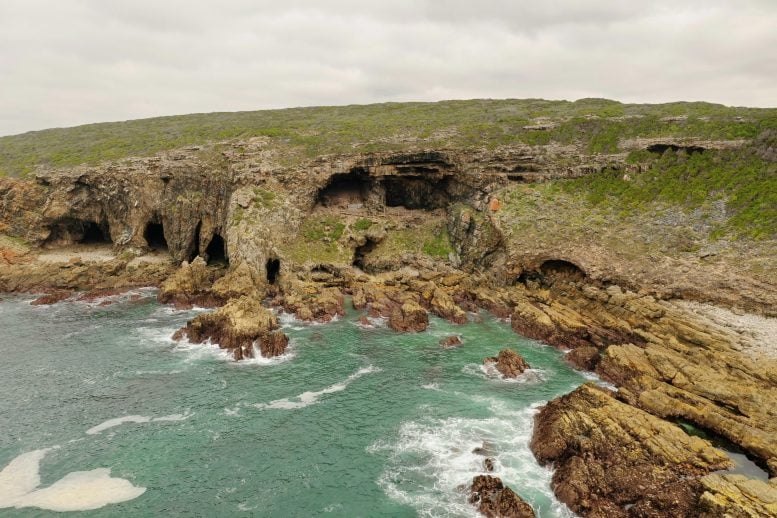
Researchers found protein from a common eland in 60,000-year-old ochre-rich sediments at the Kilpdrift Complex in South Africa's De Hoop Nature Reserve.
The protein was type I collagen, a structural material found in animal tissues, identified through analysis of archived sediment samples.
The finding links animal material with ochre use during the Middle Stone Age, a period associated with early Homo sapiens.
It is not clear whether people mixed animal materials into the pigment or whether ochre-treated eland hides were present at the site.
The discovery offers molecular evidence of materials otherwise hard to detect, especially in Africa, where ancient DNA rarely survives.
Researchers say protein analysis could help archaeologists investigate biological traces that have disappeared from view, although the exact use of the ochre and eland materials remains unknown.

Researchers identified common eland collagen in a 60,000-year-old ochre-rich surface in South Africa.
The surface was found at the Kilpdrift Complex in the De Hoop Nature Reserve.
The protein may come from animal material deliberately mixed with ochre or from eland hides treated with the pigment.
The finding provides molecular evidence that animal-derived materials were associated with ochre use during the Middle Stone Age.
The study shows that ancient proteins can survive in archaeological sediments in an environment where ancient DNA rarely does.
- Who
- Researchers from Kyushu University, Universitetet i Bergen, and the University of Copenhagen.
- What
- They identified common eland collagen in an ochre-rich archaeological surface.
- When
- The surface dates to about 60,000 years ago; the study was published on 1 October 2026.
- Where
- The Kilpdrift Complex in South Africa’s De Hoop Nature Reserve.
- Why
- To investigate biological materials associated with ochre use and learn more about early human behavior.
This story does not have two clearly opposing sides.
An ochre-rich surface containing common eland collagen was formed.
The study was published in Proceedings of the Royal Society B: Biological Sciences.
- Age of ochre-rich surface
- About 60,000 years
- Animal identified
- Common eland, Taurotragus oryx
- Site
- Kilpdrift Complex, De Hoop Nature Reserve, South Africa
- Analysis method
- Liquid chromatography-tandem mass spectrometry (LC-MS/MS)
- Journal
- Proceedings of the Royal Society B: Biological Sciences