

Science & Tech · Space · 7 hrs ago
Faster Model Tackles How Asteroid Shapes Affect Deflection
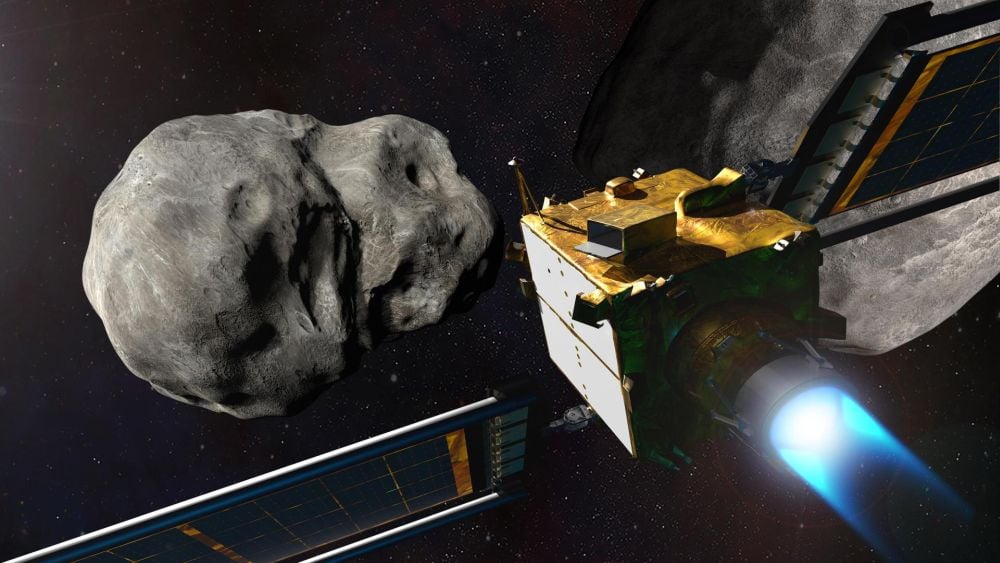
Researchers developed a faster way to model asteroid deflection using pulsed radiation.
The work was led by physicist Nathan Moore of Sandia National Laboratories and examined asteroids with irregular shapes.
A nuclear device detonated near an asteroid could send out radiation that changes its course without directly striking it.
This method may matter when an object is discovered too late for a kinetic impactor like NASA’s DART mission to alter its path enough.
Asteroid shape makes the radiation’s effect hard to predict, and breaking an asteroid apart could create debris that might also threaten Earth.
The new algorithm runs more than 1,600 times faster than earlier models, allowing researchers to simulate more realistic asteroid shapes.
Better simulations could help assess this last-resort deflection option, though the work described does not say what action comes next.

Researchers developed an algorithm that makes it much faster to model how an asteroid’s shape affects deflection by a pulse of radiation.
The method is more than 1,600 times faster than older models, according to lead author Nathan Moore.
The researchers simulated known asteroids with irregular shapes, which earlier work often did not account for.
The research examines stand-off X-ray mitigation, a proposed way to alter an asteroid’s course using a nuclear explosion detonated nearby.
- Who
- Nathan Moore, a physicist at Sandia National Laboratories, led the research with colleagues.
- What
- Researchers developed a faster algorithm to model vapor ejecta from asteroids during pulsed-energy deflection.
- When
- The research was reported on November 5, 2026.
- Where
- The work was published in the journal Icarus. The simulations concerned asteroids; a specific location for the research is not stated.
- Why
- Asteroid surface shape affects how radiation pulses may deflect them, but irregular shapes are difficult to model. Better predictions could help assess deflection options.
This story does not have two clearly opposing sides.
This story does not have a timeline yet.
- Algorithm speed
- More than 1,600 times faster than the old models
- Lead author
- Nathan Moore
- Researcher's institution
- Sandia National Laboratories
- Journal
- Icarus
- Research topic
- Vapor ejecta over asteroid geometries during pulsed-energy deflection
What people are saying
Our new algorithm is over 1,600 times faster, which was critical to this breakthrough
With the old models, computers just couldn’t handle it
The effectiveness of deflecting Near Earth Objects (NEOs) using pulsed radiation is challenging to quantify because it hinges critically on surface topography, which is often unknown