

Business · Economy · 1 hr ago
South Korea plans pension access for spouses with no income
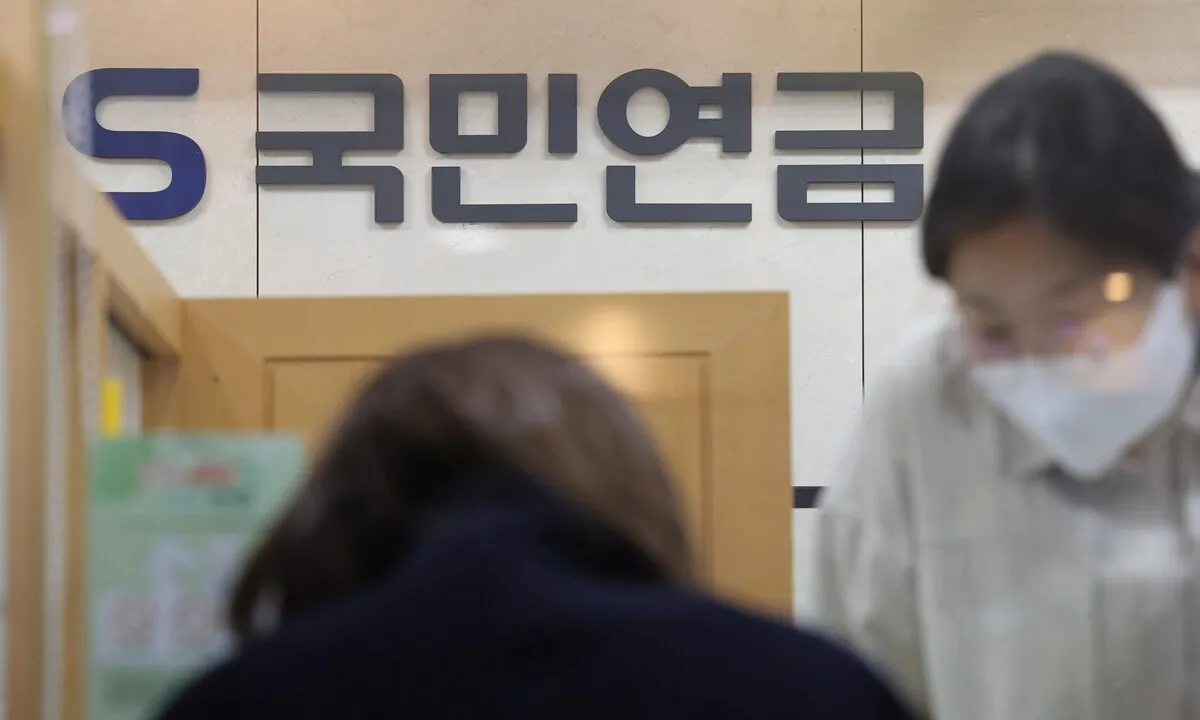
South Korea plans to change National Pension rules so spouses with no income can join as regional members.
Under current rules, a married person with no income is excluded, while an unmarried person with no income can keep membership without paying contributions.
The proposed change would let spouses keep their membership while their income is zero, and pay contributions later for up to 119 months.
Those later payments could help them reach the 10-year minimum needed to receive an old-age pension.
The change is intended to move away from a system built around one pension per household and toward individual retirement income; women’s average monthly old-age pension was about half men’s at the end of 2025.
The government is also considering wider support for low-income regional members, raising the monthly income limit from 800,000 to 1 million won.
The change is being planned, and officials are also reviewing rules for paying past contributions.

South Korea is pursuing a pension-system change that would let spouses with no income, including homemakers, keep National Pension membership.
They would be classified as regional subscribers exempt from paying contributions while they have no income.
The change would give them access to back payments for up to 119 months to help meet the 10-year minimum contribution period for an old-age pension.
The proposal aims to shift from a household-based system to individual pension coverage.
Officials and experts say the change could widen pension access, while one expert warned that more pension recipients could increase financial pressure.
- Who
- South Korea’s government and National Pension Service are pursuing the change for spouses with no income, including homemakers.
- What
- The proposal would classify them as regional subscribers exempt from contributions while they have no income, allowing them to make back payments.
- When
- The National Pension Service reported the plan on October 22, 2026.
- Where
- South Korea.
- Why
- To bring spouses with no income into the pension system and support individual retirement income.
Supporters of expanding pension coverage
Critics concerned about pension finances
Coverage
Supporters of expanding pension coverage
Supporters say bringing spouses with no income into the system could reduce gaps in pension coverage and widen eligibility for benefits.
Critics concerned about pension finances
Critics say more people making back payments and receiving pensions could increase the system’s financial burden.
South Korea introduced the National Pension system with a household-centred design.
The National Pension Service reported that it was pursuing a change to include spouses with no income as regional subscribers exempt from contributions.
The government plans to begin paying one month of pension contributions for people born in 2009 when they turn 18.
- Back-payment limit
- Up to 119 months
- Minimum contribution period
- 10 years, or 120 months
- Current voluntary contribution
- At least 95,000 won per month for spouses with no income
- Proposed low-income support threshold
- Raise from monthly income below 800,000 won to below 1 million won
- First contribution support
- 41,000 won for one month for people born in 2009
3 sources
What people are saying
The structure that excludes homemakers from automatic National Pension coverage simply because they are homemakers needs to be improved quickly.
If income continues to be absent, they would remain exempt from contributions; if income arises, we are considering setting contributions according to regional subscriber rules.
Bringing people outside the National Pension system, including spouses with no income, into it is desirable from the perspective of reducing coverage gaps by expanding the number of people eligible for benefits.
If people who have been unable to pay contributions make back payments and the number of pension recipients rises, the financial burden on the pension system could grow.