

Science & Tech · Space · 21 hrs ago
Astrolab proposes solar-powered lunar network, targeting first mission in 2028
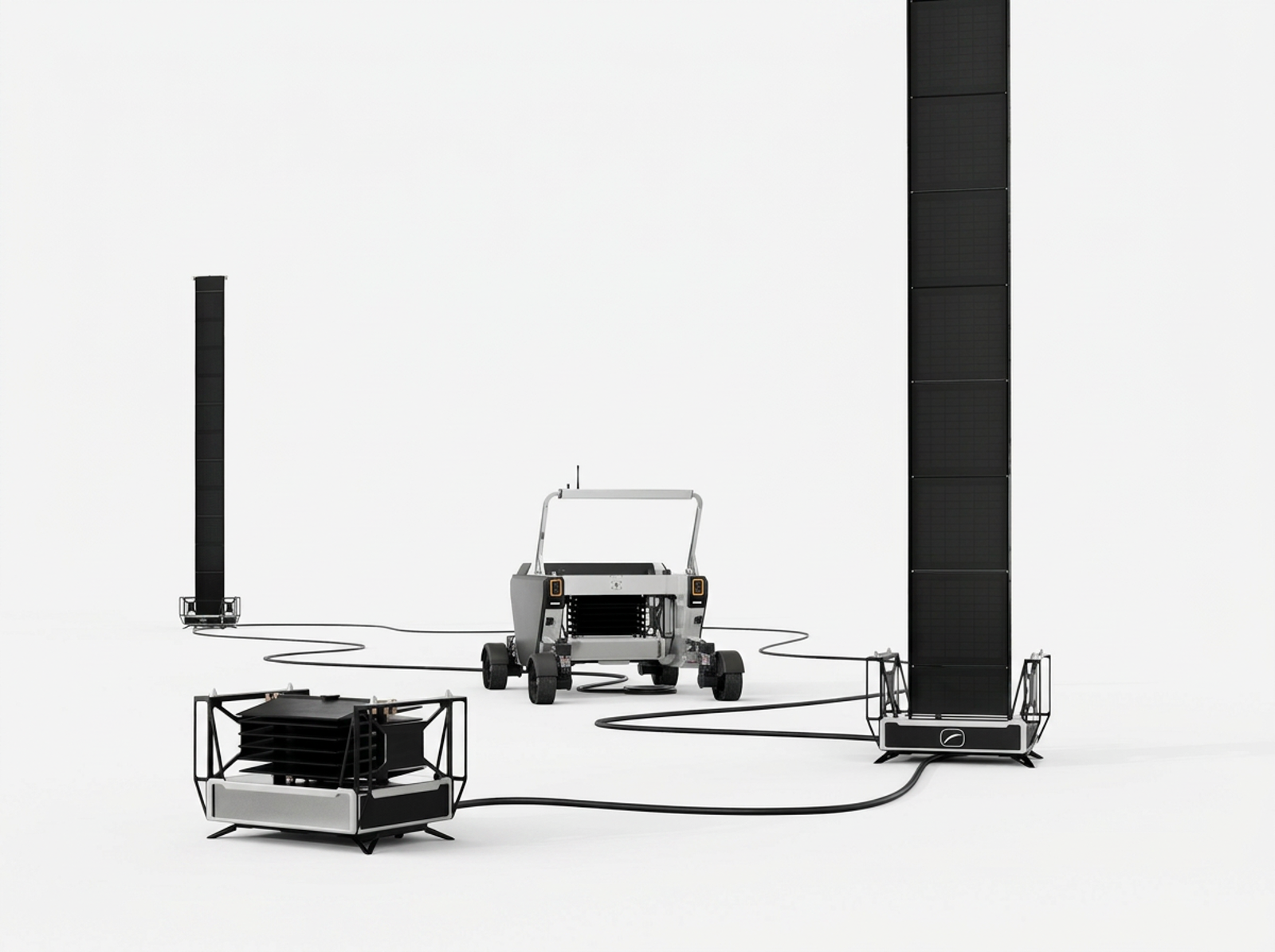
Astrolab has proposed LUMIS, a network of solar-powered stations for the Moon.
The US space technology company says the stations would provide electricity, Wi-Fi, 5G and computing services to lunar equipment.
Its initial demonstration nodes are designed to generate 2 kilowatts, with future versions potentially reaching 20 kilowatts each.
Robotic FLEX rovers would move the stations to places with better sunlight and communications coverage.
Astrolab says the stations could run for more than 400 hours on internal power reserves and relay communications over distances of more than 100 kilometres.
The network could let future Moon missions share power and communications infrastructure instead of carrying all of it themselves.
Astrolab is targeting a first deployment in 2028 on a planned commercial FLEX mission using SpaceX's Starship, but the network is still a proposal.

Astrolab has unveiled LUMIS, a proposed solar-powered lunar network for electricity, communications and computing.
The company is targeting its first LUMIS deployment in 2028 on a planned commercial FLEX mission using SpaceX’s Starship.
Initial demonstration nodes are designed to generate 2 kW, with future versions potentially producing 20 kW each.
Astrolab says the stations could use internal reserves to operate for more than 400 hours and relay communications across more than 100 kilometres.
The proposed network would use FLEX robotic rovers to move stations to locations with better sunlight and communications coverage.
- Who
- Astrolab, a US space technology company, proposed the network.
- What
- LUMIS is a proposed solar-powered lunar network for electricity, Wi-Fi, 5G connectivity and computing services.
- When
- Astrolab is targeting a first deployment in 2028.
- Where
- On the Moon; the company plans to use the network on the lunar surface.
- Why
- To provide power and communications to equipment and future missions operating on the Moon.
This story does not have two clearly opposing sides.
Astrolab outlined plans for LUMIS in an announcement.
Astrolab planned to display full-scale models at the Max Power showcase at Kennedy Space Center.
Astrolab is targeting the first LUMIS deployment aboard a planned commercial FLEX mission using SpaceX’s Starship.
- Initial node capacity
- 2 kW
- Potential future node capacity
- 20 kW each
- Planned interconnected capacity
- More than 100 kW
- Internal power reserves
- More than 400 hours
- Proposed relay distance
- More than 100 kilometres
- First deployment target
- 2028