

Health · Public Health & Disease · 20 hrs ago
WHO backs wider use and study of traditional medicine
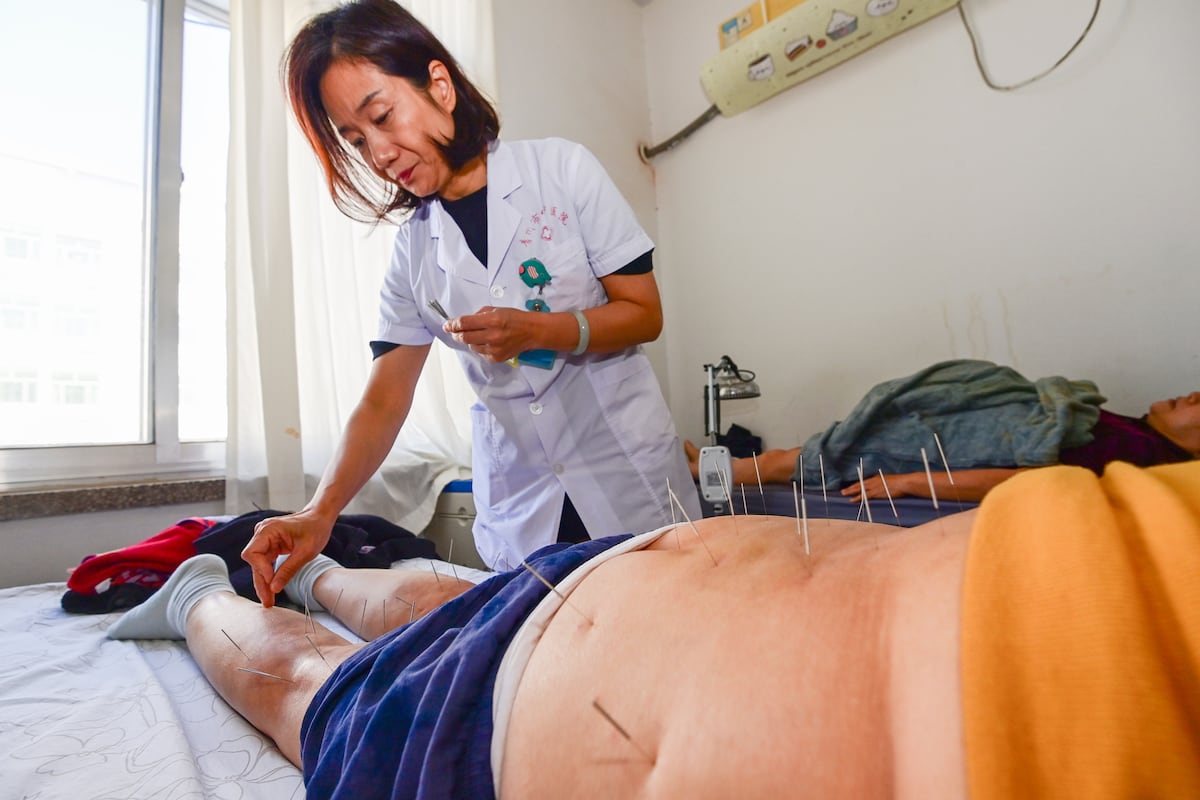
The World Health Organization is promoting traditional medicine as part of health care, with support from China and India.
Its 2025–2034 strategy aims to standardize some practices, including acupuncture and India’s ayurveda.
The WHO says traditional practitioners could help expand access to care, especially in places far from health facilities.
The agency also warns that 11 million health workers could be missing by 2030.
But many traditional treatments lack scientific evidence, and former WHO officials say they cannot make up for funding shortages for medicines such as HIV drugs.
The WHO’s traditional medicine center, based in India, says the field needs more research, and the agency and India have held biennial summits since 2023.

The World Health Organization is promoting the integration and study of traditional medicine, backed by China and India.
The WHO says integrating authorized traditional medicine practitioners could improve access to health care.
Its global strategy covers 2025 to 2034 and is funded by China and India.
Critics question whether traditional medicine can address the WHO’s funding shortfall and say many practices lack scientific evidence.
The WHO’s Global Centre for Traditional Medicine says less than 1% of health research funding goes to studying traditional medicine.
- Who
- The World Health Organization is promoting traditional medicine, with support from China and India.
- What
- The WHO is backing wider integration and research of traditional medicine practices.
- When
- Its global strategy covers 2025 to 2034. The WHO has organized biennial summits with India since 2023.
- Where
- The WHO’s Global Centre for Traditional Medicine is based in India.
- Why
- The WHO says integrating authorized practitioners could improve health care access, particularly where medical infrastructure is limited.
WHO and traditional medicine advocates
Critics of traditional medicine
Health care access
WHO and traditional medicine advocates
Integrating authorized traditional medicine practitioners could improve universal health care, the WHO’s Geetha Krishnan Gopalakrishna Pillai says.
Critics of traditional medicine
Mario Raviglione says traditional medicine is not an alternative to underfunding essential treatments.
Research
WHO and traditional medicine advocates
The WHO centre says traditional medicine has potential and should receive research funding on a scale comparable to other scientific research.
Critics of traditional medicine
Historian Javier Puerto says most traditional treatments lack scientific evidence.
The WHO created its Global Centre for Traditional Medicine after an investment of more than 200 million euros from the Indian government.
The WHO and India began organizing new biennial summits on traditional medicine.
The WHO’s global strategy on traditional medicine covers this decade.
- Strategy period
- 2025–2034
- Centre established
- 2022
- Centre location
- India
- Investment in centre
- More than 200 million euros from the Indian government
- Health research funding for traditional medicine
- Less than 1%
What people are saying
If we could integrate authorized traditional medicine practitioners into health systems, health care would improve considerably.
Less than 1% of all health research funding is devoted to studying traditional medicine.
But it is not an alternative to underfunding, for example, for antiretroviral drugs [against HIV]. People will die.
most of them “do not have scientific evidence of any kind”.