

Science & Tech · Space · 1 hr ago
Researchers 3D-print interlocking bricks from simulated lunar dust
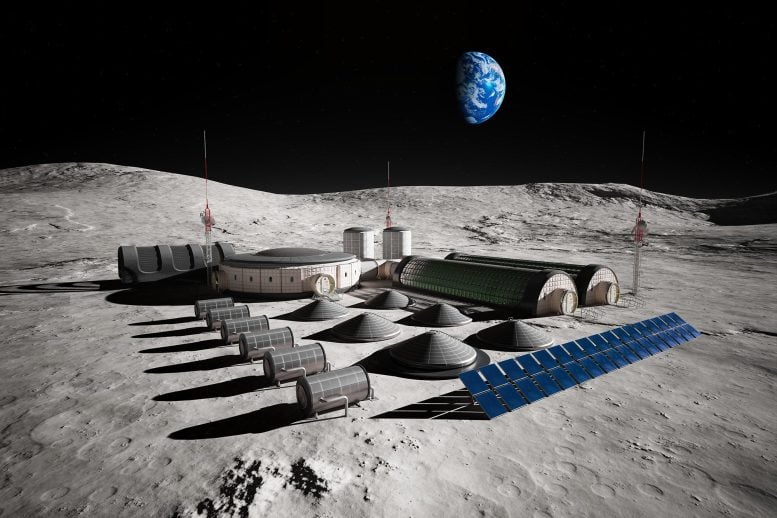
Researchers at the University of Arkansas made bricks from simulated lunar dust using a 3D-printing process.
The method heats the powder so its particles bond to one another, without added binding materials.
The team used a material designed to imitate lunar regolith, the loose, rocky dust covering the Moon.
The blocks, including cross-shaped and H-shaped pieces, can fit together to form larger structures.
But the bricks are porous and weaker than pieces made with binding agents, so they are not ready to support construction loads.
The researchers say they need to improve the bricks and test how the process works in the Moon’s vacuum and microgravity; if developed further, it could reduce supplies needed from Earth for lunar bases.

Researchers at the University of Arkansas 3D-printed interlocking blocks from simulated lunar dust without adding a binder.
The team used laser powder bed fusion to fuse the regolith simulant into shapes that can fit together.
The blocks were a few centimeters across and included cross-shaped and H-shaped pieces.
The blocks were porous and weaker than printed objects made with binding agents, so they are not yet ready to support construction loads.
The researchers say more work is needed to improve the blocks and test the process in lunar conditions.
- Who
- Researchers at the University of Arkansas, including first author Cole McCallum and senior author Wan Shou.
- What
- They 3D-printed interlocking blocks from simulated lunar regolith without a binder.
- When
- The study was published on November 15, 2026.
- Where
- The research was conducted at the University of Arkansas. The blocks were made from a simulant of lunar material.
- Why
- The approach could reduce construction supplies that would need to be transported from Earth for future lunar bases.
This story does not have two clearly opposing sides.
Apollo missions collected samples that the lunar regolith simulant was designed to imitate.
The study was published in NPJ Advanced Manufacturing.
- Research team
- University of Arkansas
- Material
- Lunar Highlands Regolith Simulant (LHS-1)
- Printing method
- Laser powder bed fusion
- Block size
- A few centimeters across
- Binder
- None used
What people are saying
There’s nothing else it’s binding to. The regolith powder is binding to itself.
These structures we’re making can be self-supported
But I would be hesitant to say our process could be used for something that’s supporting other loads at this moment yet.