

Science & Tech · Science & Environment · 1 hr ago
Chernobyl fuel particles remain more stable than scientists expected
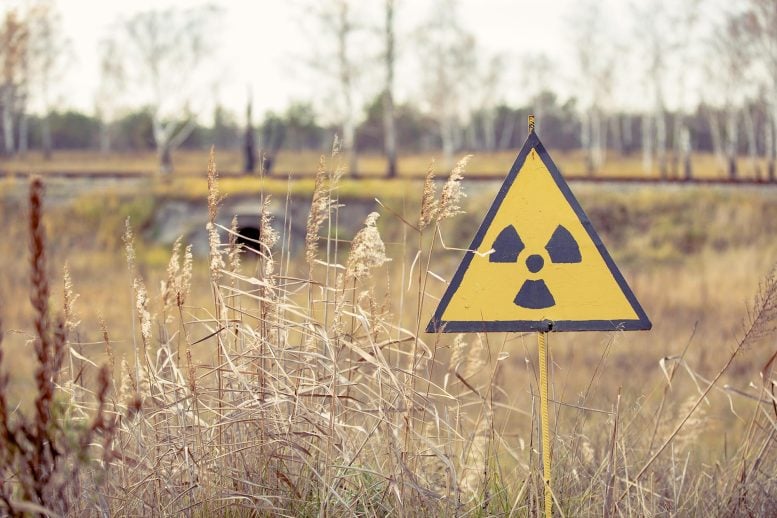
Researchers examined six radioactive fuel fragments from the Chernobyl disaster, which happened in Ukraine in 1986.
The tiny particles remain in soil around the former nuclear power plant, and some are still highly radioactive.
Using X-rays, scientists found that the fuel’s crystal structure had largely stayed intact.
The fragments were also more chemically stable than expected, retaining substances produced when atomic nuclei split.
That stability could limit radioactive releases into nearby soil and water, but the researchers say six particles cannot establish the safety of the wider area.
The findings could help scientists estimate how quickly the fragments break down and assess the risks they pose.

Researchers found that six radioactive particles from Chernobyl’s 1986 reactor accident have retained much of their original crystal structure.
The particles were chemically more stable than expected and still held fission products.
This stability could limit the release of radioactive material into nearby soil and water.
The findings may help improve assessments of risks from the particles, but six samples cannot establish the safety of the wider region.
Scientists used synchrotron X-ray diffraction, measuring each particle from 2,000 angles.
- Who
- Researchers from Leibniz University Hannover and the Helmholtz-Zentrum Dresden-Rossendorf.
- What
- They examined six radioactive fuel particles and found their crystal structures had remained largely intact.
- When
- The particles came from the 1986 Chernobyl accident; the article was published on October 19, 2026.
- Where
- The particles were isolated from Ukrainian soil samples and examined at the Rossendorf Beamline in Grenoble.
- Why
- To understand how quickly the particles break down and release radioactive substances.
This story does not have two clearly opposing sides.
A reactor at the Chernobyl Nuclear Power Plant exploded during a failed safety test.
Graphite in the reactor burned for ten days, and some fuel oxidized into different uranium oxides.
Researchers examined six particles using synchrotron X-ray diffraction.
SciTechDaily published its article about the findings.
- Particles examined
- 6
- Particle size
- 8 to 50 micrometers across
- X-ray measurements
- 2,000 angles per particle
- Accident date
- April 26, 1986
- Reactor location
- Chernobyl Nuclear Power Plant, Soviet Ukraine
What people are saying
The colleagues from Hanover and I used various methods to isolate the particles from Ukrainian soil samples and attach them to tungsten electrodes.
There are three classes of these particles.
Ultimately, we fully rotated the particles in an X-ray beam focused down to 100 micrometers—about the thickness of a human hair. We measured each particle from 2,000 different angles to seamlessly capture all the reflections.