

Science & Tech · Space · 1 day ago
James Webb detects unexplained infrared signal in deep-space field
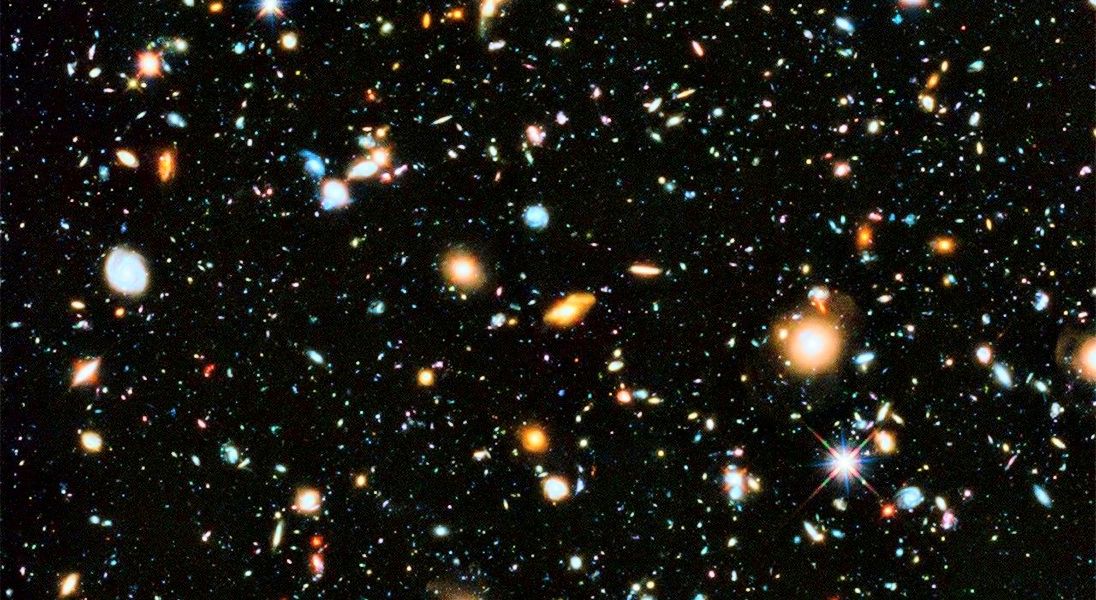
The James Webb Space Telescope detected a bright infrared signal with no known source.
It came from the Hubble Ultra Deep Field, a patch of sky in the Fornax constellation that Hubble studied for more than 270 hours and where nearly 10,000 galaxies are known.
The signal appeared in two observing campaigns 88 days apart, making a simple measurement error unlikely.
Astronomers are considering four possible explanations: an early or younger galaxy, a supernova, or a black hole tearing apart a star.
None fits all the evidence, and no object or other expected signals have been found to confirm them.
More sensitive follow-up observations are planned to identify the source and determine what produced the signal.

The James Webb Space Telescope detected a bright infrared signal in the Hubble Ultra Deep Field with no visible source in existing images.
The signal appeared in observations made 88 days apart, making a simple measurement or detector error unlikely.
The source remains unknown, and researchers say none of four proposed explanations fits all the observations.
The possibilities include a distant or younger galaxy, a supernova, or a black hole tearing apart a star.
Astronomers plan deeper, more sensitive observations to identify the signal’s origin.
- Who
- A team led by Mason S. Huberty of the University of Minnesota detected the signal using the James Webb Space Telescope.
- What
- A bright infrared emission signal with no known source was detected.
- When
- It appeared in two observing campaigns 88 days apart, in August and November 2023.
- Where
- The Hubble Ultra Deep Field, in the constellation Fornax.
- Why
- Not stated; the signal’s origin is unknown.
This story does not have two clearly opposing sides.
The James Webb Space Telescope observed the Hubble Ultra Deep Field using the MOCSS method.
A second observing campaign, 88 days after the first, also recorded the unexplained signal.
- Telescope
- James Webb Space Telescope
- Signal
- Bright emission line at about 1.6 micrometres in the near-infrared
- Observing campaigns
- Two, 88 days apart
- Field
- Hubble Ultra Deep Field, in the constellation Fornax
- Known galaxies in field
- Nearly 10,000
- Proposed explanations
- Early-universe galaxy, younger galaxy, supernova, or black hole tearing apart a star
3 sources
What people are saying
Follow-up observations are essential to confirm the redshift and determine the physical origin of the emission.