

Politics · Brazil · 3 hrs ago
Brazil lawmakers discuss a mixed district voting system for 2030
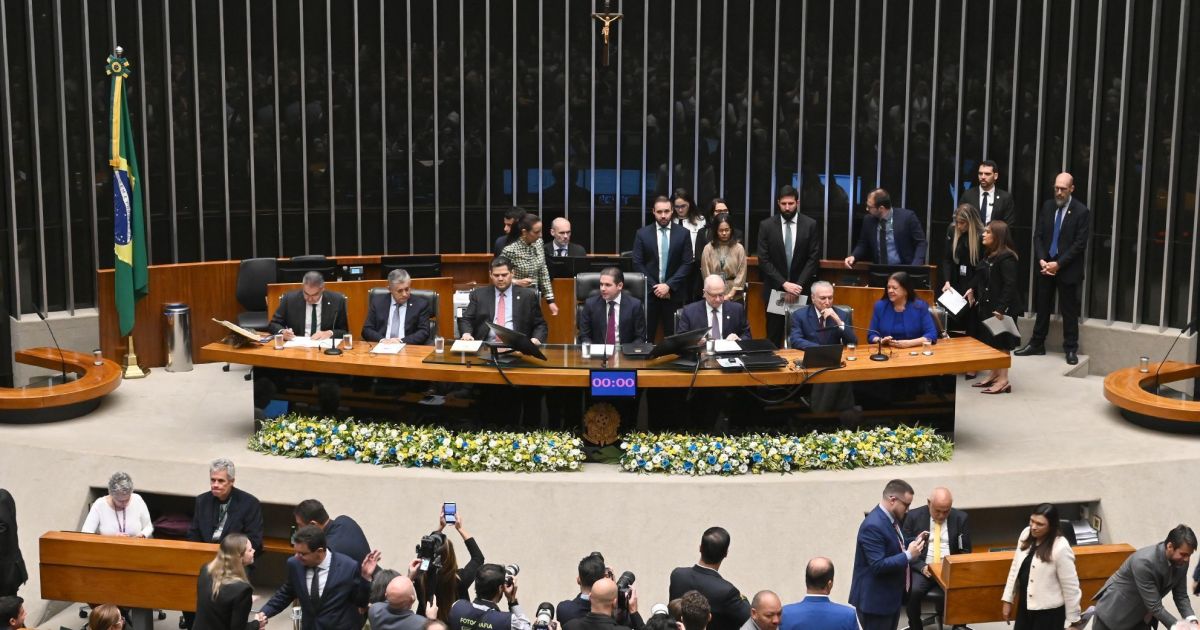
Brazil’s lower house leaders are discussing a change to legislative elections under a plan promoted by House Speaker Hugo Motta.
The proposal would replace the current proportional system, in which parties’ combined votes help determine how many seats they win.
Under the mixed system, voters would choose district candidates and party-list candidates.
Half the seats would go to the most-voted candidates in districts, while the other half would be filled from party lists.
Smaller parties fear the change could weaken their representation, including that of candidates who draw strong personal support.
Critics also warn that party leaders could control who gets seats through closed lists, although the list rules have not been settled.
The districts’ boundaries and the details of how votes would translate into seats are still under discussion.
The plan envisages a transition in 2030 and a full system by 2034, with a working group expected and the proposal set to proceed as a constitutional amendment.

Brazilian lawmakers are discussing a shift to a mixed district voting system for legislative elections.
The proposal is a goal of Chamber of Deputies President Hugo Motta and has been discussed with leaders from centrist parties.
Under the model described by CNN Brasil, voters would cast two ballots, with half the seats going to district winners and half allocated through party lists.
The proposal is intended to reduce the influence of candidates whose large vote totals help elect other members of their parties.
Smaller parties fear the change could weaken ideological and high-profile candidates, while the design of districts and lists remains unsettled.
- Who
- Chamber of Deputies President Hugo Motta and party leaders are discussing the proposal. Smaller parties have raised concerns.
- What
- A proposed change from proportional voting to a mixed district system for legislative elections.
- When
- Discussions are under way; the system is proposed to begin in 2030 and reach its final form in 2034.
- Where
- Brazil.
- Why
- Motta’s stated goal, as reported by CNN Brasil, is to reduce the influence of candidates with exceptionally high vote totals. Critics say the change could reduce representation for ideological and high-profile figures.
Supporters of the mixed district system
Smaller parties and critics
Effect on representation
Supporters of the mixed district system
The proposal aims to reduce the influence of candidates whose large vote totals help elect other party members.
Smaller parties and critics
Smaller parties fear it could weaken ideological and high-profile candidates.
How seats are allocated
Supporters of the mixed district system
Half the seats would go to the most-voted candidates in districts and half to candidates on party lists, according to CNN Brasil.
Smaller parties and critics
Folha warns that closed lists controlled by party leaders could give seats to candidates without votes; CNN Brasil says voters would choose from the lists.
District design
Supporters of the mixed district system
District boundaries and the allocation details remain to be debated.
Smaller parties and critics
Critics warn that how districts are drawn could affect which communities can elect representatives.
CNN Brasil reported that Motta had discussed the proposal after a meeting with centrist party leaders.
Folha reported that Motta had gathered leaders to begin shaping an electoral reform proposal.
The proposal described by the articles would begin with an initial mixed arrangement.
The proposed system is intended to reach its final form.
- Proposal
- Mixed district voting system for legislative elections
- Discussing the reform
- Hugo Motta, president of Brazil’s Chamber of Deputies
- Initial implementation
- 2030
- Proposed final system
- 2034
- District seats
- 50% of seats for the most-voted candidates in districts, according to CNN Brasil
- Party-list seats
- 50% of seats allocated through party lists, according to CNN Brasil
4 sources
Modelo da reforma eleitoral divide Câmara e ameaça implodir acordo para frear PL
Câmara discute reforma eleitoral para frear puxadores de voto como Nikolas; veja modelos e debates
Minoria discorda sobre voto distrital misto frente à ofensiva do centrão