

Science & Tech · Space · 9 hrs ago
Atomic-6 tests tile armor against high-speed space debris
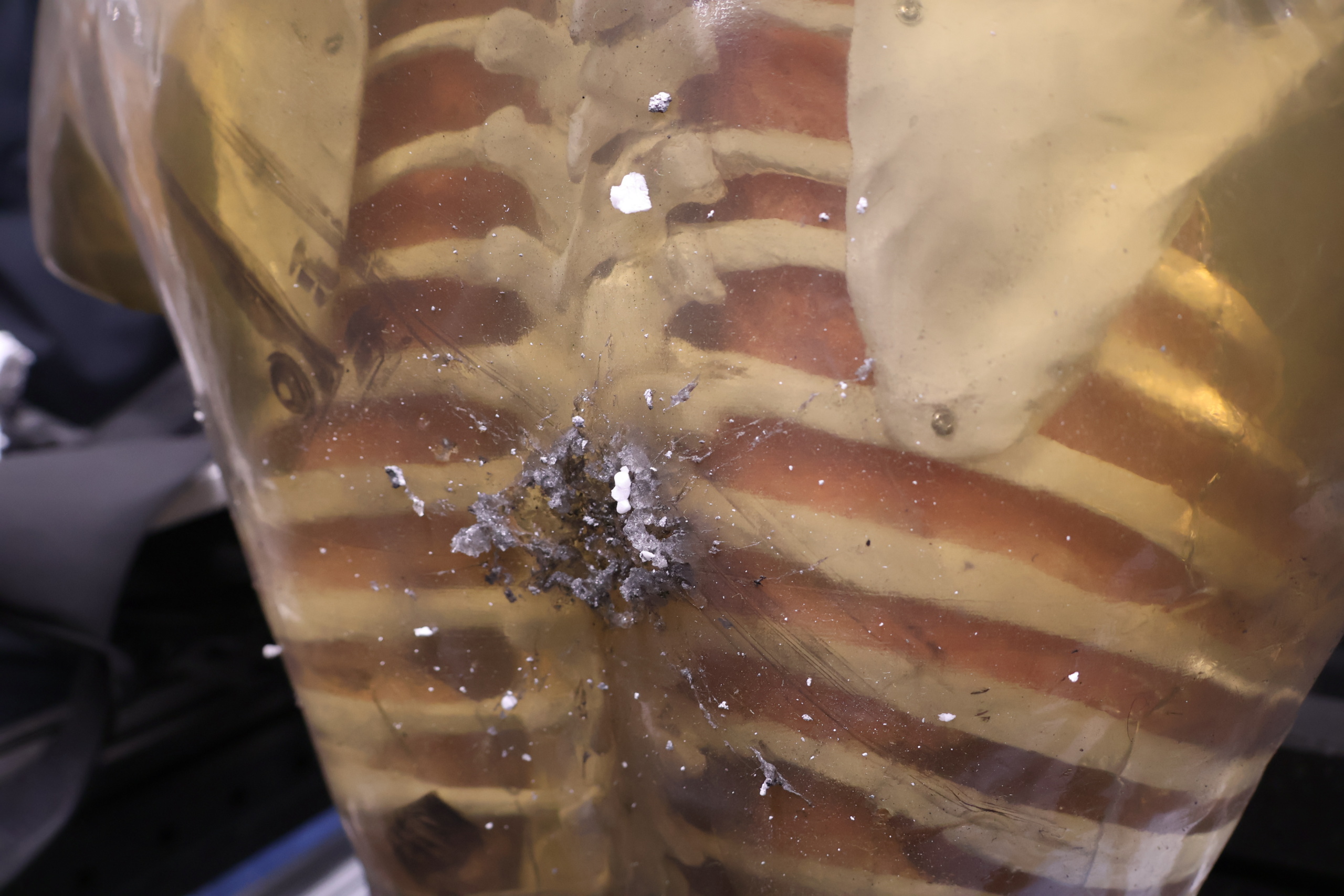
Atomic-6 tested a tile designed to protect astronauts from tiny, fast-moving space debris in a laboratory at Texas A&M University.
Researchers fired a 3-millimetre aluminum sphere at a test torso, first behind the tile and then behind a 4-millimetre aluminum plate used to represent current spacesuit protection.
The torso behind the tile showed no visible damage or penetration, while the sphere went through the aluminum plate.
The test does not show whether a spacesuit would keep its pressure after an impact, and a stationary torso cannot show what injuries a person might suffer.
The results are an early test, not proof the tile is ready for spacesuits, and Atomic-6 says the armor is intended to defend against objects moving at very high speeds.
The tile is less than an inch thick, and the company is discussing with suit makers how armor could be fitted without restricting movement.
Atomic-6 plans tests with curved tiles and different impact angles.

Atomic-6 reported tests suggesting its Space Armor Lite tile can shield a ballistic torso from a high-speed debris impact.
At Texas A&M University, the company fired a 3-mm aluminum sphere at about 7.2 km/s at a torso protected by the tile.
The torso behind the tile showed no visible damage or penetration, while a 4-mm aluminum plate let the sphere pass through.
Atomic-6 cautioned that the test did not establish injury outcomes or show whether a spacesuit would remain pressurised after an impact.
The company plans further tests with curved tiles and different impact angles.
- Who
- Atomic-6 conducted the test. The company says its Space Armor could help protect astronauts.
- What
- It tested whether a tile could shield a ballistic torso from a high-speed debris impact.
- When
- The results were reported on November 20, 2026.
- Where
- Texas A&M University’s Hypervelocity Impact Laboratory.
- Why
- Atomic-6 is exploring whether its tiles, developed to shield satellites from untrackable debris, could also protect astronauts on spacewalks.
This story does not have two clearly opposing sides.
A Space Armor Lite tile travelled to orbit aboard Portal Space Systems’ Starburst-1 spacecraft to test whether it would survive launch.
Atomic-6 released results from tests of the tile against a high-speed aluminum sphere.
The company plans tests with curved tiles and new impact angles.
- Impact sphere
- 3 mm aluminum
- Impact speed
- About 7.2 km/s (about 16,100 mph)
- Tile tested
- Space Armor Lite
- Comparison plate
- 4 mm-thick solid aluminum
- Space Armor Lite capacity
- Stops hypervelocity impacts from objects up to 3 mm in diameter, according to Atomic-6
- Space Armor Max capacity
- Targets objects up to 12.5 mm
3 sources
What people are saying
I can’t think of a higher value asset than a human life.
No humans were harmed in the testing of this
There’s really no way to orchestrate an impact in orbit
It starts working around Mach 10, and my 9 mm Glock will not shoot a bullet at Mach 10.