

Science & Tech · Science & Environment · 1 hr ago
Potatoes grown in simulated moon soil with compost, study finds
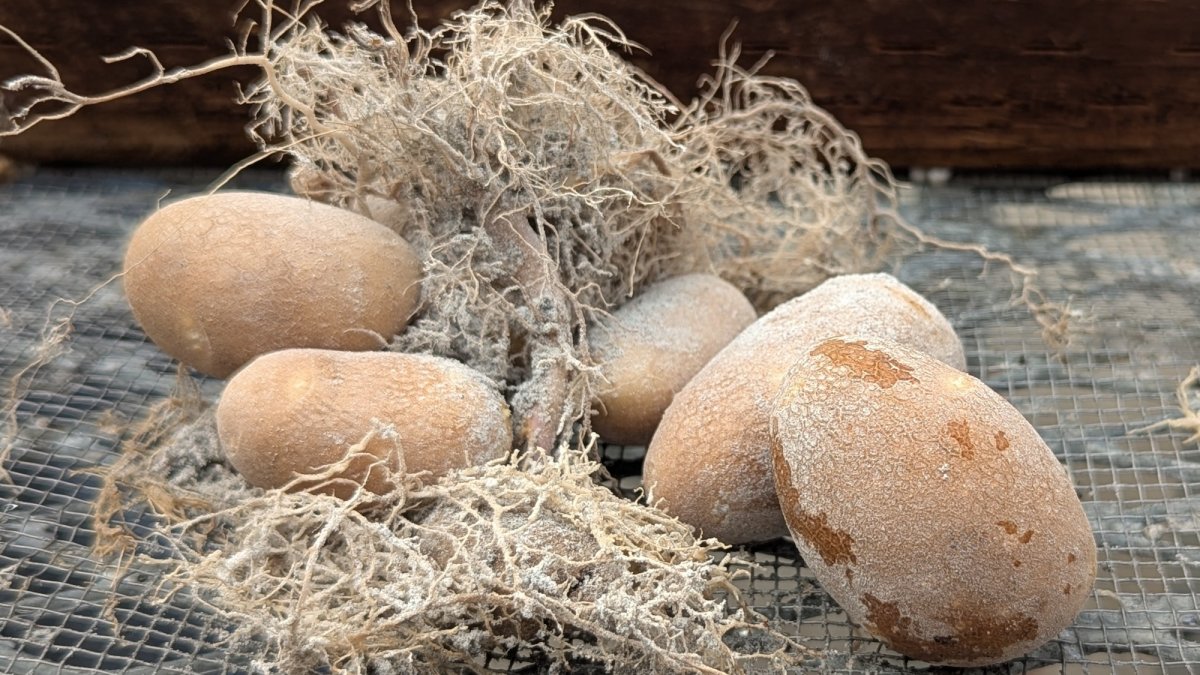
Researchers grew potatoes in simulated moon soil in experiments at Oregon State University.
The team used engineered materials designed to resemble lunar dust and rock, mixed with compost made by worms breaking down organic waste.
Lunar soil alone could not support potato growth because it lacks nitrogen and organic matter.
Adding 30% compost produced yields comparable to potatoes grown in Earth soil under the same conditions.
Tests found no statistically relevant increase in naturally occurring potato toxins, though the researchers have not tasted the samples.
Growing food locally could help support long-term lunar bases, which may not be able to rely on supplies from Earth for all their food.
The team plans to test 10 potato varieties to identify options that are nutritious and resilient in simulated lunar soil.

Researchers grew edible potatoes in simulated lunar soil using vermicompost, a nutrient-rich compost made by worms.
The study found that soil containing 30% vermicompost produced potato yields comparable to those grown in Earth soil.
The potatoes completed their life cycle, and tests found no statistically relevant rise in natural potato toxins called glycoalkaloids.
The findings could help inform food production systems for future long-term human exploration of the Moon.
The researchers have not tasted the potatoes grown in the study.
- Who
- Botanists at Oregon State University, led by Aymeric Goyer, conducted the study.
- What
- They grew potatoes in simulated lunar soil supplemented with vermicompost and found that a 30% mixture produced comparable yields to Earth soil.
- When
- The study was published on November 19, 2026.
- Where
- The experiments were conducted at Oregon State University using simulated lunar soil.
- Why
- The research examined whether potatoes could help support food production for future long-term human exploration of the Moon.
This story does not have two clearly opposing sides.
A study at the International Potato Center in Peru concluded that potatoes could sprout in a simulated Martian environment.
Nasa astronaut Don Pettit showed a potato he had grown in space.
The Oregon State University potato study was published in npj Microgravity.
- Crop
- Modoc potato, an early-maturing cultivar with reddish skin and white flesh
- Compost proportion
- 30% vermicompost produced yields comparable to Earth soil
- Study location
- Oregon State University
- Journal
- npj Microgravity
- Toxicity finding
- No statistically relevant rise in glycoalkaloids in the lunar-simulation crops
2 sources
What people are saying
We found that potatoes can complete their entire life cycle in simulated lunar soil when supplemented with organic matter.
Potatoes provide more calories per land area than many other crops.
They are nutritious – they provide more potassium than a banana, are rich in vitamin C, have good proteins – and they have a high satiety index.
We believe the compost helps balance some of the toxicity we see in lunar regolith.