

Science & Tech · Science & Environment · 15 hrs ago
Neutron Imaging Reveals Tiny Jurassic Reptile in Wyoming Fossil
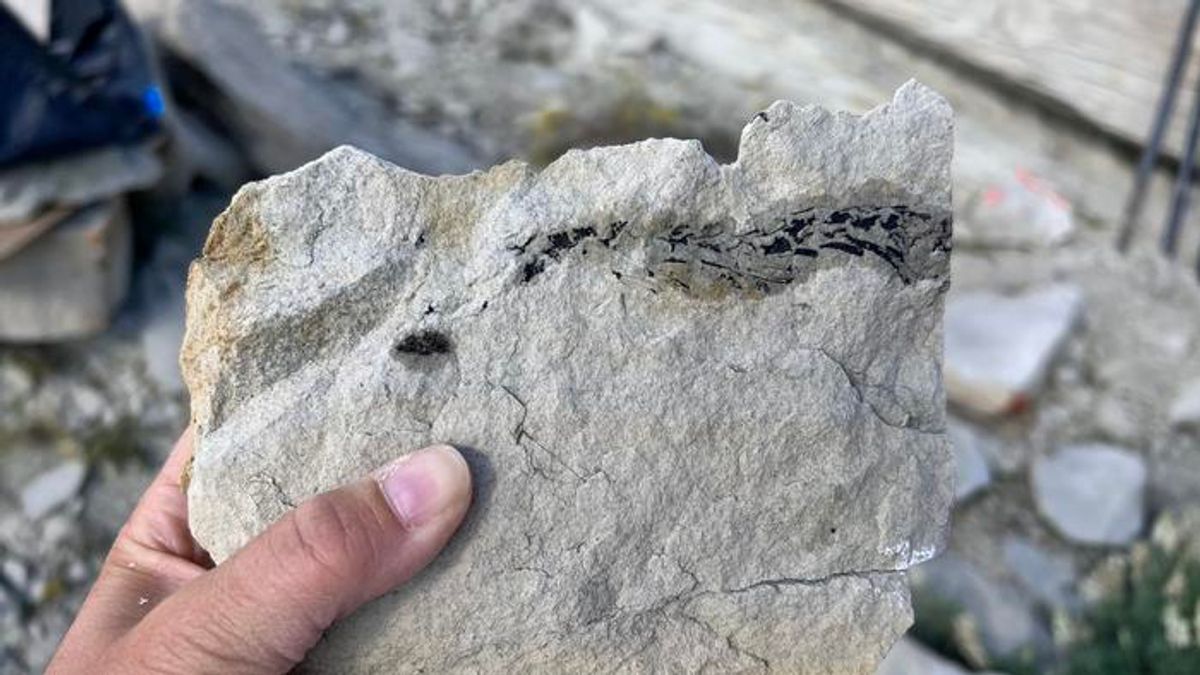
Researchers found a partly hidden skeleton in a sandstone slab at Wyoming’s Meilyn Quarry in 2022.
Neutron imaging revealed a new Jurassic reptile after most of its bones proved impossible to see through the stone.
The team named the animal Meilynodraco amonamarthi and placed it among the extinct reptiles called choristoderes.
It lived in Wyoming about 156 million years ago and was around a foot and a half long.
Its skull was separated from its body, and researchers suggest a larger predator may have torn it away before the remains were buried in river sand.
Tiny ear bones offered clues about its evolutionary place among reptiles.
Their resemblance to bones in living reptiles could mean choristoderes were more closely related to them than earlier fossil evidence suggested.

Neutron imaging revealed that a fossil concealed in a Wyoming sandstone slab belonged to a tiny Jurassic reptile.
Researchers named the new species Meilynodraco amonamarthi and classified it as a choristodere.
The fossil was found at Wyoming’s Meilyn Quarry in 2022, but most of its bones were hidden in the stone.
Neutron and X-ray images showed pelvic bones, parts of a hind leg and a tiny skull with an almost completely preserved braincase.
The specimen was about a foot and a half long and lived around 156 million years ago.
- Who
- Researchers identified the fossil as Meilynodraco amonamarthi, a choristodere.
- What
- Neutron imaging revealed the identity and preserved bones of a tiny Jurassic reptile in sandstone.
- When
- The fossil was found in 2022. The reptile lived around 156 million years ago.
- Where
- The fossil was found at Meilyn Quarry in Wyoming. Researchers examined it in Switzerland.
- Why
- Most of the bones were concealed in sandstone, so researchers used imaging to identify the fossil and study its remains.
This story does not have two clearly opposing sides.
An excavation team at Wyoming’s Meilyn Quarry noticed vertebrae imprinted on a sandstone slab.
Materials scientist Pavel Trtik visited the Aathal Dinosaur Museum and offered to help with fossil investigations.
Trtik heard about the mysterious Wyoming fossil and agreed to help researchers investigate it.
- Species
- Meilynodraco amonamarthi
- Classification
- Choristodere, an extinct reptile group
- Discovery site
- Meilyn Quarry, Wyoming
- Discovery year
- 2022
- Approximate age
- 156 million years
- Approximate length
- A foot and a half
1 source
What people are saying
Neutrons are particularly sensitive to hydrogen
And hydrogen is also present in hydroxyapatite, a mineral component of bones. This allows us to distinguish the fossilised remains from the surrounding sandstone.
They bear a striking resemblance to those of the so-called crown group of reptiles, which includes all living reptiles.
This could suggest that choristoderes are more closely related to living reptiles than previous fossil evidence indicated.