

Business · Energy & Commodities · 10 hrs ago
Brazilian industries form coalition to speed up decarbonisation
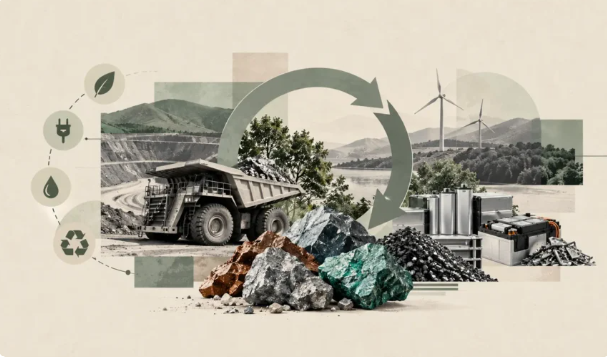
Four Brazilian industries have joined a climate coalition to coordinate cuts in greenhouse gas emissions.
The group brings together mining, electricity, transport and agribusiness, and is coordinated by the Brazilian Business Council for Sustainable Development.
More than 270 organisations support the effort, which will be presented at the COP31 climate conference in Antalya, Turkey.
The coalition says emissions cuts require shared investment in technology, infrastructure, clean energy and new production methods, including electric equipment and vehicles and more biofuels.
A new platform is due to launch on November 19 at the Brazil Pavilion to track actions across the four sectors using indicators and progress measures.
Twenty-eight measures in farming, transport and mining could cut about 900 million tonnes of CO₂ equivalent a year by 2050; that estimate does not include the electricity sector.
The sectors have set priorities and responsibilities for the next three years, with the aim of turning climate goals into coordinated action across supply chains.

Four Brazilian economic sectors have joined a coalition to speed up industrial decarbonisation and other productive activities.
The coalition, coordinated by the Brazilian Business Council for Sustainable Development, includes mining, electricity, transport and agribusiness.
It has support from more than 270 organisations and will be presented during COP31 in Antalya, Turkey.
The coalition plans 33 decarbonisation workstreams, 190 indicators and 100 actions to track progress and address obstacles.
Twenty-eight measures in agriculture, transport and mining are estimated to have the potential to cut about 900 million tonnes of carbon dioxide equivalent a year by 2050.
- Who
- Brazil’s mining, electricity, transport and agribusiness sectors, coordinated by the Brazilian Business Council for Sustainable Development.
- What
- They formed the Brazil Coalition for the Climate Transition to accelerate decarbonisation.
- When
- The initiative began in 2024 and is being presented during COP31, which began on November 9.
- Where
- COP31 in Antalya, Turkey.
- Why
- To coordinate investment and action across sectors and speed up emissions reductions in industry and other productive activities.
This story does not have two clearly opposing sides.
The initiative began with a mobilisation led by COP30 president André Corrêa do Lago.
COP31 began in Antalya, bringing together government, business and organisational representatives to discuss responses to global warming and emissions commitments.
The coalition is due to be presented.
The Intersectoral Climate Hub is scheduled to launch at the Brazil Pavilion, with indicators and mechanisms to track the four sectors’ actions.
- Sectors
- Mining, electricity, transport and agribusiness
- Coalition coordinator
- Brazilian Business Council for Sustainable Development (CEBDS)
- Organisational support
- More than 270 organisations
- Planned work
- 33 decarbonisation workstreams, 190 indicators and 100 actions
- Estimated emissions potential
- About 900 million tonnes of CO₂ equivalent per year by 2050, across 28 measures in agriculture, transport and mining
What people are saying
Because it is an industry that is at the base of almost everything society produces, mining has great potential to contribute to the reduction of global carbon emissions. Brazil, in particular, produces minerals that are strategic for decarbonising steelmaking and for the planet’s electrification process.
The productive sector’s main contribution is to transform climate targets into concrete implementation pathways. To do that, it is necessary to work across the entire value chain: technology, energy, infrastructure, finance, regulation, market and demand.