

Science & Tech · Space · 6 hrs ago
Rubin Observatory finds a retrograde object beyond Neptune
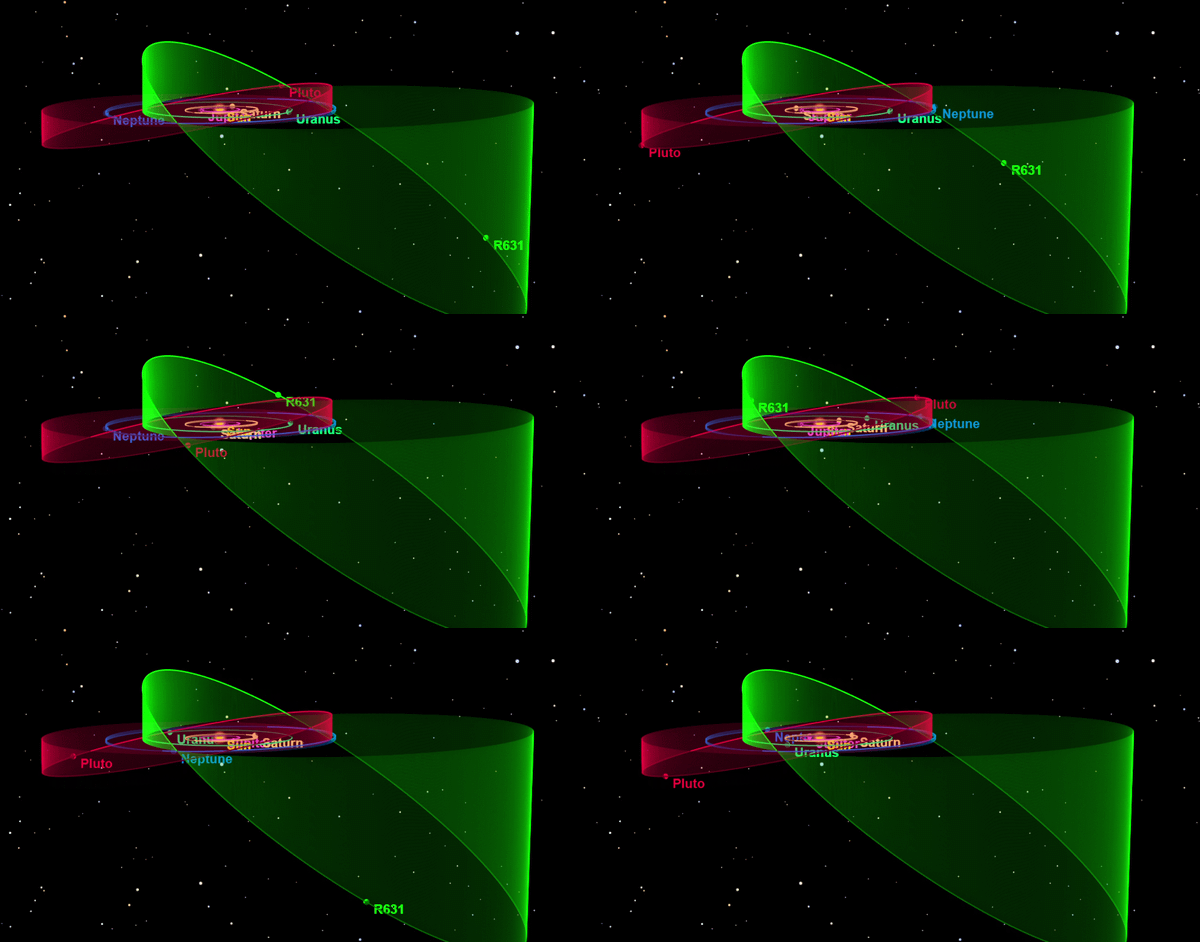
Rubin Observatory has found an object beyond Neptune that is moving around the Sun in the opposite direction to most planets.
The object, temporarily named R631, has an orbit tilted 142 degrees to the solar system’s plane, making it retrograde by the astronomical definition.
It is now about 32 times farther from the Sun than Earth is, and one orbit takes about 548 Earth years if the calculated path is correct.
Astronomers say R631 may have formed in another star system and been captured by the Sun, or may have started in our solar system and later changed paths.
Its size is not confirmed, but one astronomer estimates it could be about 100 kilometres across, and it may be comet-like.
R631 will receive an official designation, and it is expected to reach its closest point to the Sun in 2047, when it might show activity if it is a comet.

The Rubin Observatory has found an object beyond Neptune that travels in a retrograde orbit.
The object is temporarily designated R631 and has an orbital inclination of 142 degrees.
Rubin observed R631 from December 2025 through March 2026, and it is about 32 astronomical units from the sun.
If its orbit is correct, R631 will take about 547.84 Earth-years to orbit the sun and reach its closest point to the sun in 2047.
Astronomers have suggested it could be about 100 kilometres in diameter, but its nature and origin remain uncertain.
- Who
- The Rubin Observatory found the object, which is temporarily designated R631.
- What
- It is an object beyond Neptune on a retrograde orbit with an inclination of 142 degrees.
- When
- Rubin observed it from December 2025 through March 2026.
- Where
- About 32 astronomical units from the sun, beyond Neptune’s orbit.
- Why
- Its origin and the reason for its retrograde orbit are uncertain; possible explanations include that it came from another solar system or began in an ordinary orbit in this one.
This story does not have two clearly opposing sides.
Rubin observations of R631 appeared in the data over four months.
R631 is expected to reach its closest point to the sun, if its orbit is correct.
- Temporary designation
- R631
- Orbital inclination
- 142 degrees
- Distance from the sun
- 32 astronomical units
- Estimated orbital period
- 547.84 Earth-years
- Expected perihelion
- October 31, 2047, at 24 astronomical units