

Health · Medical Research · 1 hr ago
Study Finds a Way to Reverse Immunotherapy-Related Inflammation in Mice
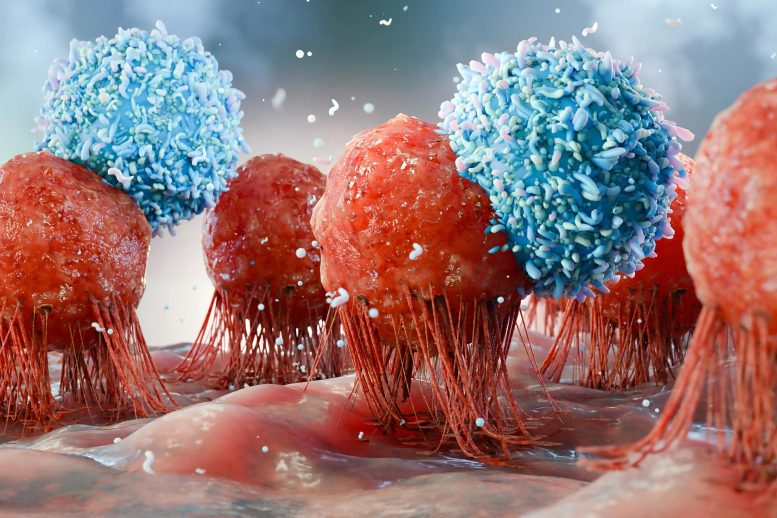
Cancer immunotherapy can lead the immune system to attack healthy tissue, forcing some patients to stop treatment.
These reactions can occur with immune checkpoint inhibitors, drugs that help T cells fight cancer by removing restraints on them.
Depending on the drug, 20% to 40% of patients experience these side effects, and up to 25% have severe reactions requiring hospitalization and an end to treatment.
A University of Pittsburgh team identified unstable immune cells as a possible driver of the inflammation in a study published in Cell.
In mice, blocking a protein in those cells reversed the inflammation, while experiments also showed that diet and gut microbes could affect how severe the reactions became.
The findings point to a possible way to reduce treatment-related inflammation, but the work described tested the approach in mice, and no FDA-approved treatments for these side effects are available in the United States.

Researchers reported that blocking a protein in unstable immune cells reversed immunotherapy-related inflammation in mice.
The study, published in Cell, also found that diet and gut microbes influenced the severity of the mice’s reactions.
The team used a low-fiber diet high in fat and processed carbohydrates to make mice more susceptible to these reactions.
Fecal-microbe transfers changed the severity of inflammation in recipient mice.
The findings may help explain why some patients develop side effects that can interrupt immunotherapy.
- Who
- A research team led by Abigail Overacre-Delgoffe at the University of Pittsburgh School of Medicine.
- What
- The team identified unstable immune cells as a potential driver of immunotherapy-related inflammation and reversed it in mice by blocking a protein in those cells.
- When
- The study was published on October 22, 2026.
- Where
- The experiments were conducted in mice; the location is not stated.
- Why
- The researchers investigated how diet and gut microbes could influence immune-related side effects of checkpoint inhibitor treatment.
This story does not have two clearly opposing sides.
The mice began eating a low-fiber diet high in fat and processed carbohydrates.
The mice continued the diet while receiving checkpoint inhibitor therapy.
The study was published in Cell.
- Study publication
- October 22, 2026
- Senior author
- Abigail Overacre-Delgoffe
- Lead author
- Dipyaman Patra
- Mouse diet
- Low in fiber and high in fat and processed carbohydrates
- Diet start
- Two weeks before checkpoint inhibitor therapy
- Patient side effects
- 20% to 40% experience immune-related adverse events, depending on the type of checkpoint inhibitor
1 source
What people are saying
Immune-related adverse events are a huge problem and can greatly impact quality of life for patients. In many cases, it impacts their ability to stay on immunotherapy or benefit from treatment.
This got us thinking about whether common lifestyle factors, particularly diet and the gut microbiome, could influence the host immune system even before immunotherapy begins.